Last updated November 18, 2026






Free written scope consultation - allowances, timeline, and change-order rules on paper before a single trade is scheduled
Seasonal Construction Care for Boulder City: Year-Round Homeowner’s Guide
Boulder City’s spring lasts about three weeks before temperatures breach 100°F, and when monsoon moisture arrives in July it hits a building envelope that’s been baked for two months straight. That sequence cracks caulk, lifts flashing, and buckles composite materials in a pattern that’s predictable if you know to look. Most home maintenance guides assume four gentle seasons. Boulder City doesn’t work that way. The real calendar here has two punishing transition periods, pre-summer heat and monsoon onset, that do more damage in six weeks than the other ten months combined. This guide runs on that calendar, with the specific inspections, resealing windows, and scheduling advice that fits how buildings here actually fail.
Quick Answer
Boulder City home maintenance should center on two hard deadlines: inspect and reseal all exterior caulk, flashing, and seals by late April before sustained 100°F heat begins, and clear roof drains, condensate lines, and stucco cracks before monsoon moisture arrives in July. Winter freeze protection at 2,500 feet matters more than most locals assume, particularly for exterior hose bibs and uninsulated garage-wall pipe runs. The rest of the year is check-and-repair work in the gaps between those three pressure points.
Styles & brands we work with
- Kitchen remodeling
- Bathroom remodeling
- Home additions & ADU
- Roofing
- Windows & doors
- Driveway & pavers
- Fence
Table of Contents
- The April – May Window: Sealing Before the Heat
- Monsoon Prep for Boulder City Elevation
- The September Checklist: What Monsoon Leaves Behind
- Winter Freeze Risk at 2,500 Feet
- Matching Contractors to Boulder City’s Demand Peaks
- Materials That Survive Here (And Some That Don’t)
- When to Call a Professional
- Frequently Asked Questions
The April – May Window: Sealing Before the Heat
The single most valuable thing a Boulder City homeowner can do all year happens in a narrow six-week stretch from roughly the start of April to mid-May. Once daytime highs lock above 100°F and stay there, exterior sealants stop curing properly and start failing early. Standard acrylic caulk needs overnight lows above 50°F to cure, and here those lows vanish by late May. Miss the window and you’re sealing in June at 7 a.m. to beat the heat, or you’re waiting until October while the gap widens.
What’s actually at risk is thermal cycling: the daily expansion and contraction of siding, stucco, window frames, and trim as the exterior swings from 75°F at dawn to 108°F by midafternoon. Every joint that isn’t sealed moves with that swing, and each cycle works the material a little more open. By August, a hairline gap from April is a quarter-inch separation.
Our April – May inspection list, in order of importance:
- Window and door perimeter caulk. Run a finger along every joint. Any caulk that’s cracked, pulled away, or feels chalky needs removal and replacement – not a fresh bead over the old one.
- Roof flashing at penetrations. Vent pipes, chimney surrounds, and skylight curbs. Look for lifted edges, rusted nails, or sealant that’s gone brittle.
- Stucco hairline cracks. Anything wider than a credit card edge gets filled with an elastomeric patching compound, not standard caulk. Stucco in Boulder City moves more than in cooler climates and stiff fillers crack right back out.
- Expansion joints at the slab and wall interface. The joint where stucco meets the foundation is a common entry point for both water and insects.
- Siding butt joints and corner trim. On fiber cement, check the factory-finished edges at every seam – they’re the first place moisture gets behind the panel.
We’ve seen Boulder City homes where two hours of April caulk work would have prevented a $4,000 stucco repair by September. The physics is unforgiving: get it done before the heat, or pay for it after the monsoon.
Monsoon Prep for Boulder City Elevation
Boulder City sits at roughly 2,500 feet, higher than the Las Vegas valley floor and built into the slope of the McCullough Range. That elevation changes monsoon behavior in ways that catch transplants off guard. Storms here can drop an inch of rain in twenty minutes on ground that’s been baked hard for two months.
Two local factors make runoff worse than lower-elevation neighborhoods. First, the drainage grade: many residential streets in Boulder City slope toward the rear of lots before reaching a storm channel, so water pools against back walls and fences instead of draining to the street. Second, caliche – the cement-like calcium carbonate layer that sits inches below the surface across much of the area. Caliche doesn’t absorb water. Rain that would soak into ordinary soil instead sheets off the top, finds the low spot, and sits there. We’ve seen water stand against a stucco wall for a full day after a storm because the caliche layer underneath gave it nowhere to go.
Before monsoon season, do these five things:
- Walk the property during a heavy rain if you safely can – or inspect after the first storm and map where water actually goes. Water flow on caliche is nearly impossible to predict from a dry yard.
- Clear the roof-to-ground drainage path. Downspouts, splash blocks, and any channel or swale between the house and the street.
- Check that soil grades away from the foundation on every side. A minimum of 6 inches of fall across the first 10 feet is the standard. On caliche, that often means added fill, not just raking.
- Clear HVAC condensate lines and any exterior weep holes in stucco. Monsoon humidity pushes condensate volume up; a clogged line backs water into the air handler or the wall cavity.
- Inspect window wells and any low patio slabs for pooling risk. A 1-inch lip at a slider threshold is enough to send water inside during a twenty-minute downpour.
Getting drainage right is the single highest-value monsoon investment. If your property has a chronic low spot, a small regrade or a French drain built with a general contractor in Boulder City is far cheaper than water damage remediation.
The September Checklist: What Monsoon Leaves Behind
September in Boulder City is the audit month. The heat has broken, the summer storms are done, and whatever the season damaged is now visible. This is when we do the inspections that actually catch problems before the cooler months hide them.
Start with the exterior envelope:
- Stucco inspection. Look for new cracks, especially at corners and around windows, and for any area that feels hollow when tapped – hollow means the stucco has debonded from the substrate (the layer underneath) and needs patching before it lets water in.
- Roof flashing re-check. The monsoon lifts and reseats flashing with every wind-driven storm. Look at every penetration and the drip edge on all sides.
- HVAC condensate line clearing. After two months of humidity exposure, algae and mineral buildup can clog the line. Flush it and check the drain pan for standing water.
- Attic and interior moisture check. A water stain on a ceiling that appeared in July tells you a flashing joint failed. Get it fixed in September, before winter rain adds to it.
- Wood trim and paint inspection. Horizontal surfaces – window sills, door thresholds, railings – take the worst sun on top of monsoon moisture. Repaint any area where the finish has broken.
- Foundation and slab edge. Look for new cracks or spalling at the slab edge, and check that soil hasn’t washed away from the foundation.
We’ve found that Boulder City homeowners who do the September stucco and flashing check catch roughly 80 percent of the issues that would otherwise become winter water intrusions. It’s the cheapest inspection on the calendar.
Winter Freeze Risk at 2,500 Feet
Here’s what surprises people: Boulder City freezes harder and more often than Las Vegas. At 2,500 feet, overnight lows in December and January regularly drop below freezing, and cold air pooling in the canyons can push some nights into the low 20s. That’s enough to burst an unprotected pipe. We’ve seen it happen more times than most locals would expect, and it almost always happens to the same handful of pipe runs.
The pipe runs that actually need winterizing in Boulder City:
- Exterior hose bibs and irrigation stub-outs. Shut off, drain, and cover. A single freeze night cracks a cheap bib and floods the wall cavity when it thaws.
- Pipes in uninsulated garage walls. A common construction detail here, and a common failure point. If a pipe runs through a garage wall with no insulation, protect it or add a heat trace.
- Exposed runs on the north-facing exterior wall. The face that never gets winter sun is the one that freezes.
- Swamp cooler supply lines, if you still have one. Drain them completely; the water sitting in the line cracks the housing.
- Pool equipment and any detached-workshop plumbing. Drain or protect these separately.
Pipes in a heated interior rarely freeze here. It’s the exterior and the unheated runs that get caught. A few minutes of winterizing in November prevents most of the freeze damage we see.
Matching Contractors to Boulder City’s Demand Peaks
Contractor availability in Boulder City follows the damage calendar. When the first 105°F week hits in June, every AC repair, stucco crack, and roofing call in town lands at once. When monsoon storms roll through in July and August, water damage and roofing demand spikes again. By the time a homeowner calls for a repair in the peak, every qualified contractor is booked weeks out.
The scheduling rule is simple: book non-emergency work in the shoulder windows, not the peaks. In our experience, the smartest time to schedule exterior work is late September through November, once the monsoon damage is visible and the contractors are still available. The next-best window is February through March, when things have dried out and the heat hasn’t started. Interior work – kitchens, bathrooms, whole-home remodels – is easiest to start in the winter months when crews are less occupied outside.
Plan the sequence this way:
- January – March: Book interior remodels and reserve exterior inspection appointments for April.
- April – May: Complete all resealing, caulk, and flashing work yourself or with a pro. This is a hard deadline.
- June – August: Emergency-only calls. Expect longer waits for anything non-urgent.
- September – November: Schedule post-monsoon stucco, roofing, and drainage repairs. Availability is still good, especially in October.
- December: Winterize, and book spring interior projects.
If you’re planning a bathroom or kitchen, the demand peak for interior crews lines up with spring buying season. Bathroom remodeling in Boulder City booked in January will start on a predictable schedule; the same call in May might wait until August.
Materials That Survive Here (And Some That Don’t)
Material choices in Boulder City aren’t about style – they’re about surviving an 80°F daily swing, two months of baked heat, and sudden monsoon moisture. Some materials hold up, and some fail at a predictable rate.
What holds up well:
- Fiber cement siding and trim. It handles thermal expansion better than vinyl or wood and doesn’t support rot. James Hardie is the standard the local installers work with.
- Elastomeric exterior sealants and paints. They stretch with the stucco and siding instead of cracking. Standard acrylics don’t.
- Quartz countertops. Cambria and Silestone are less prone to thermal shock than natural stone in a kitchen that swings in temperature when you open the slider on a 108°F day.
- Powder-coated aluminum and composite windows. Traditional wood windows need constant refinishing here.
What fails at a predictable rate:
- Aromatic cedar or pine decking and trim. The sun cooks the oils out within a season and the thermal movement cracks the boards.
- Standard acrylic caulk on exterior joints. It fails inside one summer cycle. The cost difference to elastomeric is roughly $3 per tube, and the failure difference is 6 weeks versus 8 years.
- Composite decking with dark colors. The surface temperature on a dark composite board in direct Boulder City sun can exceed 160°F, and the material can sag or warp along the span.
- Cheap exterior-grade particleboard trim. Moisture and heat break the binder down, and the trim swells.
Material selection is where most budget repairs quietly fail. If you want the product to outlast the promise, choose cabinets and finishes that were engineered for a desert climate – KraftMaid and Wellborn both make cabinet lines built for low-humidity environments. Our kitchen remodeling in Boulder City projects almost always prioritize the exterior-facing material choices for exactly this reason.
See the difference
 Before
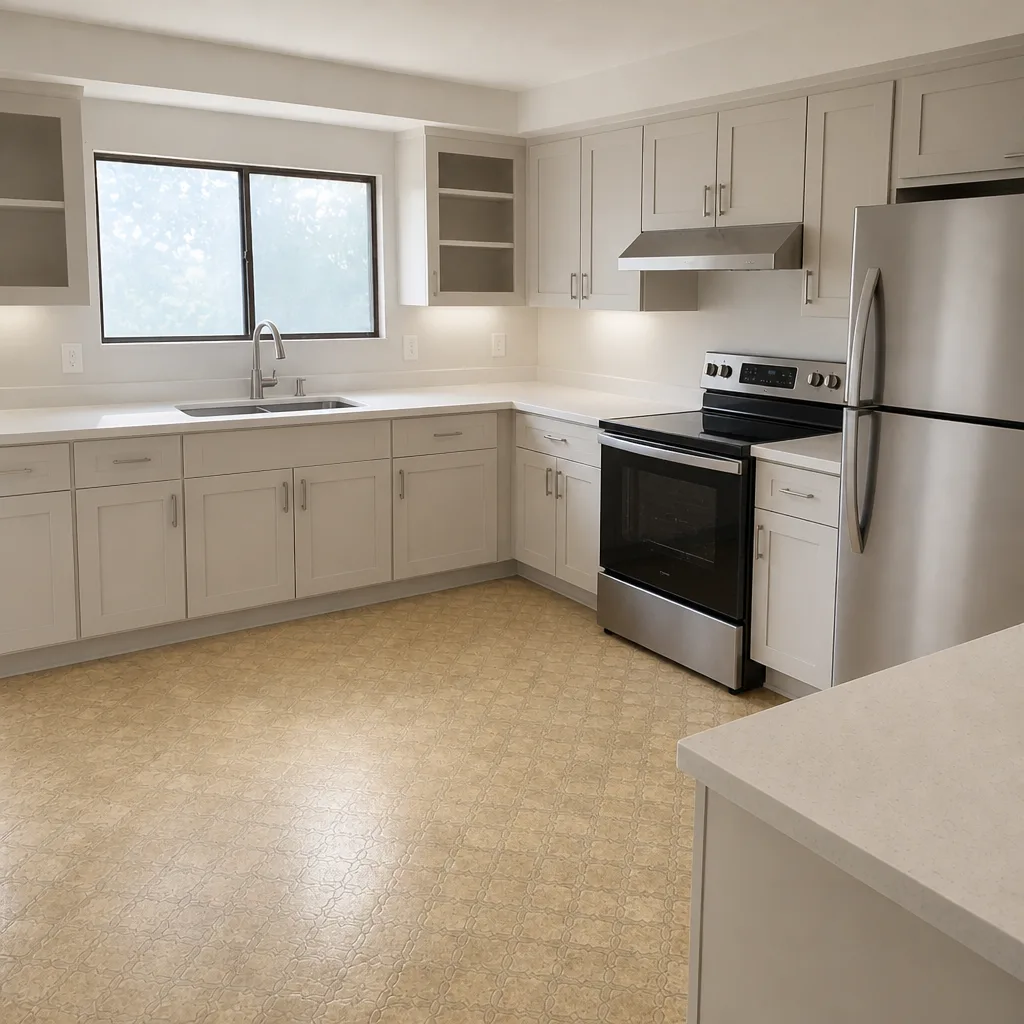 After
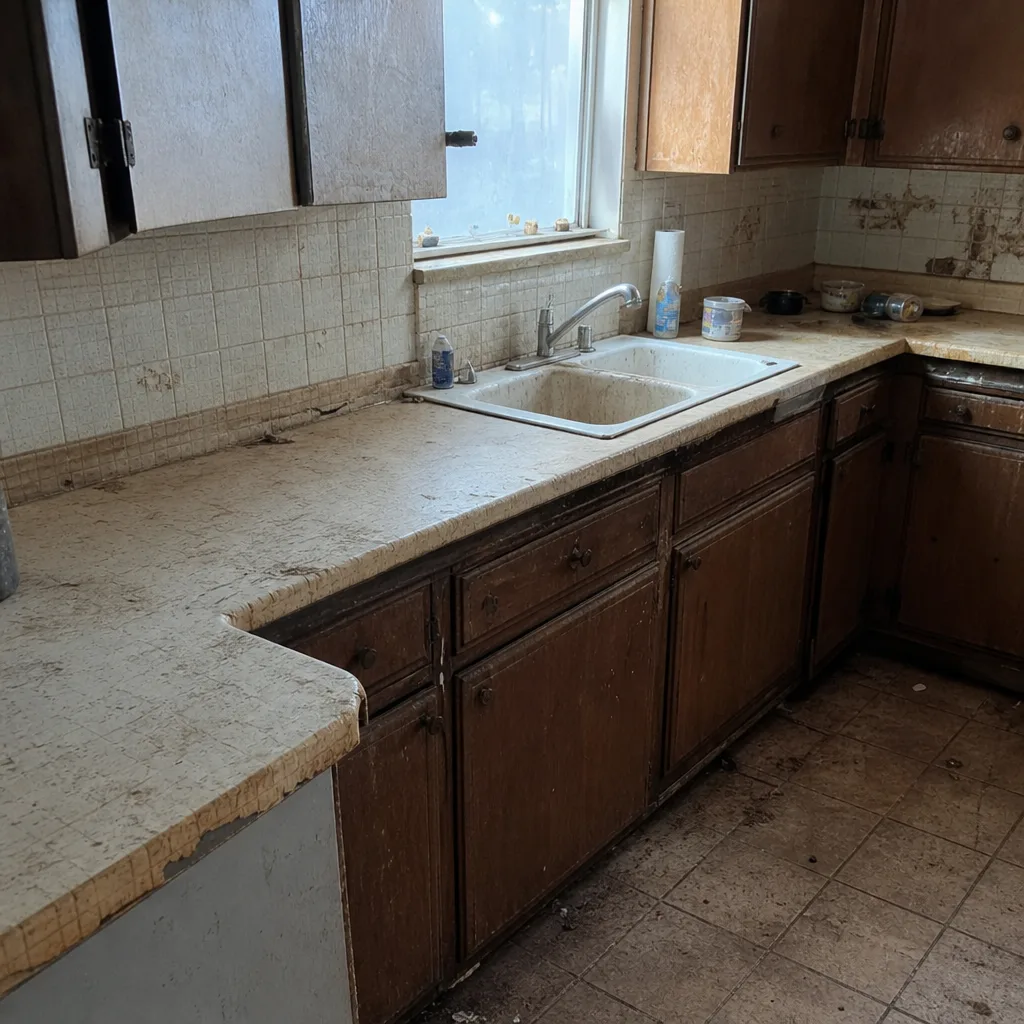 Before
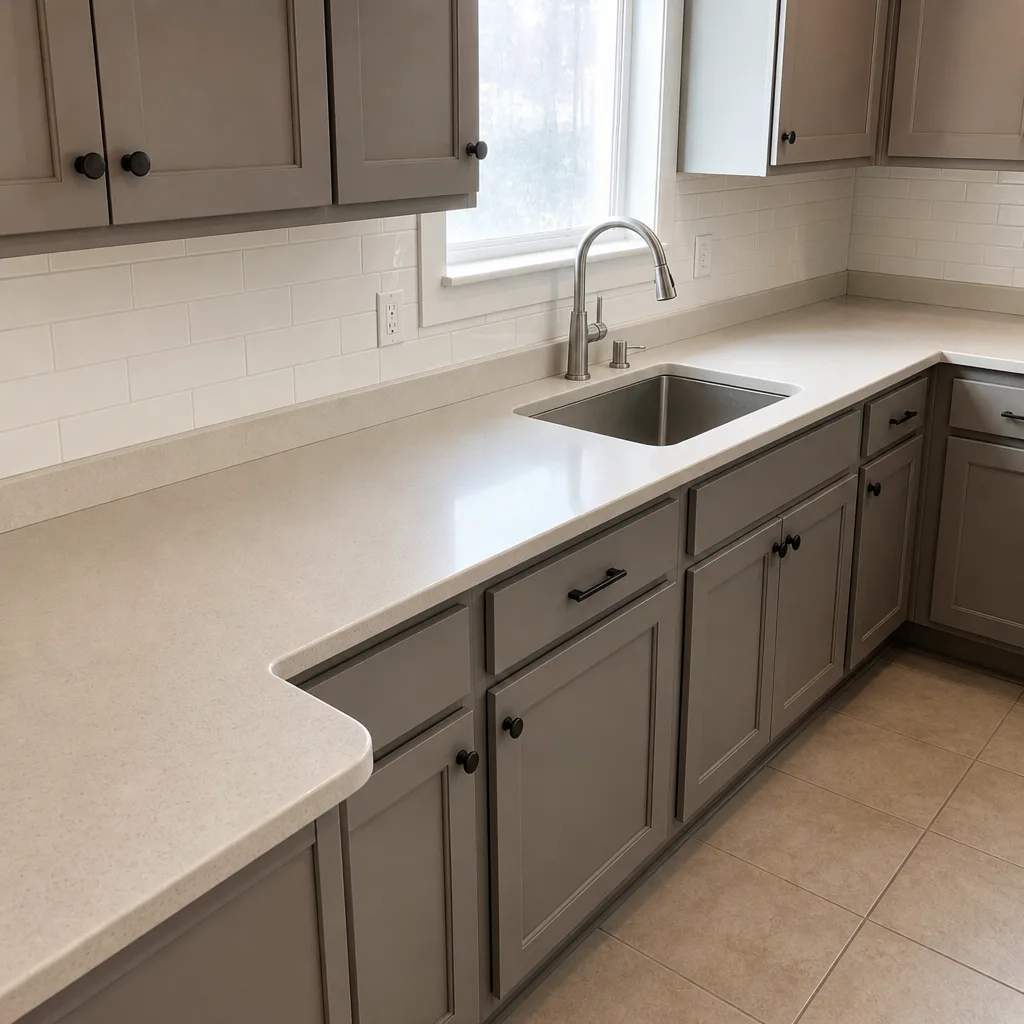 After
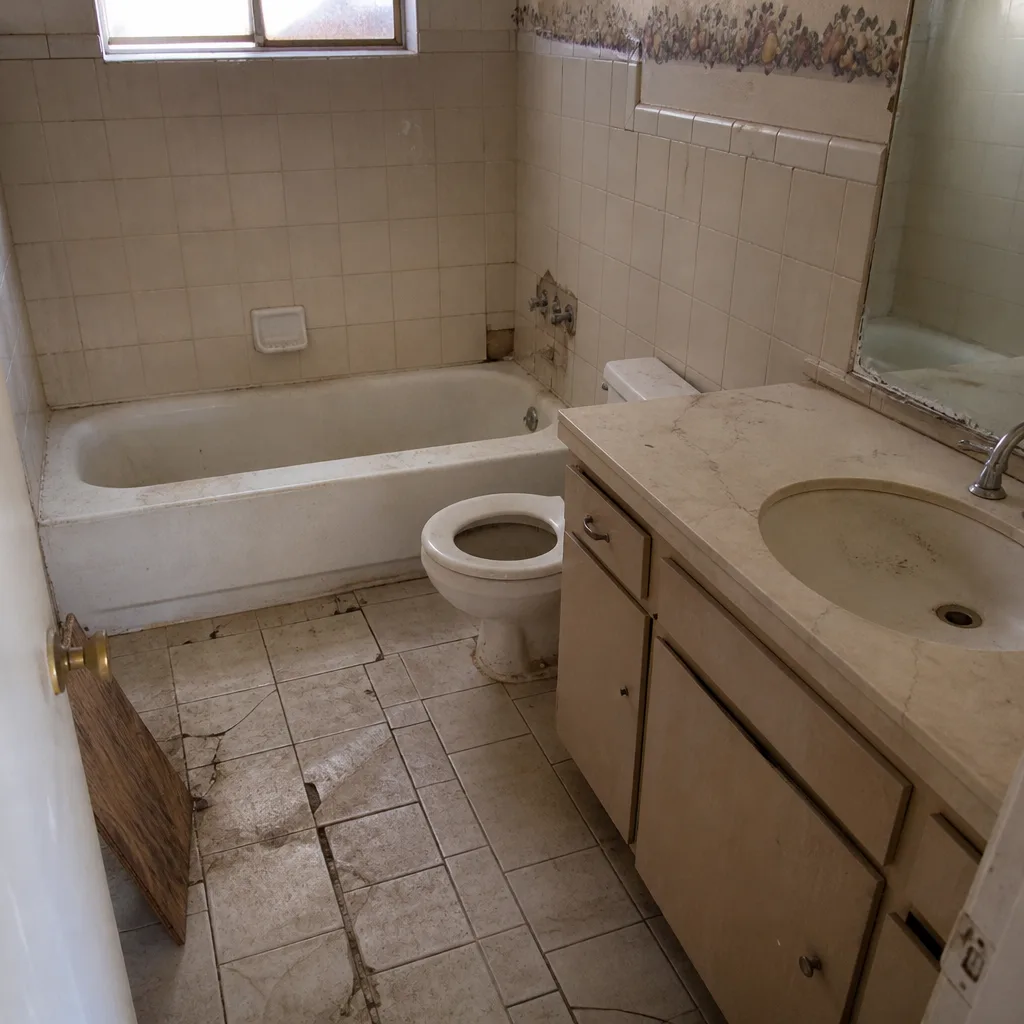 Before
 After
Common Mistakes to Avoid

- Sealing in June instead of April. Once the heat has locked in, exterior caulk won’t cure. You get a bead that looks finished and fails before August.
- Assuming caliche drains like normal soil. Water sheets off caliche instead of soaking in, which means the ground slopes you trusted on an ordinary lot may not be enough here.
- Ignoring the stucco after monsoon season. The cracks look cosmetic in September and become water intrusions by January. Once water gets behind the stucco, the repair cost roughly triples.
- Leaving the December hose bib connected. The single cheapest failure point on the property. Disconnect, drain, and cover before the first hard freeze night.
- Scheduling repairs in June or July. Every contractor in Boulder City is booked during peak heat and post-monsoon. Book in the shoulder months.
- Choosing dark composite decking. The board surface reaches temperatures that can warp the deck along its span. Choose a mid-tone or light color.
- Repainting over failing caulk. A fresh coat of paint hides a bad seal until the wet season finds it. Remove the old caulk before repainting every exterior joint.
When to Call a Professional
Most routine seasonal care is doable on your own. Call a professional when the scope crosses a certain line. Any repair involving roof work above the ground floor, structural stucco repair where the substrate is exposed, or drainage regrading is worth a professional visit. Water intrusion that has reached the interior – a ceiling stain, a wet patch in the wall cavity, a swelling baseboard – never resolves on its own and almost always comes from a flashing or drainage failure that’s easier to fix early. Any piping change, electrical panel work, or gas line work requires a licensed trade professional, and we recommend against doing those yourself. We also recommend a formal inspection if your home is over 15 years old and has never had a post-monsoon stucco look.
Penhallow Remodeling Boulder City offers free estimates in Boulder City – call (844) 834-9740. Every price comes in writing before any work starts, and every job carries the 365-Day Done Right Promise. If something fails inside the guarantee period, we come back and fix it at no charge.
Frequently Asked Questions
Sealing exterior caulk, flashing, and window joints by late April is the single highest-value task. Missing this window lets thermal cycling open those joints throughout the summer, and it’s the most common source of water intrusion we see every September.
Yes, more than most locals assume. At 2,500 feet, overnight freezes are common in December and January, and uninsulated pipe runs through garage walls, exterior hose bibs, and north-facing exterior runs are the ones that actually burst. Pipes in heated interior walls rarely freeze here.
Elevation and caliche make the runoff risk higher here. The caliche layer below the topsoil doesn’t absorb water, so it sheets off and pools faster than in the valley. Boulder City’s street drainage grade also sends water toward the rear of some lots, so property-level regrading and drainage clears matter more.
Routine stucco patching in Boulder City typically runs $250 – $600 for small cracks and $1,200 – $3,500 for larger sections with debonding. Catching it in September before water reaches the wall cavity keeps the cost at the low end. Call (844) 834-9740 for a free written estimate.
January through March is the smartest booking window. Exterior crews are slow in winter and interior scheduling is easier. The May-to-August peak is the worst time to start a project because repair demand competes for the same crews. See our kitchen remodeling in Boulder City and bathroom remodeling in Boulder City pages for what to expect during a project.
Not with us. Every job starts with a written price, and the number on day one is the number on the invoice. If unexpected conditions are found during demo, we stop and price the change in writing before proceeding – you approve or decline in advance. Call (844) 834-9740 for a free estimate and a written number you can hold us to.
The Bottom Line
Boulder City’s calendar doesn’t match the four-season model, and maintenance that follows the standard playbook misses the two windows that actually matter. Get exterior sealing, caulk, and flashing done by late April, before thermal cycling begins. Prep drainage and condensate lines before monsoon moisture arrives in July, accounting for caliche and the local drainage grade. Do the stucco, flashing, and HVAC checks in September while the damage is visible. Winterize the specific pipe runs that freeze at 2,500 feet. Book the big projects in the shoulder months, not the peaks. Homeowners who work this calendar spend meaningfully less on repair than those who call after damage is visible. Our Penhallow Remodeling Boulder City home page has more on how we approach residential work across Boulder City.
Call (844) 834-9740 for a free estimate. Written price before work starts, a real arrival window, and a 365-day guarantee on every job – that’s what we put in writing on every Boulder City project.
Written by the team at Penhallow Remodeling Boulder City.