
Last updated November 18, 2026








Free written scope consultation - allowances, timeline, and change-order rules on paper before a single trade is scheduled
Kitchen Remodeling Maintenance Schedule: What to Do and When
Most homeowners get a beautiful new kitchen and then, quietly, start undoing it the day the crew drives away. Not on purpose. It’s just that nobody hands over a checklist. Here’s a number that surprises people: the maintenance items that protect a remodel cost a few hundred dollars a year, while the repairs they prevent run into the thousands. In Boulder City, where the desert pulls moisture out of the air and out of your cabinetry joints, that gap is wider than most places. This guide lays out exactly what to do in month one, month twelve, and every year in between.
Quick Answer
Maintain a remodeled kitchen on a simple calendar: inspect caulk and grout at 30 days and again every six months, adjust cabinet hinges and drawer slides once a year, and check every water and gas connection annually. Seal grout in wet areas (backsplash near the sink, floor tile) once a year and recaulk where the counter meets the wall whenever you see shrinkage. In Boulder City’s dry climate, add a seasonal humidity-watch on wood cabinets. That’s the short version. The rest of this guide explains what to look for and why it matters.
Styles & brands we work with
- Kitchen remodeling
- Bathroom remodeling
- Home additions & ADU
- Roofing
- Windows & doors
- Driveway & pavers
- Fence
Table of Contents
- The First 30 Days: The Window That Protects Your Warranty
- Desert Climate Maintenance: Why Boulder City Is Different
- Appliance Connections Most Homeowners Never Check
- The Annual Grout and Caulk Audit
- Cabinets and Hardware: The Yearly Adjustment
- How a 365-Day Written Guarantee Changes Your Approach
- Your Month-by-Month Schedule
The First 30 Days: The Window That Protects Your Warranty
The month after your remodel is when the building materials are still settling into their new environment. Caulk that went on smooth at install can shrink back a hairline as it cures. A cabinet door that hung perfectly on day one can drift a little as the wood adjusts. None of this is failure. It’s normal movement, and catching it early is the whole game.
Walk your kitchen at day 30 with a notebook. Here’s what to check:
- Caulk lines. Run a fingertip where the backsplash meets the counter and where the counter meets the wall. Any gap, crack, or soft spot gets flagged.
- Cabinet doors and drawers. Open and close every one. Note doors that rub, drawers that stick, and hinges that feel loose.
- Grout haze and grout lines. New grout sometimes leaves a faint film. Also look for hairline cracks at inside corners, which is common and usually cosmetic.
- Water connections. Look under the sink and behind the fridge for any moisture, discoloration, or softness in the cabinet base.
- Appliance seating. Confirm the dishwasher and range sit level and don’t rock.
This is also the window where your written guarantee does the most work. We build a live phone line because a homeowner who notices a soft caulk line at day 20 should be able to reach a person, not a voicemail prompt. Document what you find with dated photos. That record is your friend if anything needs a second look.
Desert Climate Maintenance: Why Boulder City Is Different
Boulder City sits in one of the driest corners of Nevada, and that low humidity is hard on wood. Cabinet frames, doors, and trim are hygroscopic, meaning they take on and release moisture from the air. When indoor humidity swings, the wood swells in the wet months and shrinks in the dry ones. In a place like Boulder City, that swing is wider and more frequent than in a humid climate, and it shows up as joint separation, small cracks at miters, and doors that no longer sit flush.
What actually helps:
- Watch indoor humidity. A cheap hygrometer tells you where you land. Avoiding big indoor swings (from a roaring heater in winter to closed-up air in summer) keeps wood calmer.
- Keep cabinets out of direct sun. The desert sun through a west-facing window fades finishes and dries wood unevenly. Simple blinds help more than any product.
- Don’t over-wet your counters. Standing water on wood counters or pooling near cabinet seams works its way in. Wipe up spills promptly.
- Condition wood at the start of each season. A light conditioning wipe on exposed wood surfaces slows the drying cycle.
We’ve seen cabinet doors in Boulder City that separated at the joint within a year, not because they were cheap, but because nobody adjusted for the dry air. A ten-minute seasonal check prevents most of it.
Appliance Connections Most Homeowners Never Check
This is the maintenance nobody does until something floods or fails. The connections behind your appliances are the least-visible, highest-consequence parts of your kitchen. A slow leak under a dishwasher can rot a cabinet base for months before you notice. Give them a proper annual look.
- Gas line flex connector (range). Check the flexible connector feeding a gas range for kinks, corrosion, or a faint gas smell. If you smell gas at all, leave the area and call your gas utility immediately. Gas work is not a homeowner job and we strongly recommend a licensed professional handle any connection.
- Dishwasher supply line. Look for a braided stainless line (better than the old rubber ones), and check the valve and fittings for moisture or drips. A drip pan under the dishwasher worth checking once a year.
- Refrigerator water line. The ice-maker line is a common silent leaker. Check the saddle valve and line for damp spots and confirm the line isn’t kinked behind the fridge.
- Sink supply and drain. Under the sink, check that both supply lines are dry and that the P-trap has no cracks.
An electrical safety note: if you’re ever inspecting behind a range or dishwasher and something looks like wiring damage, don’t poke at it. Panel and wiring work belongs to a licensed electrician. Our role is noticing the problem and pointing you to the right trade, not talking you into handling live wiring yourself.
The Annual Grout and Caulk Audit
Grout and caulk are your kitchen’s waterproofing layer, especially around the sink, backsplash, and floor tile. They fail gradually. The trick is knowing the difference between normal settling and a real waterproofing failure.
Normal wear (seal it, don’t panic)
- Hairline cracks along grout lines that haven’t gotten wider in months.
- Faded or slightly discolored grout in high-traffic floor areas.
- Caulk that has pulled a thin gap where counter meets wall but is still soft and pliable.
Real failure (act now)
- Grout that crumbles or comes out when you press it, or cracks that widen over weeks.
- Caulk that is hard, cracked, or has separated more than a hair, letting water into the substrate.
- Dark staining or softness at cabinet bases or drywall near tile – a sign water is getting behind the surface.
The fix is straightforward: remove old caulk fully, recaulk with a quality silicone in wet areas, and reseal grout in wet zones once a year. Cement board substrate (the moisture-resistant layer behind your tile) does its job only if the top layer stays sealed. Keep it sealed and the tile lasts decades. Let it go and you’re looking at re-tiling instead of re-sealing. If you’re not comfortable with the repair, that’s exactly the kind of small job a free estimate can scope properly.
Cabinets and Hardware: The Yearly Adjustment
Cabinet hardware is like a car’s alignment: it drifts slowly and you only notice when it’s obvious. Once a year, set aside an hour.
- Hinges. European-style hinges have adjustment screws. A quarter turn can correct a door that’s rubbing or sitting proud. Tighten any loose mounting plates.
- Drawer slides. Check that drawers glide evenly and the slides are fastened tight. Wobble usually means a screw has backed out.
- Soft-close mechanisms. These wear over time. If a door slams instead of easing shut, the damper is likely due for adjustment or replacement.
This is where material choice pays off. Cabinetry from a line like KraftMaid or Wellborn is built with hardware and joinery that hold adjustment well, which is why we install those lines and why the brand behind the product matters alongside our guarantee. A well-made door that’s been adjusted yearly looks the same at year eight as it did at year one. A cheap one that never got adjusted starts to sag.
How a 365-Day Written Guarantee Changes Your Approach
A written 365-Day Done Right Promise changes maintenance from guesswork into a clean division of responsibility. Here’s how to think about it. The first year is covered for workmanship: if something we installed fails because it wasn’t done right, we come back and fix it at no charge, and that return visit is free. What’s on you is normal upkeep – keeping caulk sealed, checking connections, wiping up spills. The line between the two is clearer than you’d think.
Document photographically. Put dated photos of the day-30 walk in one folder: caulk lines, cabinet alignment, grout. If a repair is ever needed inside the year, that record tells everyone what was normal and what changed. Report anything that looks like a waterproofing failure or a water intrusion immediately; don’t wait for the next scheduled check. That’s exactly what we promise on every job. Anything that falls outside the guarantee gets a written price before any work starts, so there are no surprise numbers at the door.
Your Month-by-Month Schedule
Here’s the whole thing condensed into a calendar you can actually keep. Stone countertops like Cambria, Silestone, or Caesarstone need very little beyond a damp cloth, but the surrounding materials need the attention.
- Month 1: Full day-30 walk. Photo every caulk line, door, and grout corner. Flag anything soft or separated.
- Month 3: Quick pass under the sink and behind the fridge for moisture.
- Month 6: Re-inspect caulk. Reseal grout in wet zones if faded.
- Month 9: Seasonal wood check as humidity shifts with the season.
- Month 12: Full annual audit: hinge and slide adjustment, gas and water connection check, grout and caulk refresh, and a fresh set of dated photos.
We hand this schedule over because it’s the difference between a kitchen that still looks new at year five and one that’s showing wear at year two. The investment was the remodel. The next 365 days are what protect it.
Common Mistakes to Avoid
- Skipping the day-30 walk. It’s the one inspection most homeowners never do, and it’s the one that catches warranty-relevant issues early.
- Blaming the desert for everything. Some cabinet movement is normal, but a widening crack at a joint is a signal to adjust, not ignore.
- Recaulking over old caulk. Layering new silicone over failing caulk traps moisture and hides the real gap. Remove it fully first.
- Ignoring the ice-maker line. The single most common silent leak in a kitchen. In Boulder City’s low humidity, a slow leak can stay hidden behind a cabinet for a long time.
- Over-wetting wood. Swabbing wood cabinet faces with a soaked rag drives moisture into seams. Use a damp cloth, not a wet one.
- Not photographing. Without dated photos, you can’t show what changed. Keep a simple folder.
- Treating a waterproofing failure like a cosmetic issue. Dark staining or soft drywall means water is getting behind tile. That’s a call-a-pro moment, not a weekend fix.
See the difference
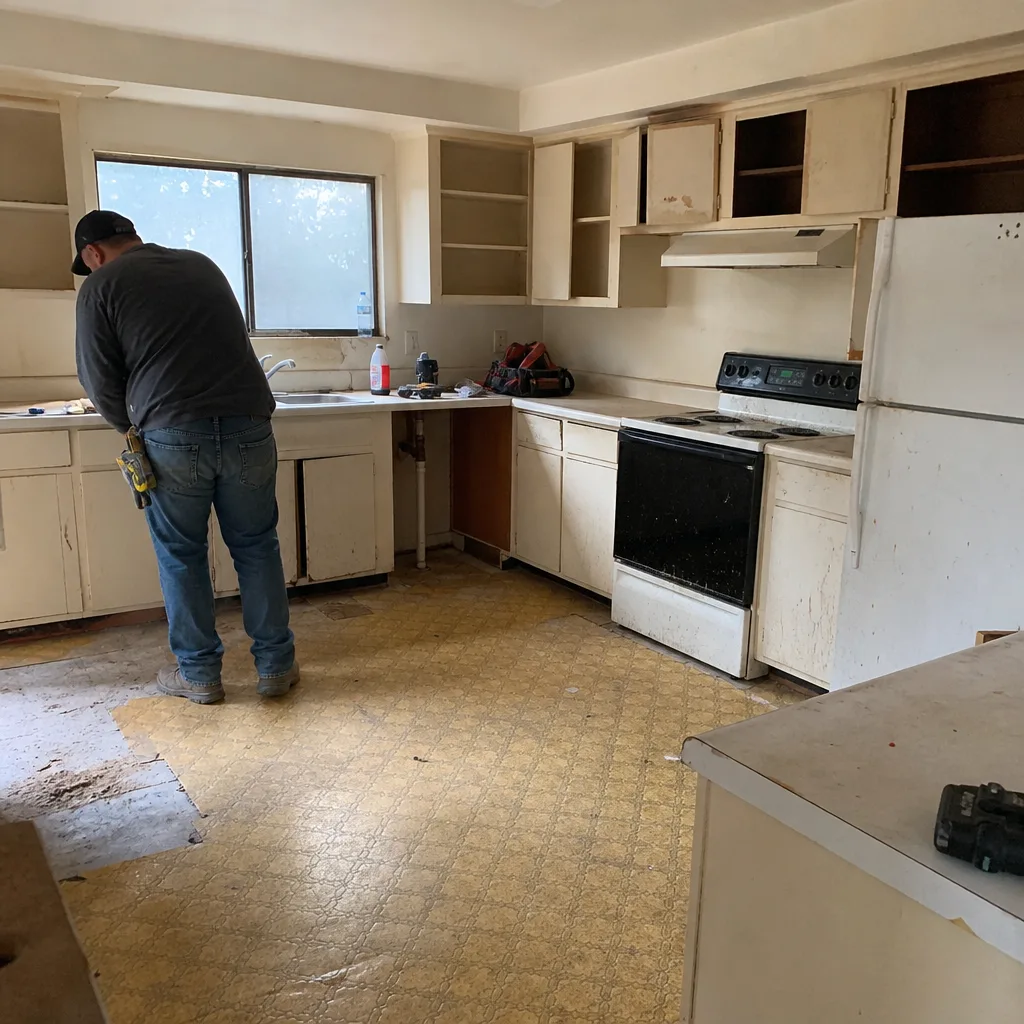 Before
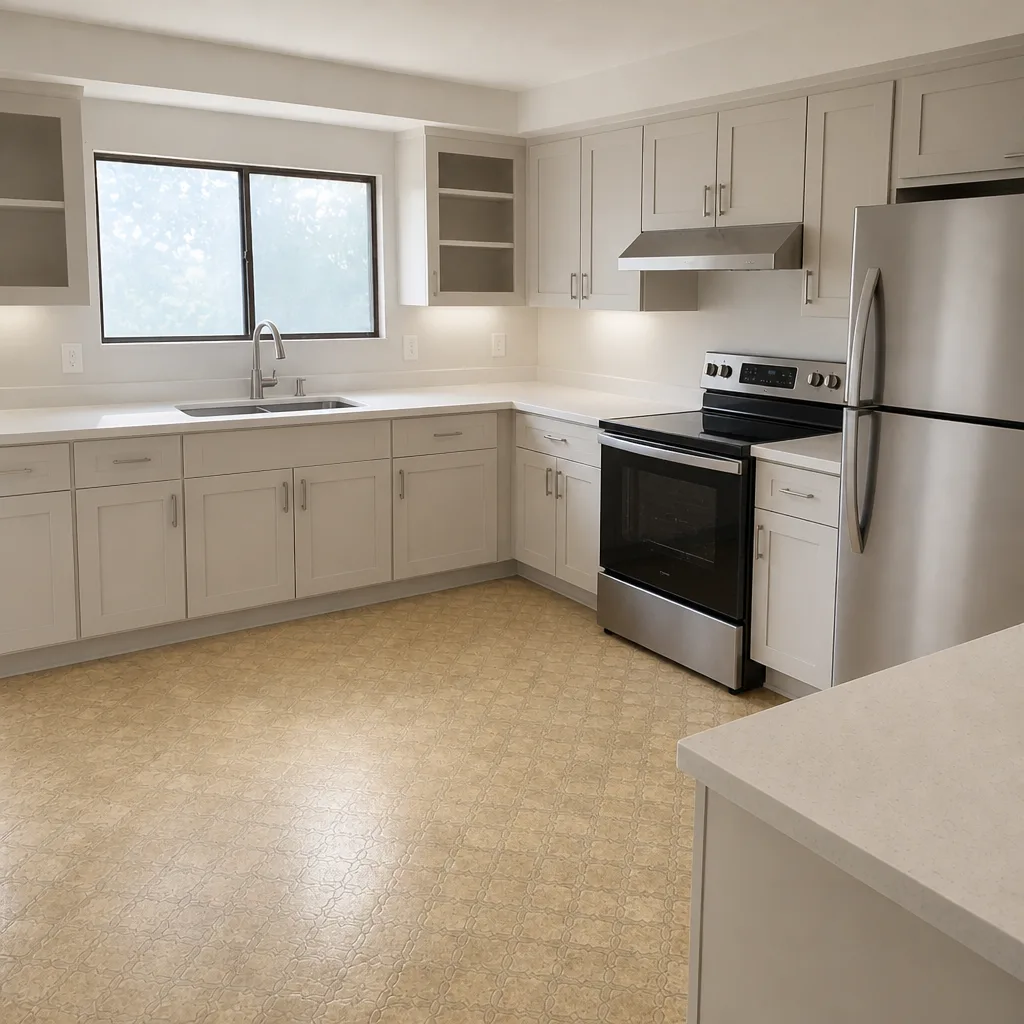 After
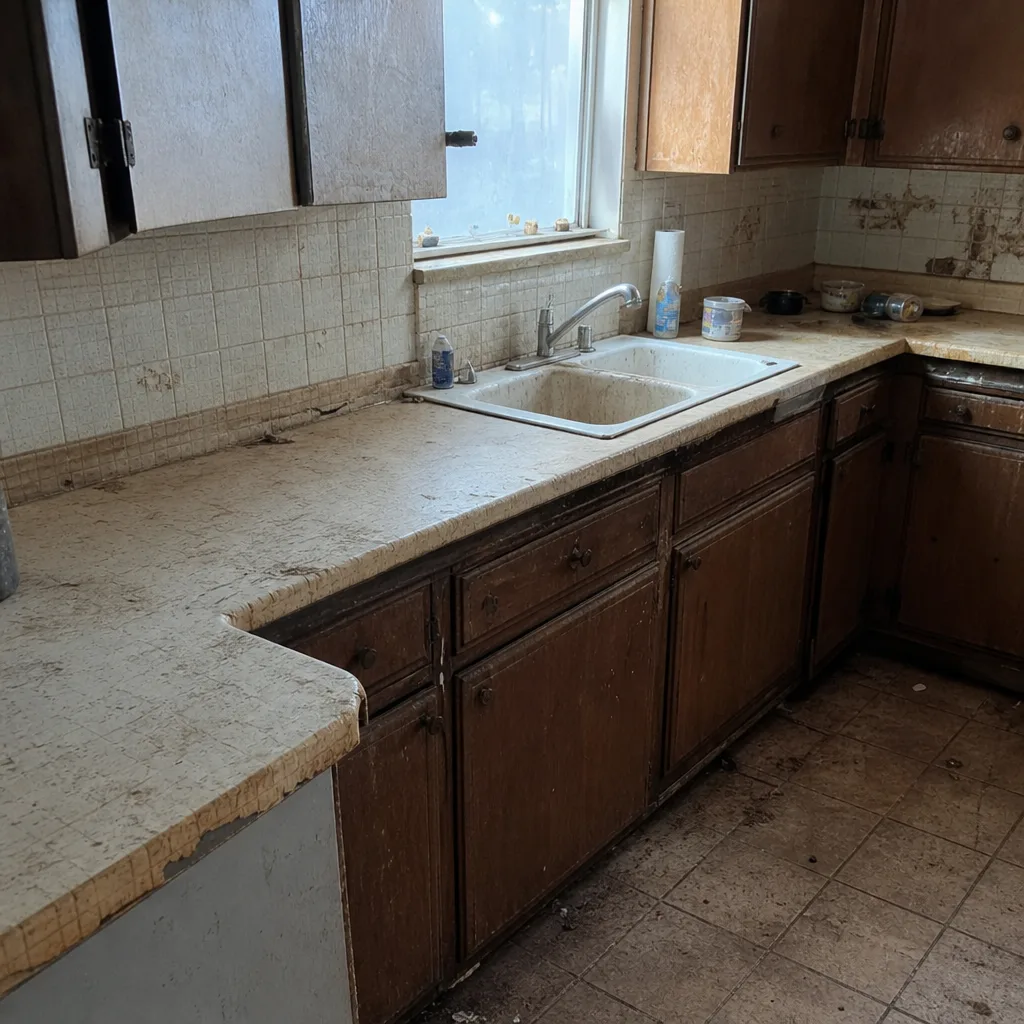 Before
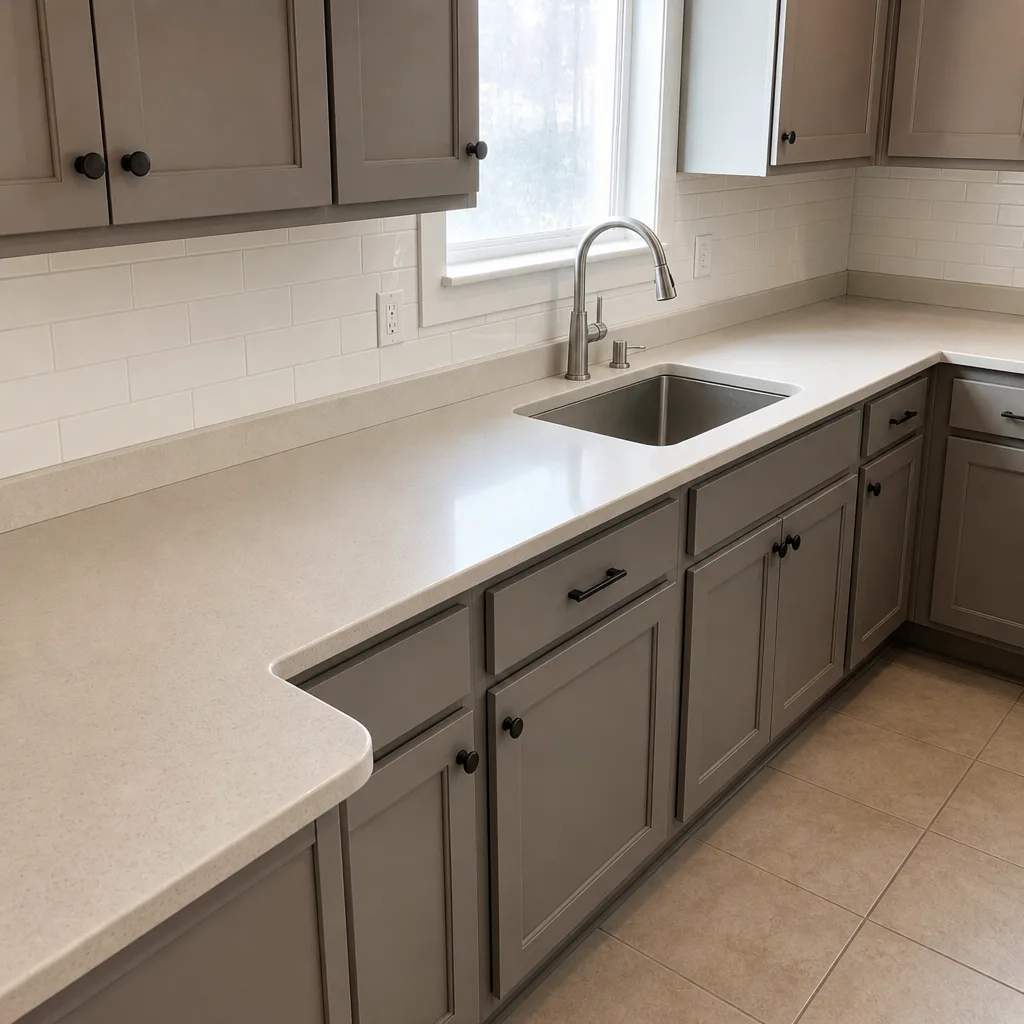 After
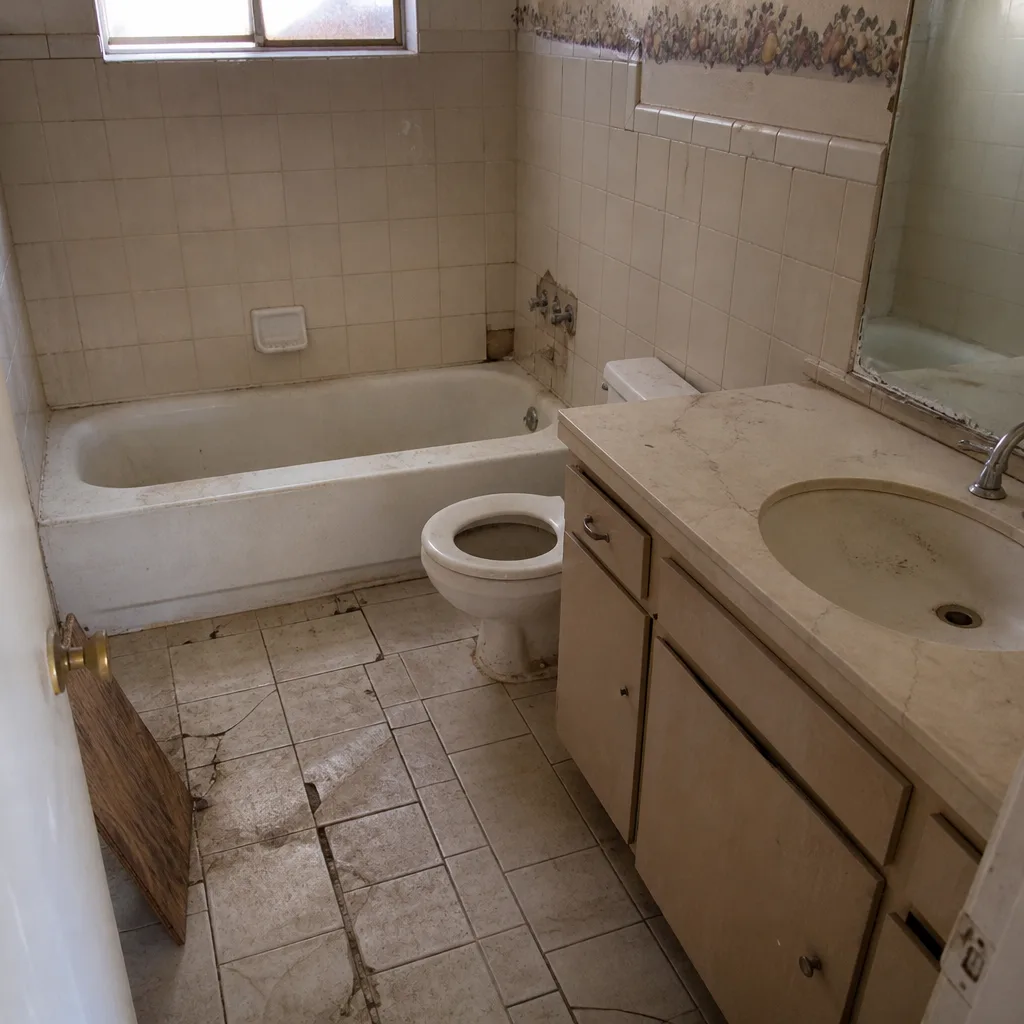 Before
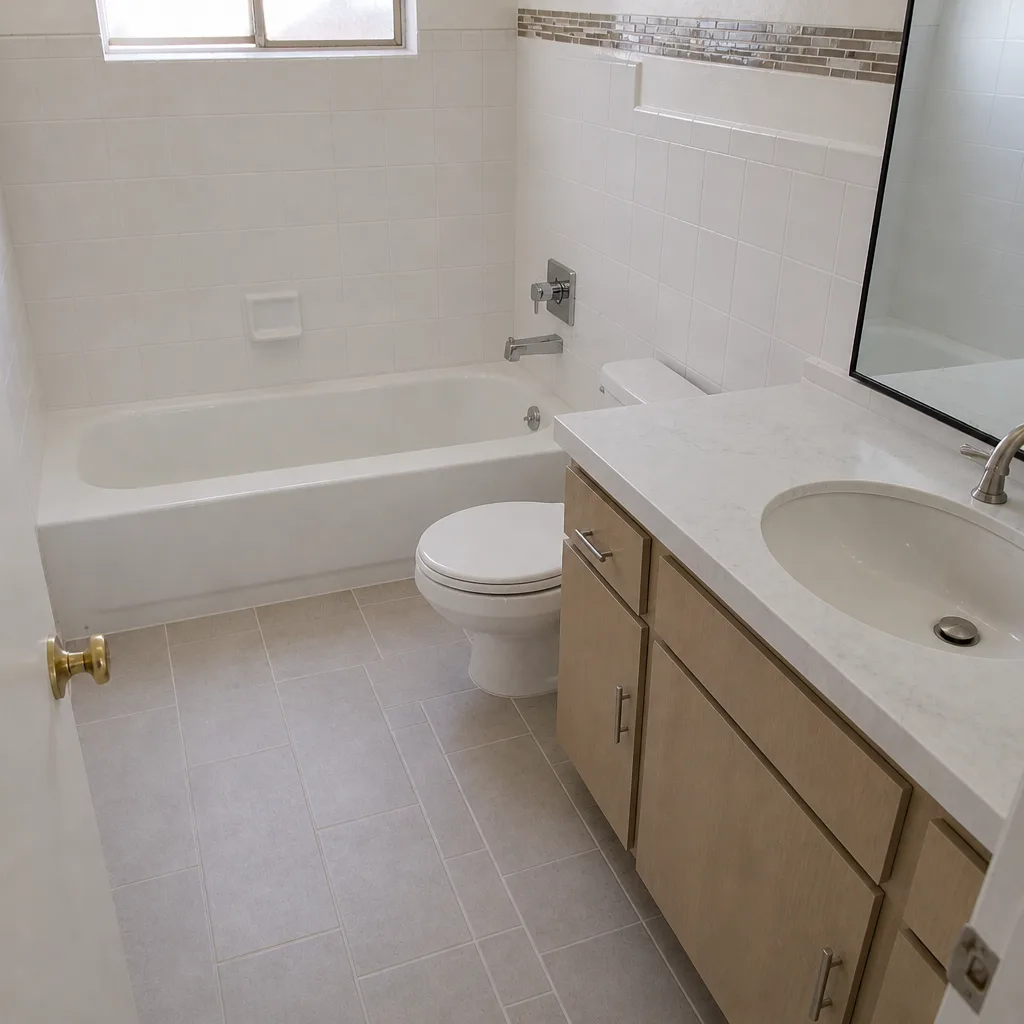 After
When to Call a Professional
Some jobs are genuine maintenance you can handle. Others aren’t. Call us for a free estimate when a defect looks structural – cabinet doors that won’t align even after adjustment, repeated water intrusion, widening grout cracks at a joint. The same goes for anything involving gas connections, electrical wiring, or cabinet refacing and replacement after a water event. Don’t risk live wiring or gas yourself; those need a licensed trade. The local professional we connect you with is licensed and insured as the state requires, and we’ll be straight with you about what the job takes and what it costs before any work starts. If you’re in Boulder City or the surrounding area, Penhallow Remodeling Boulder City offers free estimates – call (844) 834-9740 to schedule yours.
Frequently Asked Questions

Seal grout in wet areas – the backsplash near the sink and kitchen floor tile – once a year, and reseal sooner in high-traffic spots if water stops beading on the surface. Stone and tile around dry zones can stretch to every two years. Keeping grout sealed is the cheapest waterproofing you’ll ever do, and it protects the cement board substrate behind the tile. Call (844) 834-9740 for an exact quote if you’d rather have it done right.
Low desert humidity pulls moisture out of wood, and that shrinkage shows up as small joint separations and doors that drift out of alignment. It’s a climate issue, not a defect, in most cases. Seasonal conditioning and an annual hinge adjustment prevent most of it. If a joint keeps widening, have it looked at before it becomes a repair.
Check caulk lines for shrinkage, every cabinet door and drawer for alignment, grout for hazing and hairline cracks, and all water connections under the sink and behind the fridge for moisture. Document each with a dated photo. This window matters because it’s when a written guarantee gives you the fastest path to a fix if something’s off. Call (844) 834-9740 for a free estimate if anything needs attention.
You can check for obvious moisture and corrosion, but gas line work and any electrical wiring must go to a licensed professional. If you smell gas, leave and call your gas utility right away. Our role is spotting the problem and pointing you to the right trade, not walking you through a repair on a gas appliance.
The guarantee covers workmanship for a full year: if something we installed fails because it wasn’t done right, we return and fix it at no charge, and the return visit is free. Your part is normal upkeep. Keep dated photos of your inspections, report water intrusion immediately, and we handle the rest in writing.
Hairline grout cracks that stay stable and pliable caulk with a thin gap are normal settling, reseal and move on. Crumbling grout, hard cracked caulk, or dark staining and softness at cabinet bases or drywall mean water is getting behind the surface, which is a real failure that needs attention now. Call (844) 834-9740 for an exact quote – estimates are free.
The Bottom Line
A remodeled kitchen stays beautiful when the owner treats the first year as part of the project, not the end of it. Do the day-30 walk, seal grout and recaulk yearly, adjust cabinet hardware once a year, and check the water and gas connections every twelve months. In Boulder City’s dry climate, add a seasonal humidity check on wood. Document with dated photos so your written guarantee can do its job. Our technicians have up to 22 years of experience, and we’ve watched a few hundred kitchens stay new-looking well past year five because of this exact schedule.
Ready to get it right the first time? Penhallow Remodeling Boulder City gives you a written price before any work starts and stands behind it with the 365-Day Done Right Promise. Call (844) 834-9740 for a free estimate – a real person answers, 24/7.
Written by the team at Penhallow Remodeling Boulder City.