Last updated November 18, 2026


Free written scope consultation - allowances, timeline, and change-order rules on paper before a single trade is scheduled
DIY vs Professional Construction: The Boulder City Homeowner’s Decision Guide
Nevada’s contractor licensing law sets a specific dollar threshold below which hiring unlicensed help is legal, and a lot of Boulder City homeowners don’t know that number. The result runs in two directions: people pay professional rates for work they were legally free to do themselves, or they take on unpermitted work that quietly attaches to the home’s title and has to be disclosed at resale. The decision isn’t really about whether you’re handy. It’s about where the permit line falls, what Nevada’s disclosure statute obligates you to reveal, and which Mojave conditions turn a “simple” job into a complicated one. This guide draws those lines for Boulder City homes specifically, with real cost comparisons for tile, drywall, and exterior paint.
Quick Answer
In Boulder City, DIY makes sense for cosmetic work that stays under the permit threshold and doesn’t touch structure, plumbing, gas, or electrical: interior paint, tile over sound substrate, drywall patching, cabinet hardware, fencing under the height limit. Hiring a licensed contractor is the right call the moment a project needs a permit, changes load-bearing structure, moves a gas line, or involves work you’d have to disclose as unpermitted at resale. The dividing line is permits and resale obligations, not confidence.
Styles & brands we work with
- Kitchen remodeling
- Bathroom remodeling
- Home additions & ADU
- Roofing
- Windows & doors
- Driveway & pavers
- Fence
Table of Contents
- What Nevada’s $1,000 Threshold Actually Means
- Which Boulder City Projects Are Genuinely DIY-Safe
- Projects That Look Simple But Aren’t in Desert Construction
- The Resale Disclosure Math Under Nevada Law
- Real Cost Comparison: Tile, Drywall, and Exterior Paint
- How to Scope a Hybrid Project Legally
- Common Mistakes to Avoid
- When to Call a Professional
What Nevada’s $1,000 Threshold Actually Means
Nevada’s contractor licensing rules draw a line at a combined labor-and-materials value of $1,000. Below that figure, a person can legally perform work without holding a contractor’s license; at or above it, the work requires a licensed contractor in the applicable classification. This matters to Boulder City homeowners in two ways.
First, if you’re hiring, the threshold tells you when you’re legally entitled to a licensed, insured, background-checked professional and when a handyman arrangement is permissible. Second, it isn’t a DIY permit. The threshold governs who may perform work for pay; it doesn’t override building permit requirements, which are separate and set by the local authority having jurisdiction. A homeowner can pull certain permits themselves in Boulder City for work on their own primary residence, but the moment structural, gas, plumbing, or electrical changes are on the table, the sequencing and inspection requirements become the real project risk, not the labor cost.
The practical rule we share with homeowners: if the total contract value (labor plus materials) will cross $1,000 and the work is being done for pay by someone else, that person needs to be licensed. If you’re doing it yourself, the threshold is irrelevant, but the permit line is not.
- Under $1,000, paid work: Unlicensed handyman work is generally permissible, subject to permit rules.
- $1,000 and over, paid work: A licensed contractor in the correct classification is required.
- Any value, structural/gas/electrical: Permit and inspection requirements apply independent of dollar value.
Which Boulder City Projects Are Genuinely DIY-Safe
Boulder City’s climate is the single biggest factor in what survives a homeowner’s own hands. Summer highs regularly push past 105°F, humidity is often below 20%, and the swing between day and night can exceed 30 degrees. Materials that cure, set, or expand behave differently here than they do on a coastal YouTube tutorial.
Genuinely DIY-appropriate work in a Boulder City home tends to be:
- Interior paint on properly prepped drywall (not exterior, and not over failing stucco).
- Tile backsplash or floor tile over sound, flat substrate, using a modified thinset rated for the temperature swings.
- Drywall patching on non-structural walls, using setting-type compound rather than pre-mixed in low-humidity conditions.
- Cabinet hardware, lighting swaps on existing switched circuits, and interior door and trim replacement.
- Fencing under the local height threshold, using pre-finished composite panels from a line like Bufftech or ActiveYards rather than wood that will check and split in the sun.
What we’ve seen in Boulder City is that the same homeowner who installs a flawless backsplash will underestimate a stucco patch on a south-facing wall, where the surface can reach 150°F and any patch mix that cures too fast will crack within weeks. Climate competence is the real dividing line.
Projects That Look Simple But Aren’t in Desert Construction
Some jobs read as weekend projects and turn into permit-and-structure problems specific to Mojave conditions. If you’re hiring, your contractor should be licensed and insured as their state requires and equipped to pull the permits and pass the inspections. The following are the ones we see homeowners regret:
- Removing a wall in a 1940s or 1950s Boulder City ranch home. Plenty of these older homes use non-standard framing, and what looks like a clean partition sometimes carries a load path. Structural changes require a permit and often a stamped drawing.
- Enclosing a patio or adding a room. Desert solar gain and 100°F-plus summer heat demand the right insulation values and shading, plus permits, slab considerations, and window ratings. Poorly executed enclosures become ovens.
- Repointing or repairing stucco and masonry. Fast-curing patches on sun-baked walls fail without proper curing and a compatible mix. This is where DIY repair cracks again in the first season.
- Patio covers and shade structures. Desert UV and wind loading mean attachment points and anchoring matter far more than the design suggests, and most require a permit.
- Roof repairs and flashing. Walking a roof in 110°F heat is a genuine fall and heat-illness hazard. Roof work is a trained-professional job, not a ladder weekend.
For the highest-risk categories (garage-door springs and cables, electrical panel and wiring work, gas line work, and steep-roof or height work), we recommend stopping at assessment. Do not attempt these yourself. A licensed electrician or plumber is the right call for anything that carries live current or gas, and the cost of a service call is trivial next to a serious injury.
The Resale Disclosure Math Under Nevada Law
Nevada’s residential disclosure statute requires a seller to provide a written disclosure of known material defects before closing. A permit pulled and inspected is not a defect. Unpermitted work that doesn’t meet code is, and it can follow you. This is the resale math most Boulder City homeowners miss.
Think of it this way. You finish a kitchen for $22,000 without permits. Five years later, a buyer’s inspector flags that the electrical was moved, the range hood vented improperly, and the countertop outlets were added without a dedicated circuit. The buyer now has leverage: either the buyer walks, or you concede a credit. A $6,000 – $12,000 credit on a Boulder City home sale is not unusual in that scenario, and it’s on top of what you already spent.
- Permitted work: passes inspection, becomes a selling point, requires no disclosure correction.
- Unpermitted, code-compliant cosmetic work: usually fine, but document it and disclose honestly if asked.
- Unpermitted structural, gas, or electrical work: a real disclosure obligation and a real negotiation liability.
The math favors permits for anything that touches the bones of a Boulder City home. It also favors written contracts: a written price before any work starts and a written guarantee are the two pieces of paper that protect you if the work ever needs to be defended.
Real Cost Comparison: Tile, Drywall, and Exterior Paint
Here’s where the DIY-vs-hire decision gets concrete. Below is an honest all-in comparison for three common Boulder City projects, including tools, materials, and the mistakes a first-timer typically eats. Professional ranges reflect a written quote from a licensed contractor.
- Backsplash tile (approx. 35 sq ft): DIY all-in $400 – $750 including a wet saw rental or purchase, modified thinset, trowel, spacers, grout, and a first-attempt waste allowance. Professional written quote $650 – $1,200. The DIY savings shrink fast if the substrate needs prep or the first layout is off.
- Drywall patch (two walls, small holes): DIY all-in $60 – $120 in materials. Professional $200 – $450. This is the clearest DIY win in the house unless the hole is larger than 16 inches or the wall is load-bearing.
- Exterior paint (single-story, 1,600 – 2,000 sq ft): DIY all-in $1,200 – $2,200 including elastomeric paint, primer, sprayer, masking, and patch materials. Professional $3,000 – $6,500. The DIY number assumes a sound stucco substrate. In Boulder City, a sprayer on 105°F stucco can flash-dry and leave a stipple finish, which is the mistake that costs you the savings.
Notice the pattern: drywall is a real DIY win, tile is a coin flip, and exterior paint is where climate punishes inexperience. That’s not because skill level differs so much between them; it’s because the desert environment is unforgiving of the wrong technique in ways that show up within weeks.
How to Scope a Hybrid Project Legally
Most Boulder City remodels don’t need to be all-or-nothing. There’s a legal and practical way to split the labor so you keep the parts you can do safely and hand off the parts that carry permit or structural exposure. If you’re weighing a larger project, the Kitchen Remodeling in Boulder City page walks through how a typical scope gets divided.
- Pull the permits first. The permit establishes who inspects what. If you’re pulling as owner-builder, confirm in writing which inspections you’re responsible for.
- Set the mechanical line. Electrical, plumbing, and gas belong to licensed trades. Cabinet installation, tile, paint, and trim are usually fair homeowner territory.
- Get a written scope from your contractor. A written price before any work starts, covering the parts you’re handing off, with a stated arrival window and a written guarantee, is the standard to hold. Penhallow operates under The Kingswell Way: say the price before the work, show up in the window we gave, leave the place cleaner than we found it.
- Document the split. Keep a record of what was permitted, what was inspected, and what was owner-performed. This matters at resale.
For a bathroom project, the same logic applies: the Bathroom Remodeling in Boulder City page covers the plumbing and shower waterproofing boundaries where owner-work rarely holds up. And for anything crossing into a full structural change, a General Contractor in Boulder City is the correct starting point, not the last resort.
Common Mistakes to Avoid
- Treating the $1,000 threshold as a permit exemption. They’re separate rules. You can legally hire at $999 and still need a permit for structural work.
- Painting a south-facing Boulder City wall at midday. Stucco can hit 150°F and the coating flash-dries, stipples, or peels. Work the shaded side first.
- Skipping the moisture barrier on a tile install. Cement board substrate (the moisture-resistant layer behind your tile) is the difference between a ten-year floor and a toilet that rocks loose in two.
- Buying the cheapest exterior stain or paint and assuming it’s desert-rated. UV here is brutal. A recognized trade brand with a real warranty is the cheaper choice over the life of the home.
- Not documenting DIY work that touches systems. If it has to be disclosed at resale, you’ll want clean photos, receipts, and a permit history.
- Hiring the lowest verbal bid. A number that changes after demo day is not a price. Insist on a written quote before work starts.
- DIY-ing anything above a single-story roofline or near live electrical or gas. This is a trained-professional job, full stop.
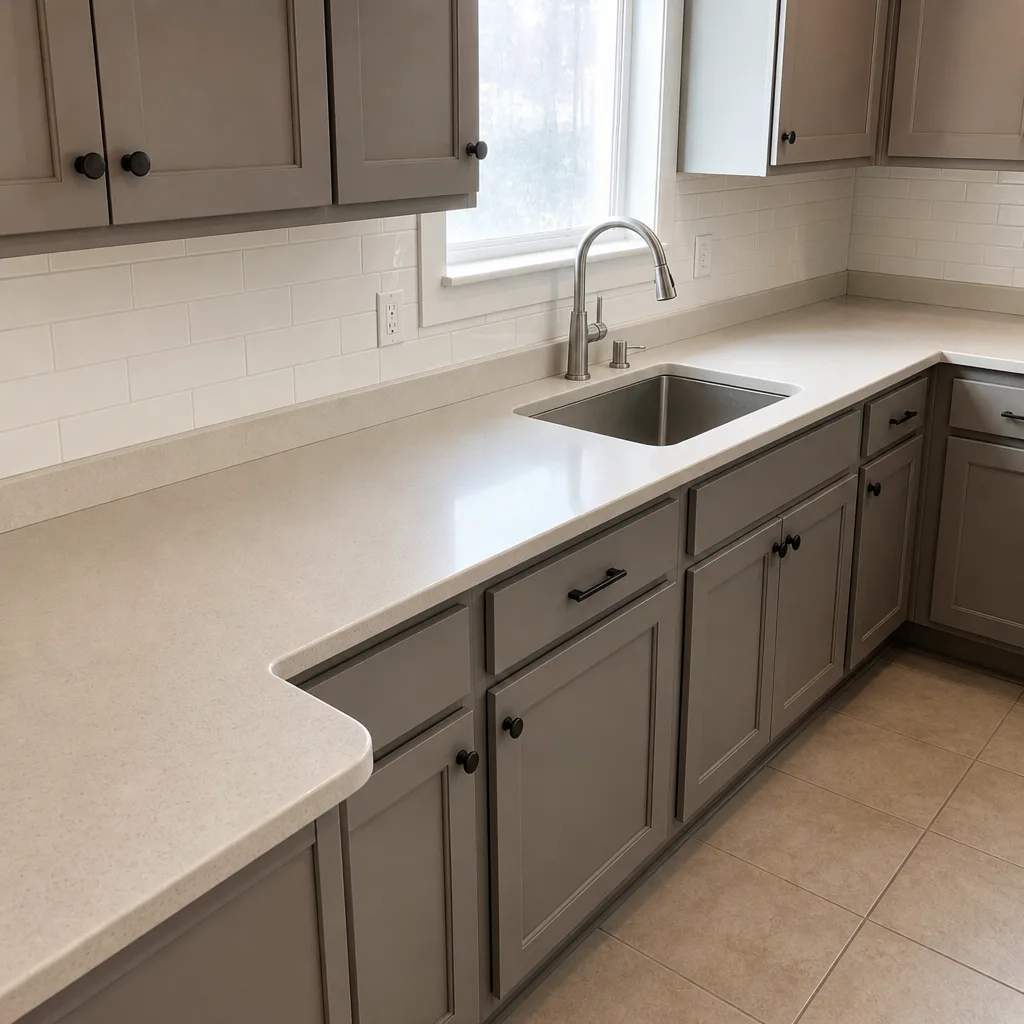
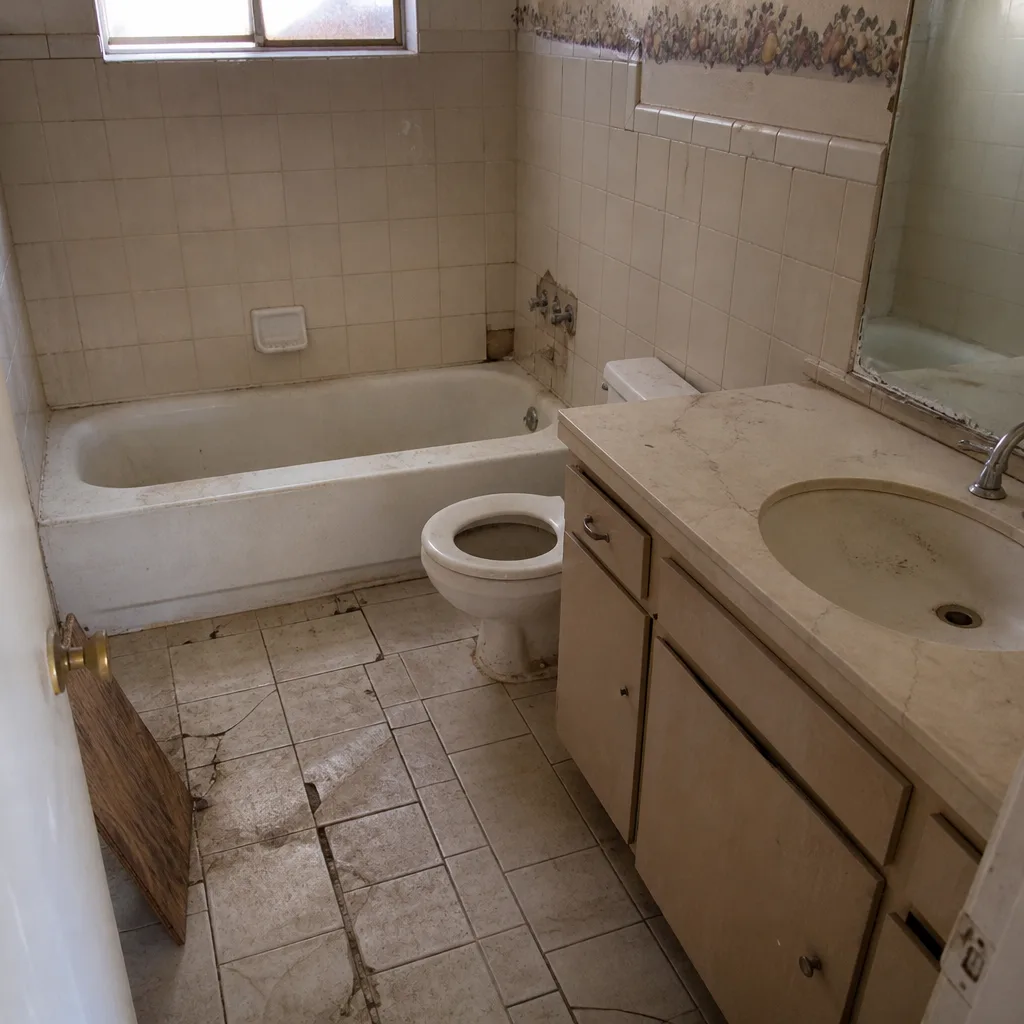
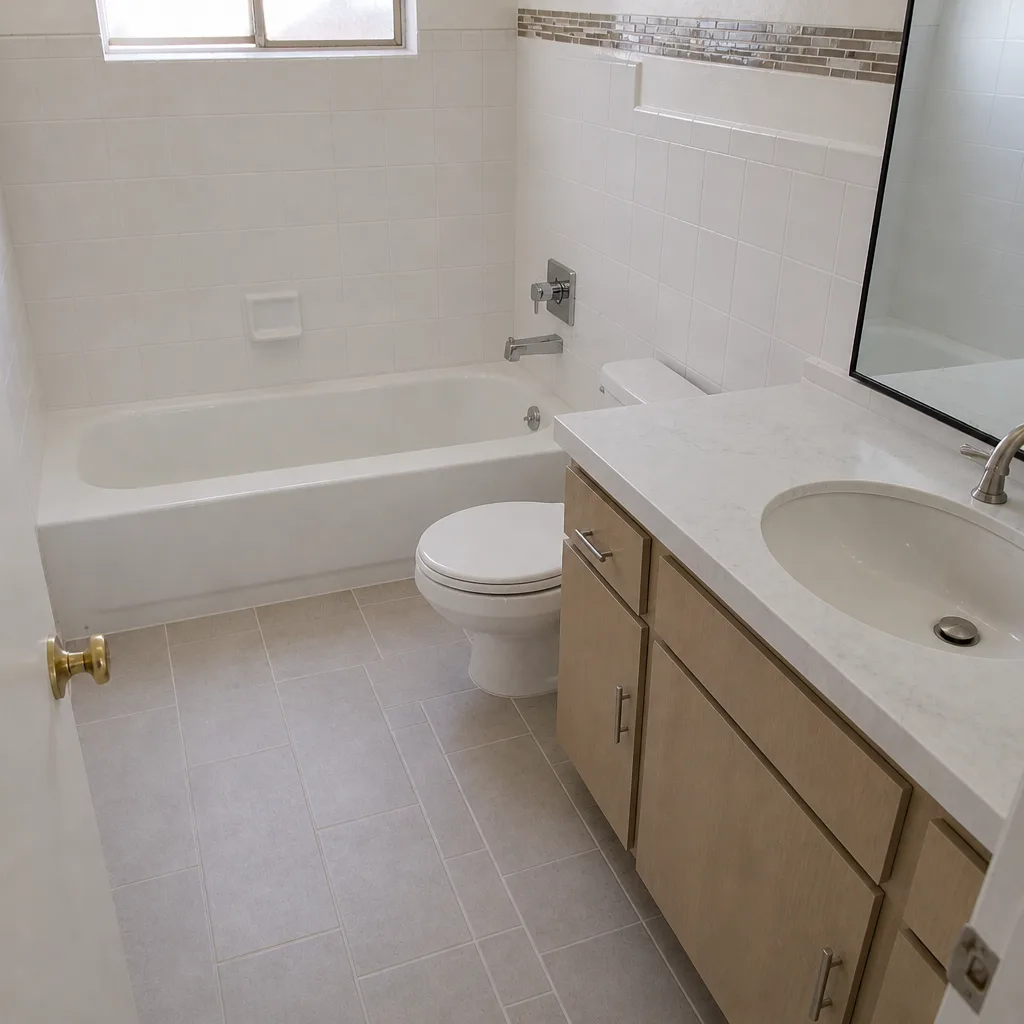
See the difference
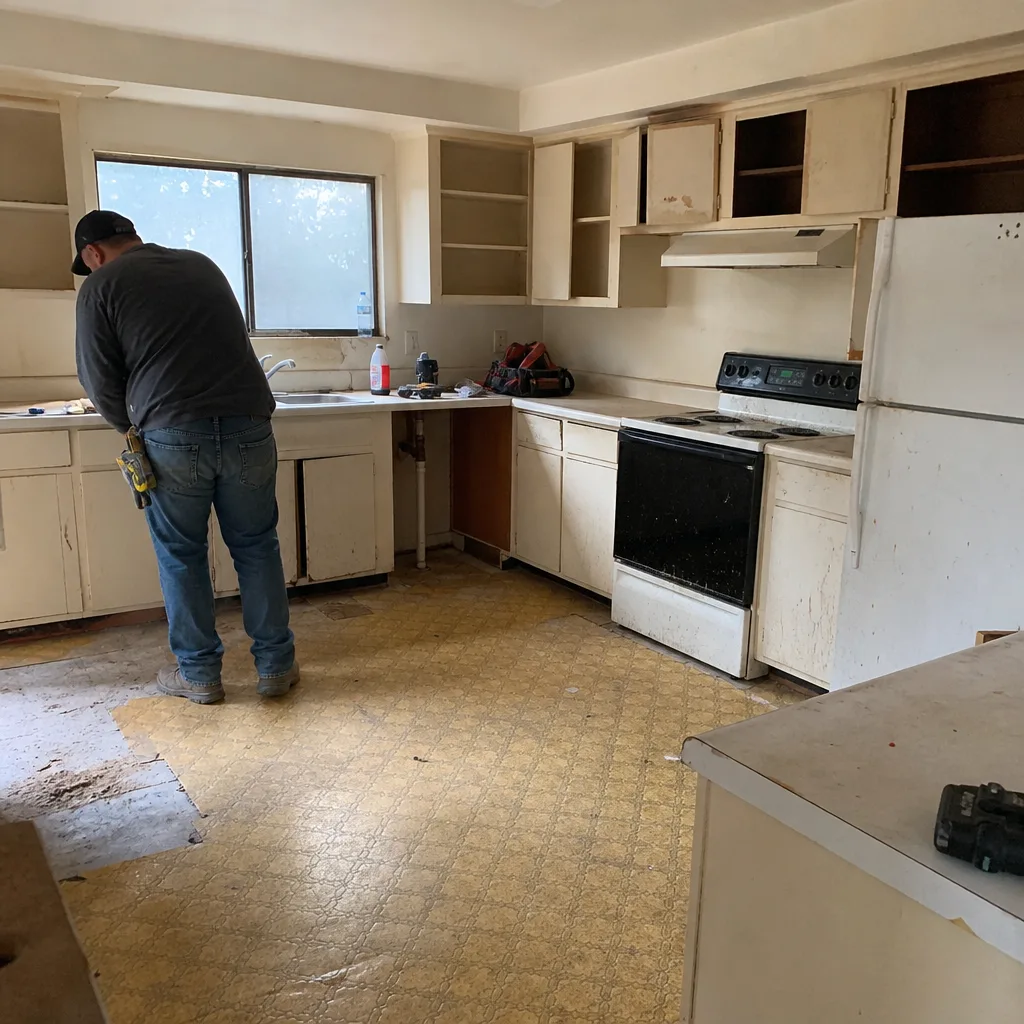 Before
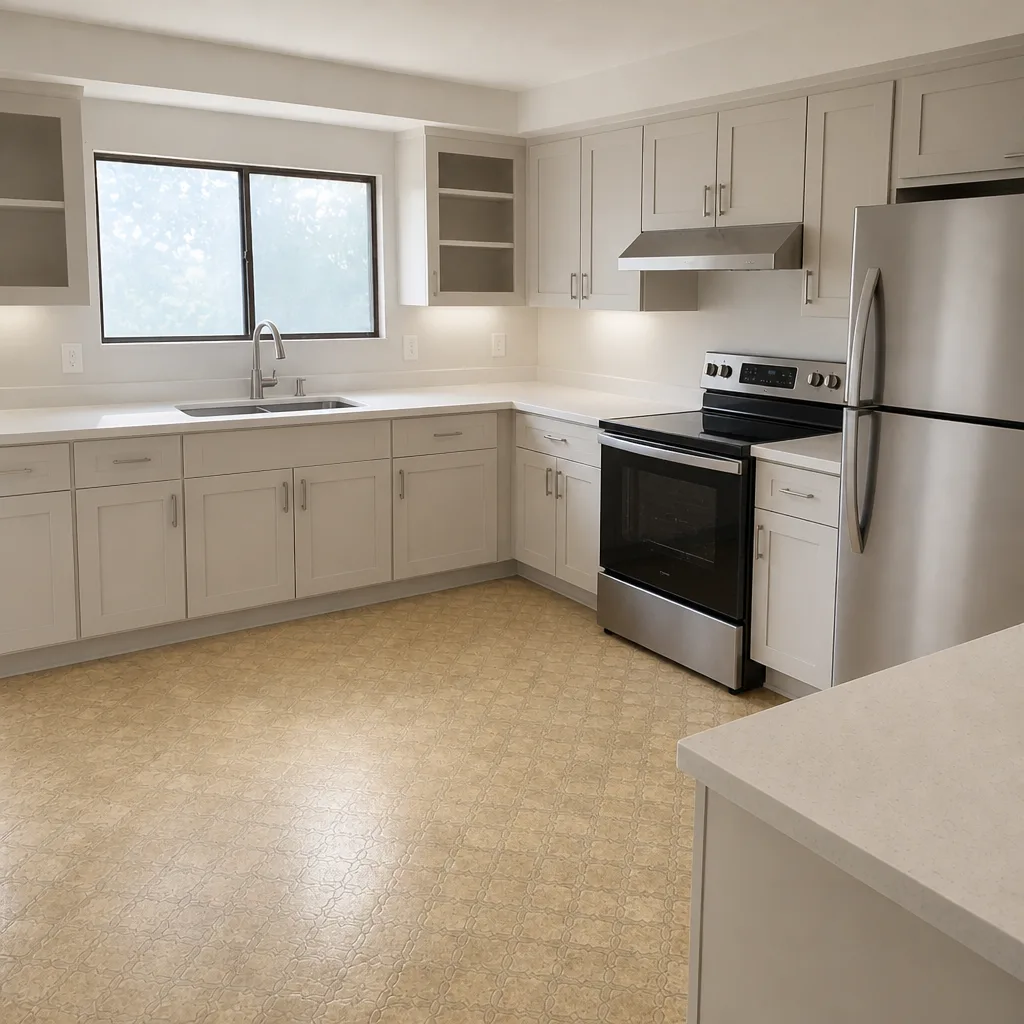 After
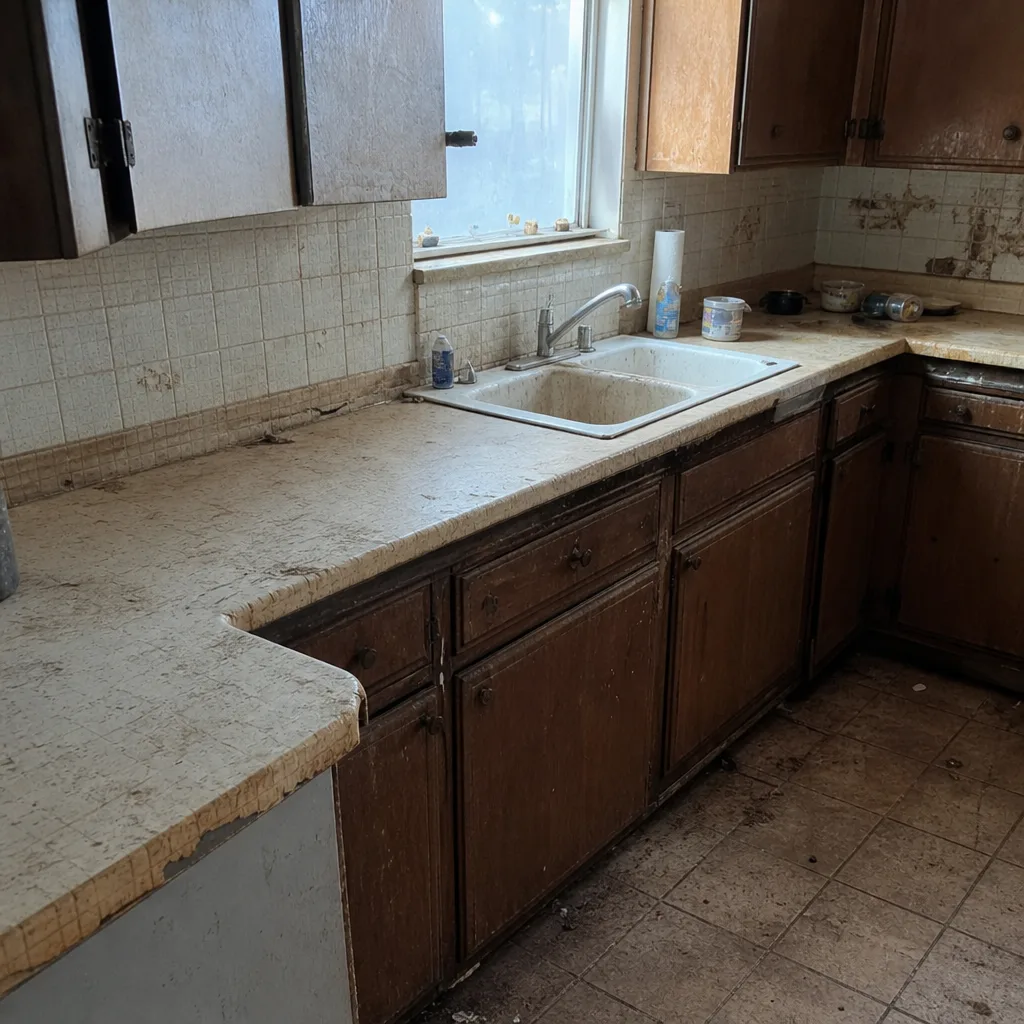 Before
 After
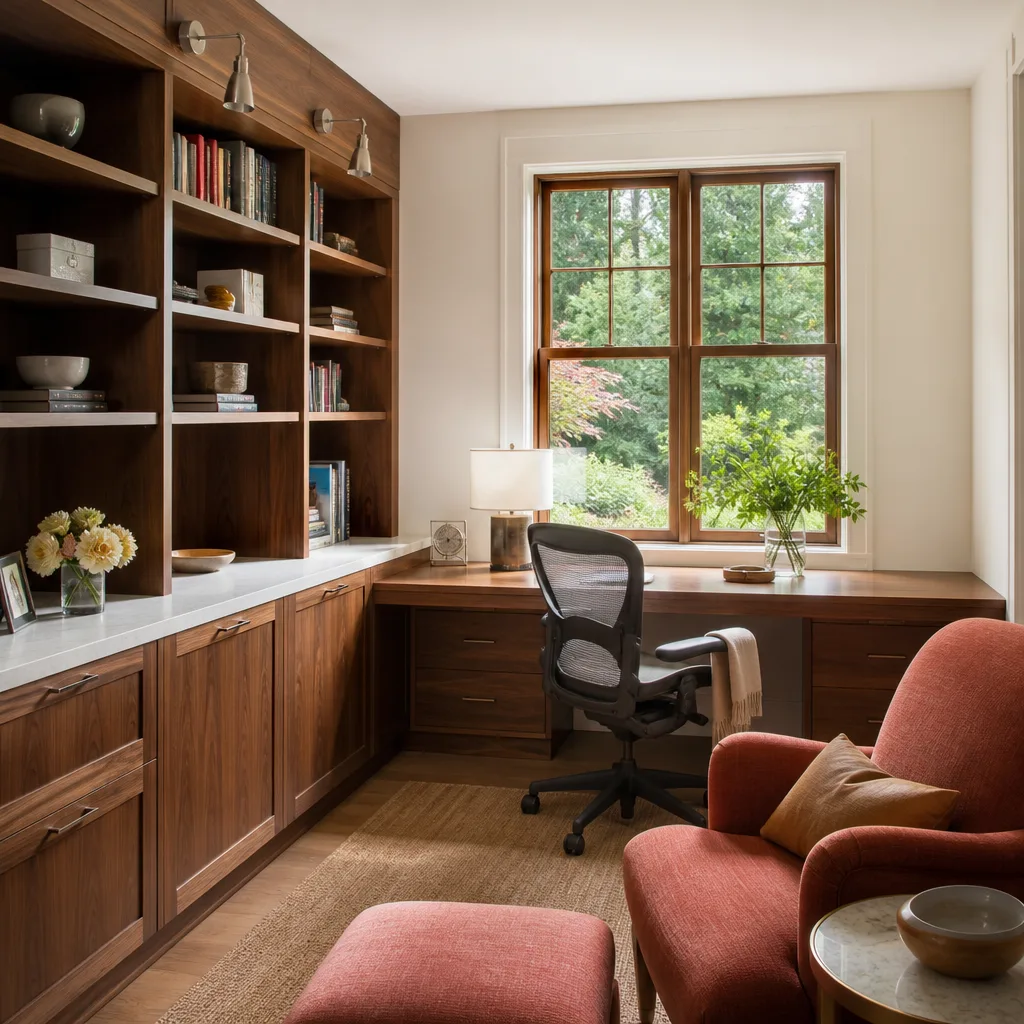
 Before
 After
When to Call a Professional
Call a licensed professional when the work crosses a permit threshold, changes structure, involves gas, electrical, plumbing, or roofing, or adds square footage. Call also when a DIY repair has already failed once, since repeating the mistake costs more than the original quote. If you’re selling your Boulder City home in the next two years, plan to permit any work that will be inspected or disclosed. In our experience, the homeowner who calls early spends less than the homeowner who calls after a failed attempt. Penhallow Remodeling Boulder City offers free estimates in Boulder City, with a written price before any work starts and the 365-Day Done Right Promise in writing. Call (844) 834-9740.
Frequently Asked Questions
No. Nevada’s $1,000 combined labor-and-materials threshold means paid work below that value doesn’t require a licensed contractor. A permit may still be required for the work itself, especially if it touches structure, gas, or electrical. Call (844) 834-9740 if you want a free estimate to check your scope against the threshold.
You can legally perform certain work on your own primary residence, but we don’t recommend it. Electrical and plumbing mistakes in a home are hazards, not just inconveniences, and the permit and inspection pathway is built for licensed trades. The cost of a service call is small next to the risk of an electrical fire or a slow leak behind a wall.
Yes, it can. Nevada’s disclosure statute requires you to disclose known material defects, and unpermitted structural, gas, or electrical work is often a negotiation point at resale. Buyers and their inspectors will find it, and a credit in the thousands is common. Pull the permits on anything that touches the bones of the home.
Heat and low humidity, applied to the wrong technique. Stucco patching, exterior paint, and tile mortar all behave differently at 105°F and 15% humidity than they do in a moderated climate. The failure shows up in weeks, not years, and the correction costs more than the original job.
A backsplash tile job typically runs $650 – $1,200 for a written professional quote; exterior paint on a single-story home runs roughly $3,000 – $6,500. Material, square footage, surface condition, and prep drive the number. Call (844) 834-9740 for an exact written quote; estimates are free.
Yes. The local pro we connect you with is licensed and insured as their state requires, and permits are pulled and inspections passed as part of the scope. It’s part of the written quote before work starts, and part of what protects your resale disclosure position. Call (844) 834-9740 to walk through the permit requirements for your project.
The Bottom Line
The DIY-vs-hire choice in Boulder City comes down to three questions. Is the work crossing Nevada’s $1,000 combined labor-and-materials threshold for paid help? Does it require a permit, or touch structure, gas, electrical, plumbing, or roofing? Will it show up in your resale disclosure if it goes unpermitted? Answer those, and the decision is usually clear: cosmetic, non-permitted work over sound substrate is fair game; anything structural or mechanical is professional territory, and the desert climate punishes the wrong technique faster than most homeowners expect. The other piece is paper: a written price before any work starts, a stated arrival window, and a written guarantee. If your contractor won’t hand those to you up front, walk away.
To get a free, written estimate for your Boulder City project, call Penhallow Remodeling at (844) 834-9740. Our technicians have up to 22 years of experience, arrive background-checked and in uniform, and every project is backed by our 365-Day Done Right Promise. Still mapping out your full plan? Start at the Penhallow Remodeling Boulder City home page for the overview of what we do.
Written by the team at Penhallow Remodeling Boulder City.