Free written scope consultation - allowances, timeline, and change-order rules on paper before a single trade is scheduled
Styles & brands we work with
- Kitchen remodeling
- Bathroom remodeling
- Home additions & ADU
- Roofing
- Windows & doors
- Driveway & pavers
- Fence
See the difference
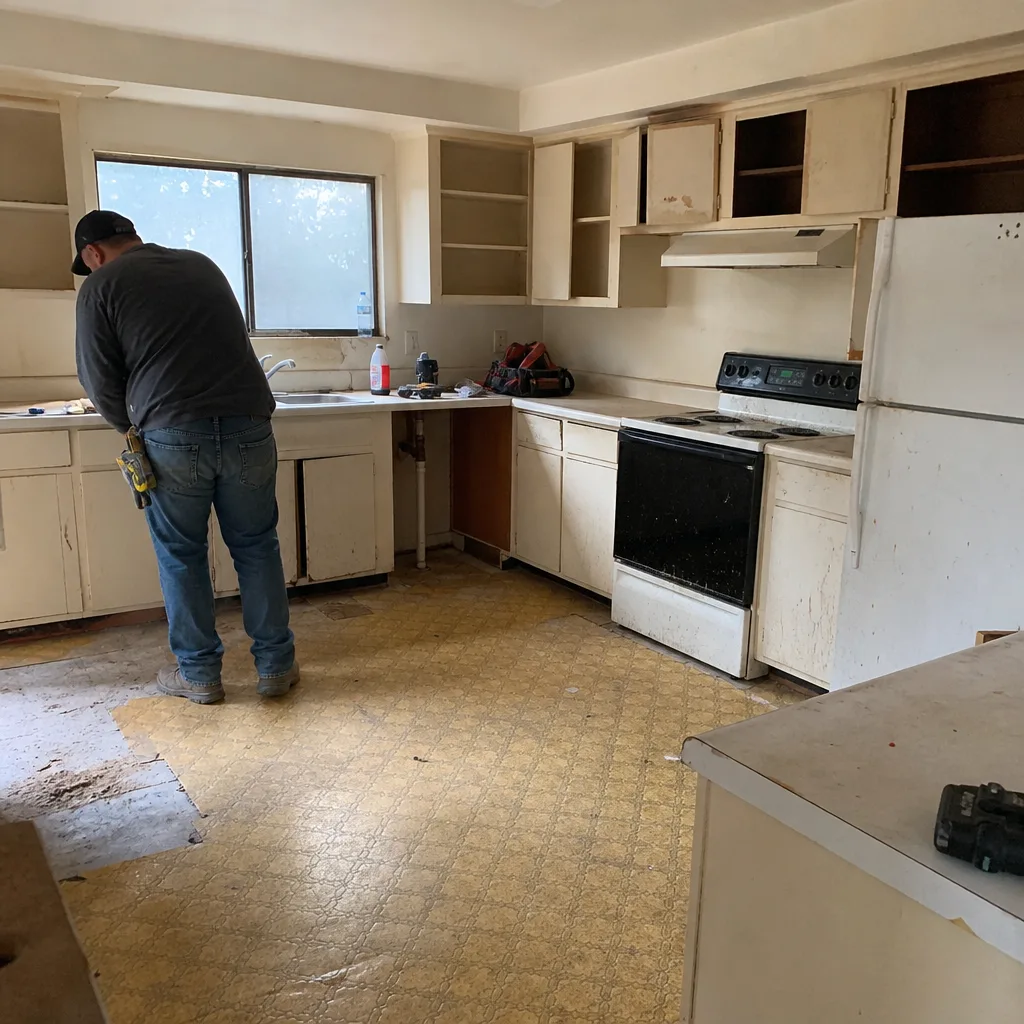 Before
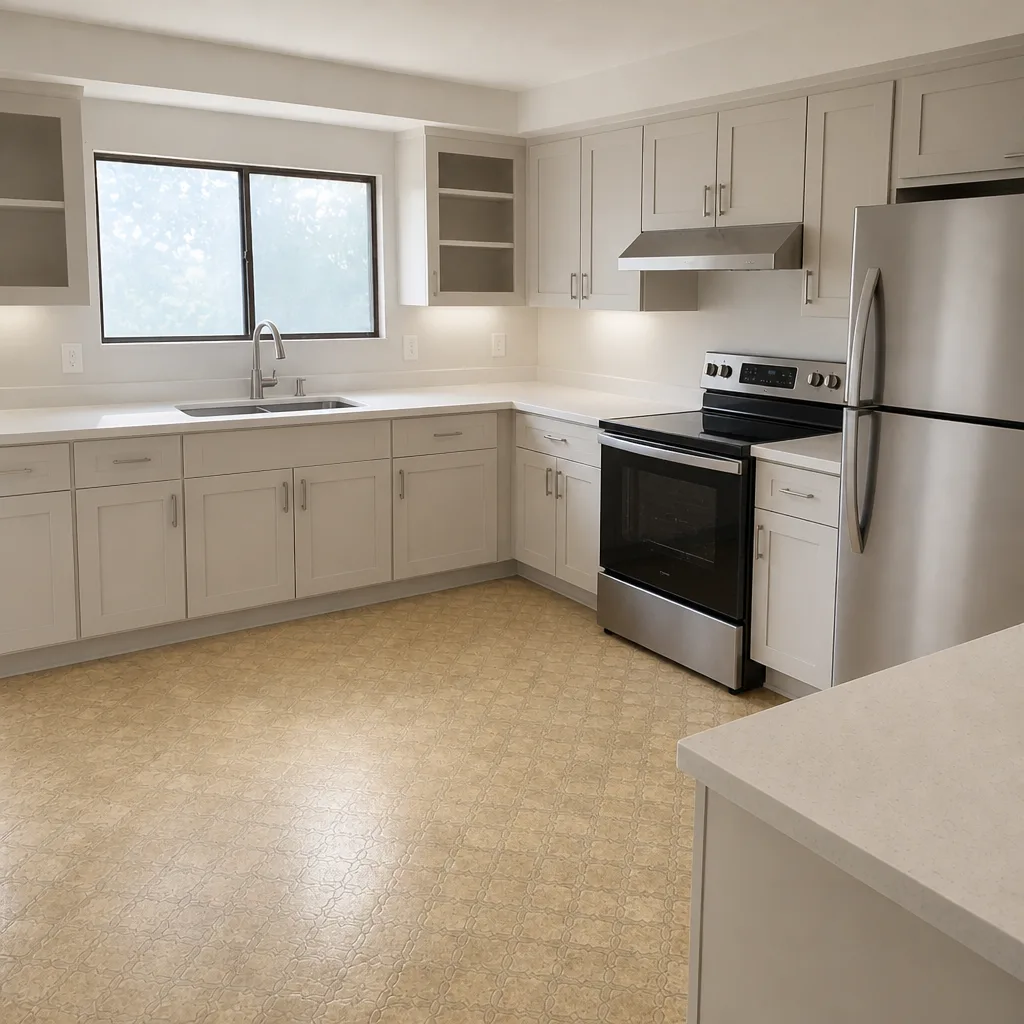 After
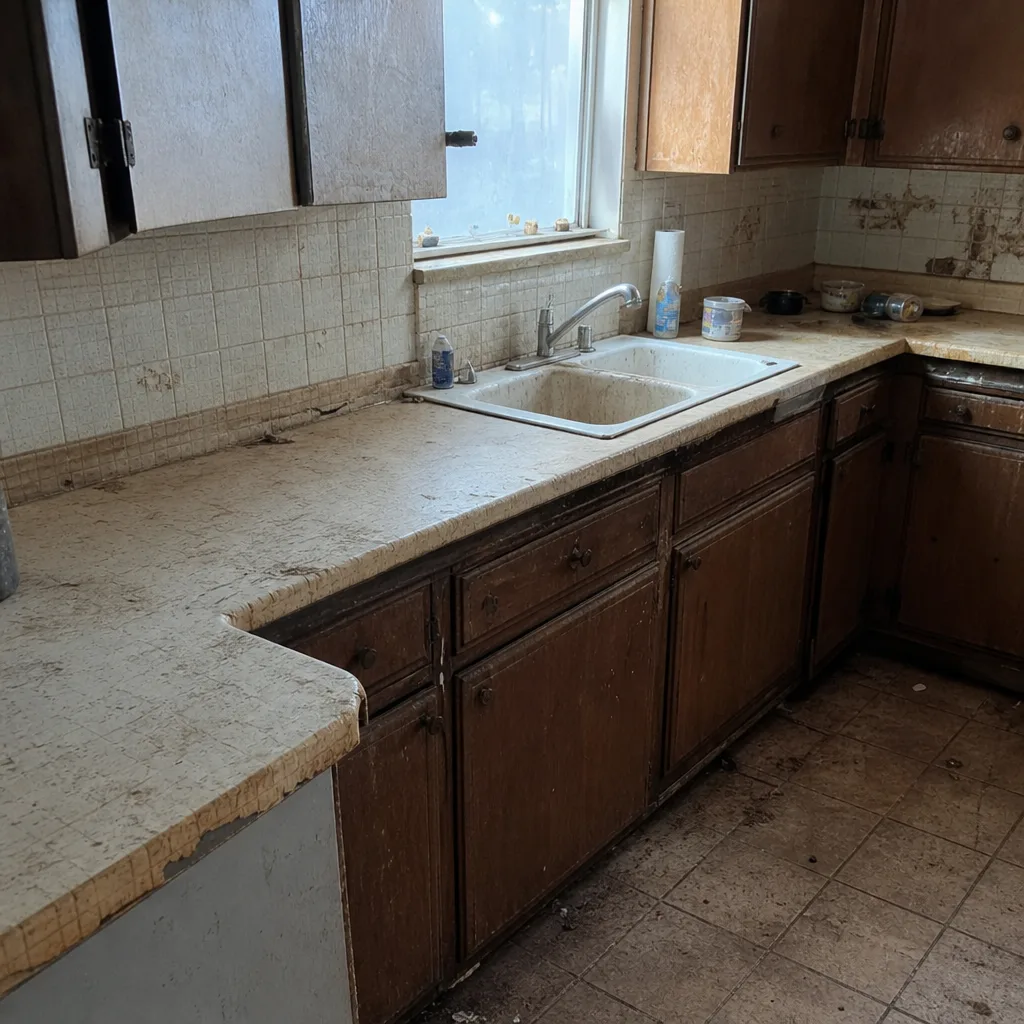 Before
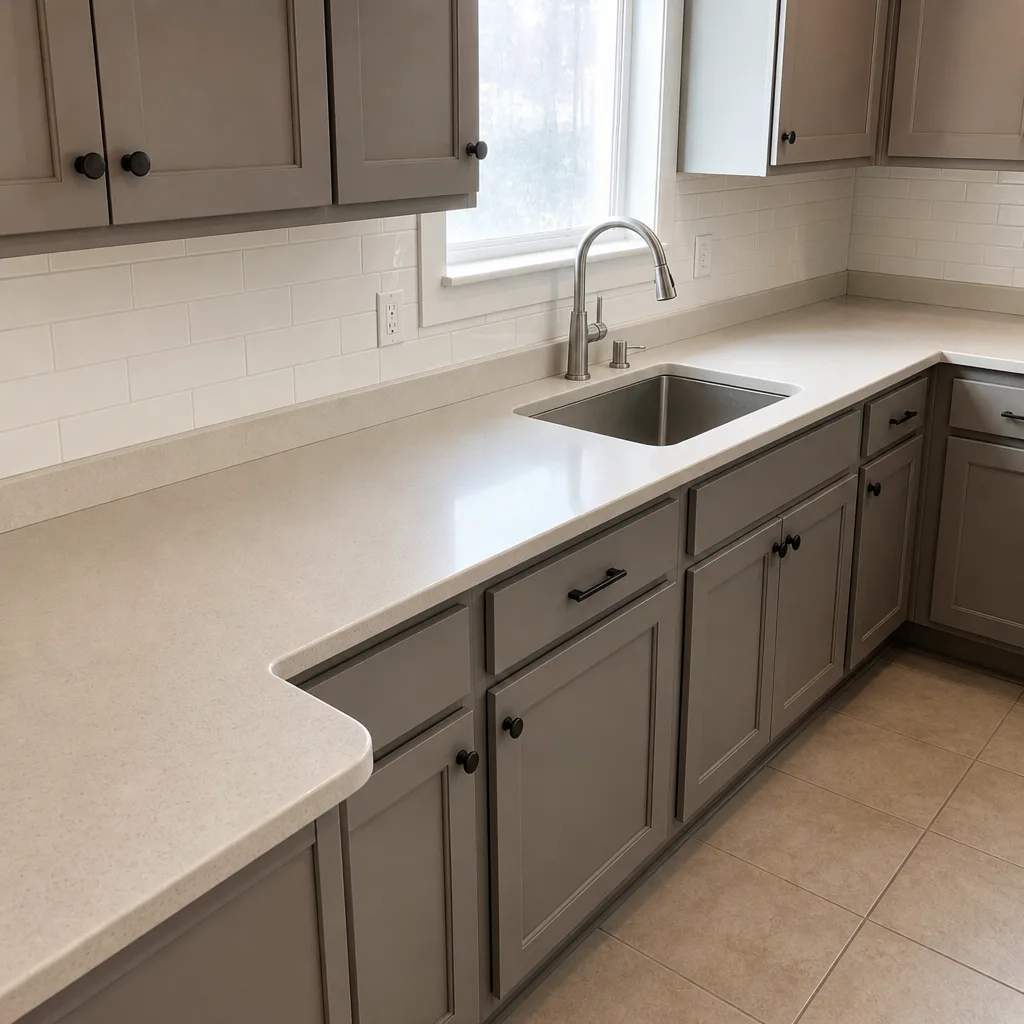 After
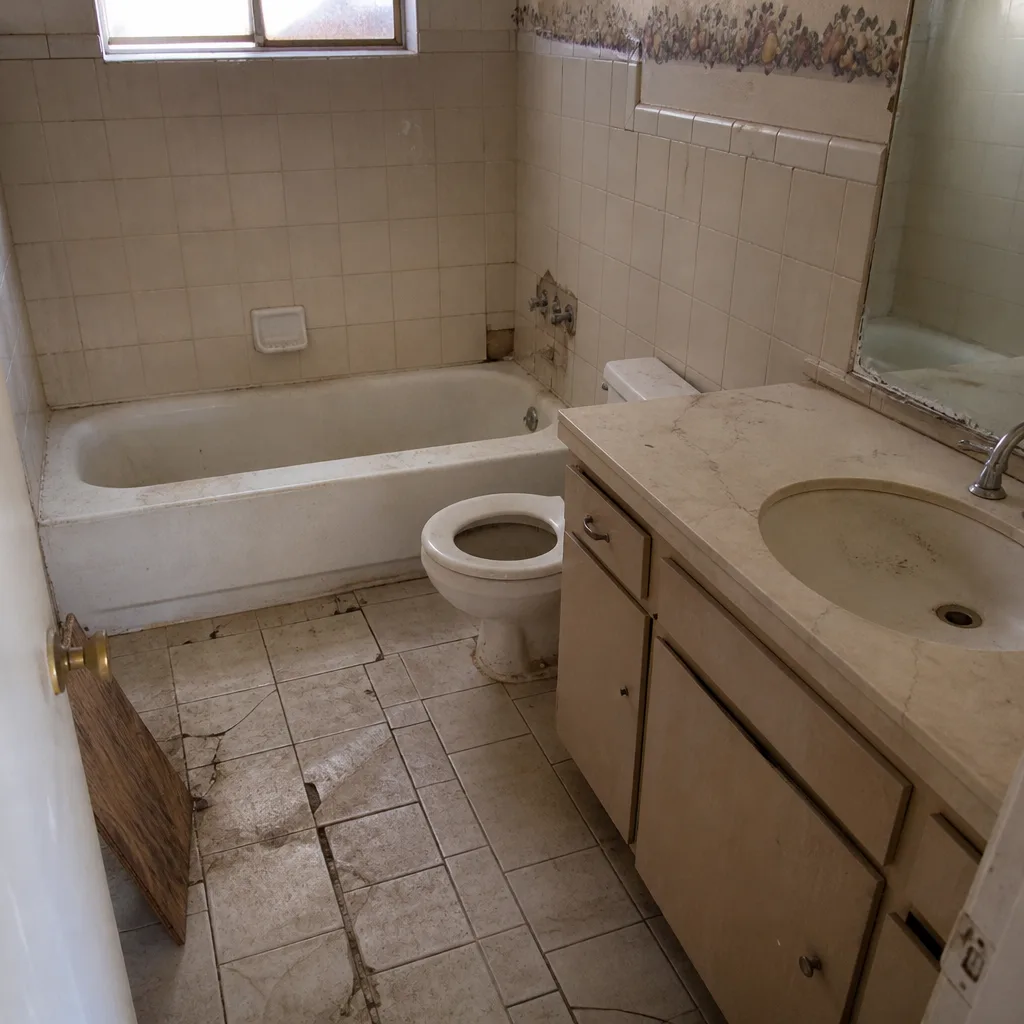 Before
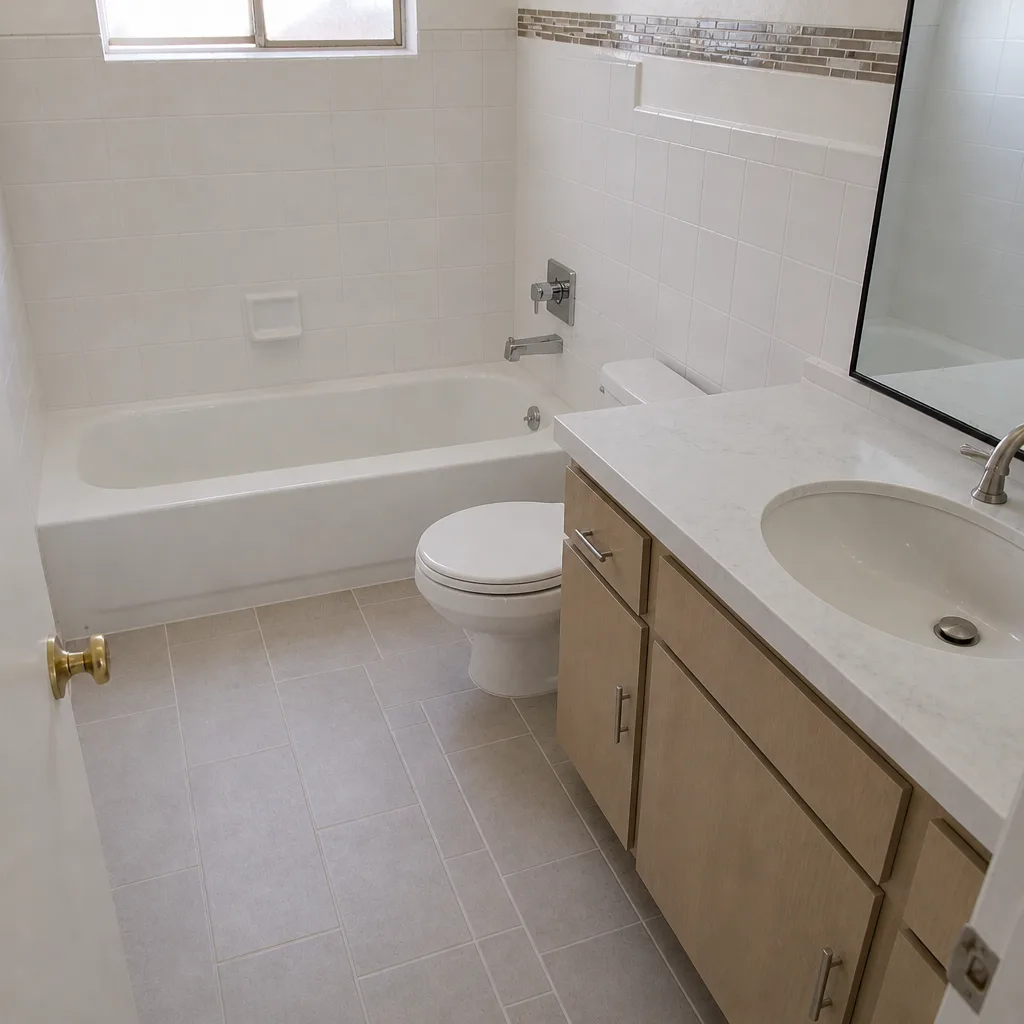 After
For most Boulder City kitchens, we recommend porcelain tile over luxury vinyl plank – but only after a moisture test on the slab and a realistic leveling number in writing. Tile is the safer bet in the historic core’s 1930s poured-concrete Dam bungalows, where summer heat pushes 105°F and monsoon humidity spikes hard. Vinyl plank can work beautifully in a properly prepped Boulder City kitchen – and we’ll tell you when it’s the right call. Call (844) 834-9740 for a free written estimate.
Why the Usual Tile vs Vinyl Plank Advice Doesn’t Fit Boulder City
Most tile-vs-vinyl guides assume a plywood subfloor nailed to wood joists. That’s a reasonable assumption in a Henderson tract home built in 2004. It’s the wrong assumption in Boulder City, where the historic core is dominated by 1931-1935 Bureau of Reclamation “Dam” bungalows – poured concrete and masonry, small footprints, flat or low-pitch roofs, all built to a federal spec when this was a federally planned company town for Hoover Dam workers.
You’re not bonding tile to plywood. You’re bonding it to 90-year-old poured concrete. That single fact flips the cost math, changes which product survives the Mojave summer, and is the reason a flooring decision that’s easy in most of Clark County takes more thought here.
Here’s the honest framework we walk homeowners through, plus the scenarios we actually see when we’re standing in a Boulder City kitchen with a level and a moisture meter.
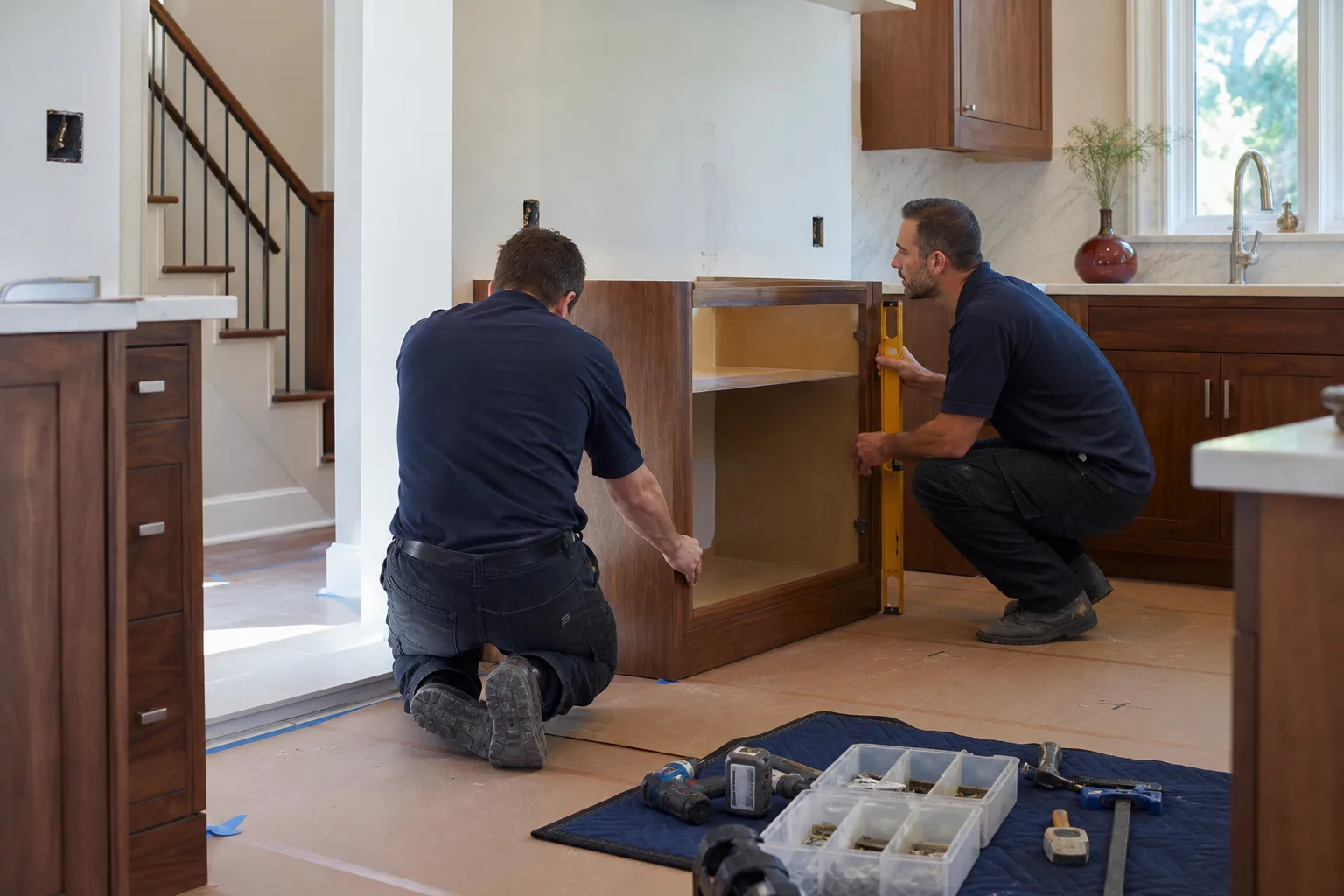
The Two Things That Decide It: Flatness and Moisture
Old slabs are rarely flat to modern tolerances
A poured-concrete slab from 1933 has had nine decades to settle, crack, and move. Modern flooring tolerances – for tile and vinyl plank both – assume a floor that’s flat within a small fraction of an inch over a 10-foot span. Original Boulder City slabs often aren’t close.
That gap gets filled with self-leveling compound (a pourable underlayment that cures to a dead-flat surface). On a Boulder City kitchen it typically adds $2-$4 per square foot to either product’s install. That number belongs in any honest comparison, and it’s where cheap bids mysteriously balloon on day two.
We itemize slab prep separately from material cost in every written price, so you see the full number before a single tile or plank is ordered. Say the price before the work – that’s The Kingswell Way, and it’s how every Penhallow project starts.
Heat and monsoon humidity hit the two products differently
Mojave summers push past 105°F regularly, and luxury vinyl plank expands when it heats up. In a small-footprint Dam bungalow kitchen, there often isn’t much expansion-gap room at the slab edge – and a tight plank install in that room can buckle at the perimeter when August arrives. Tile, set on a properly prepped concrete slab, is dimensionally stable year-round.
Then there’s monsoon season. Boulder City’s humidity spikes are brief but intense, and if the slab hasn’t been tested for moisture vapor emission, vinyl plank can cup – the edges curl up – as moisture moves through the concrete. Tile set with epoxy-modified thinset doesn’t share that risk on a historic slab. We test the slab before recommending either product, because guessing here is how floors fail six weeks after install.
Tile vs Vinyl Plank in a Boulder City Kitchen: Side by Side
| Factor | Porcelain Tile | Luxury Vinyl Plank |
|---|---|---|
| Behavior on 90-year-old concrete | Stable with epoxy-modified thinset | Requires moisture test; can cup if slab emits vapor |
| Summer heat (105°F+) | No expansion concern | Expands at slab edge; needs expansion room |
| Monsoon humidity | Unaffected | Risk if slab moisture isn’t addressed |
| Slab leveling (self-leveling compound) | Often required: $2-$4/sq ft | Often required: $2-$4/sq ft |
| Feel underfoot | Hard, cool – can be cold on bare feet | Warmer, softer, quieter |
| Historic-character fit | Strong match for Dam bungalow character | Depends on the look you choose |
| Best fit | Historic-district kitchens, high-traffic, long-term | Warmer feel, budget-tight, sound-sensitive |
Our recommendation: choose porcelain tile unless you specifically want a warmer, quieter floor underfoot and the slab passes a moisture test with room for expansion. Vinyl plank is a good floor – it just asks more of an old Boulder City slab than tile does. Either way, that slab prep line is the same, and it’s the number most homeowners don’t see until it’s too late.
What This Costs in Boulder City – and Where Flooring Fits
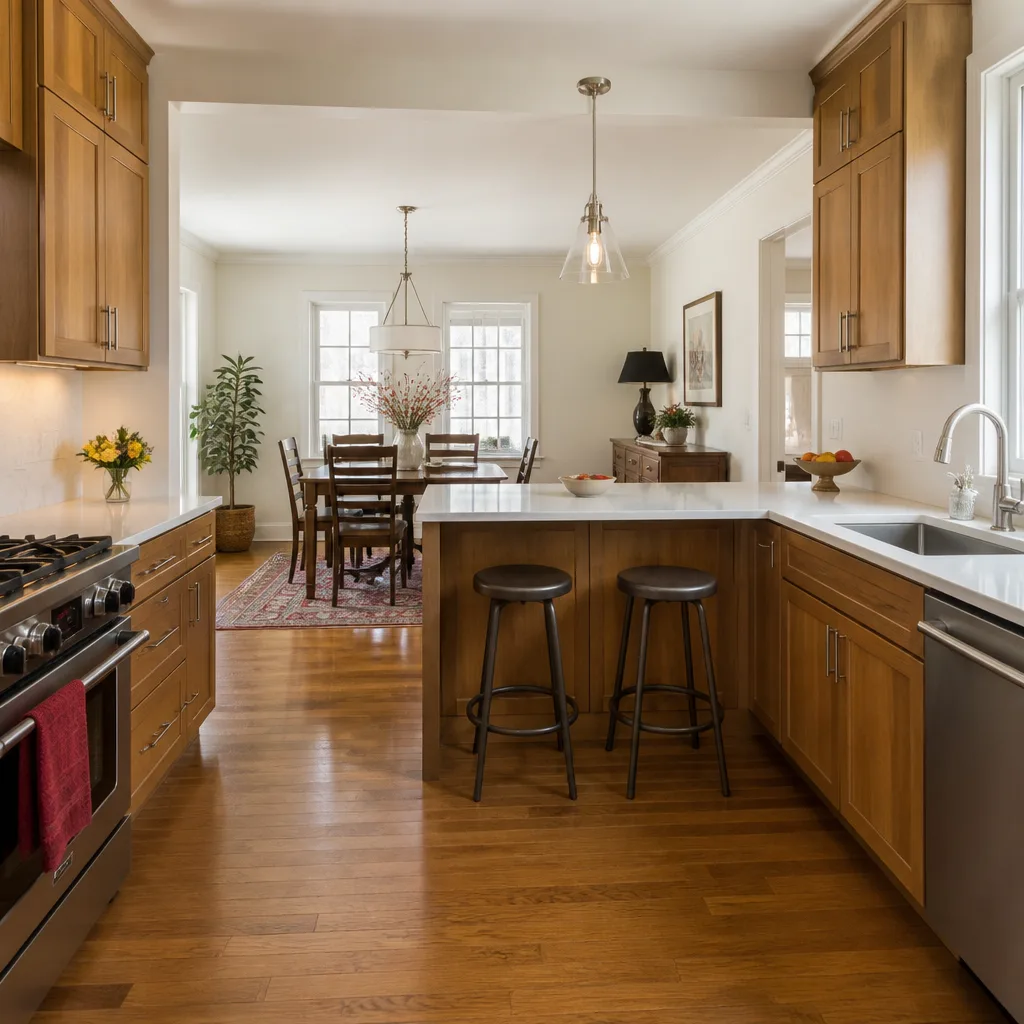
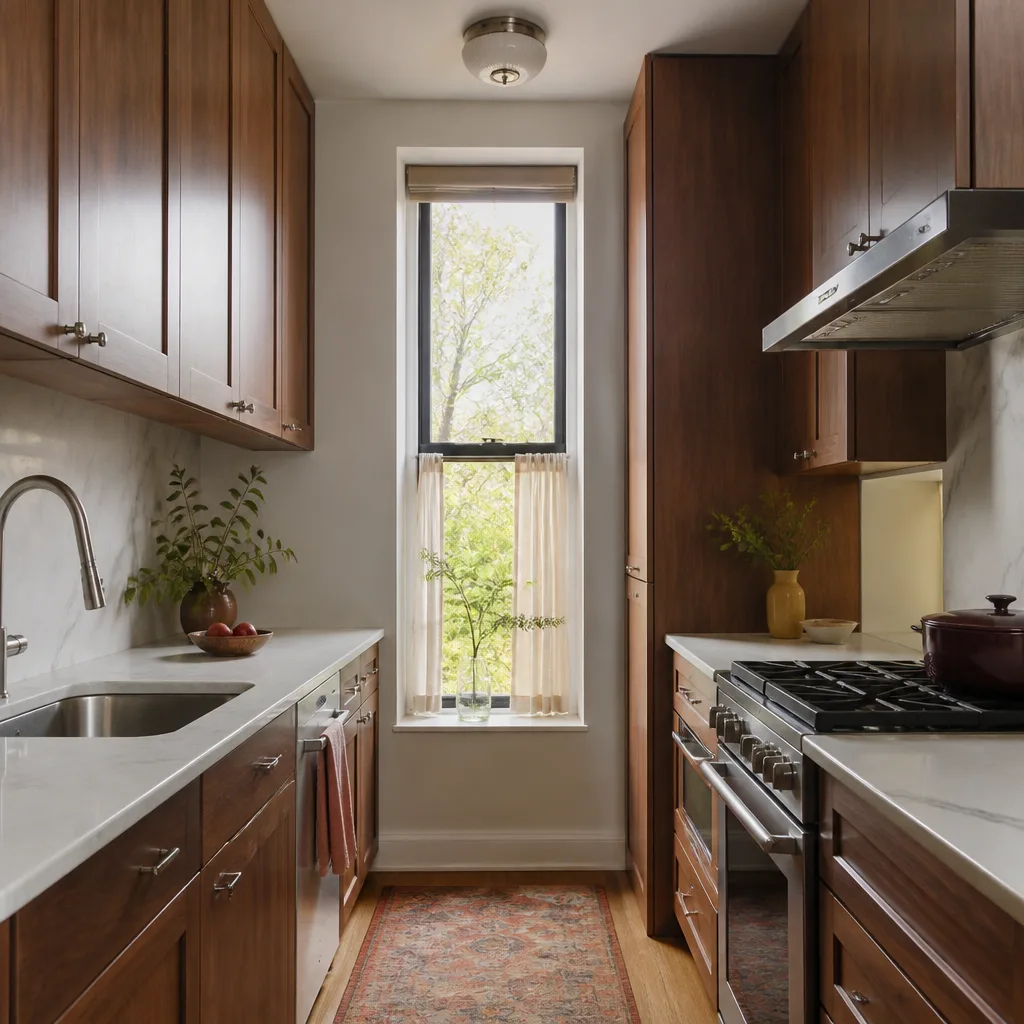
Flooring is rarely a standalone job in a Dam bungalow kitchen. Because the footprint is small and the layout is fixed, most homeowners we work with are redoing cabinets, counters, and floor together – which is why our Kitchen Remodeling projects in the historic core run a full scope, not a patch. A full kitchen remodel in Boulder City typically runs $14,000-$45,000 depending on layout, cabinet line, and countertop material; a smaller kitchen remodel lands around $9,000-$20,000. If the floor is the only thing moving, we scope it on its own.
Here’s how the pieces line up when flooring sits inside a larger kitchen project:
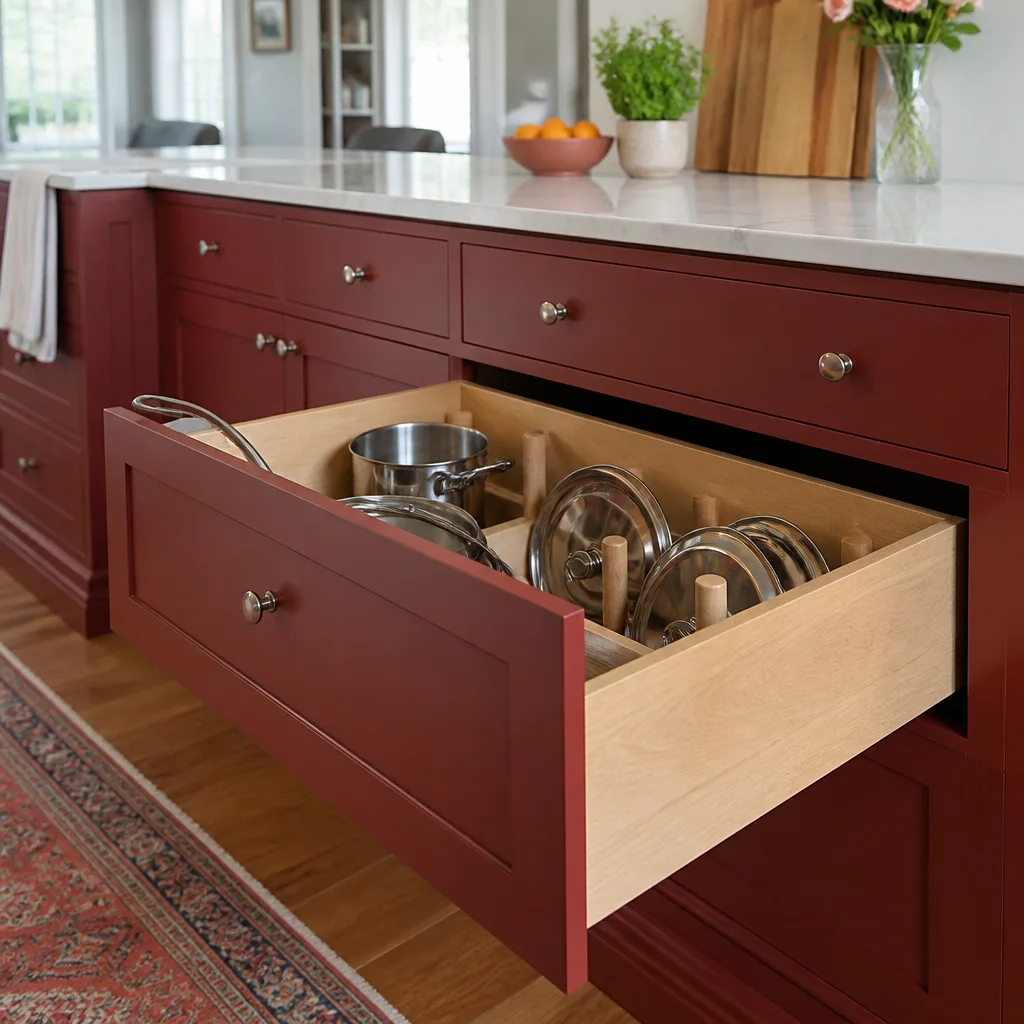
- Cabinet installation: $4,000-$13,000
- Countertop installation: $2,000-$6,500
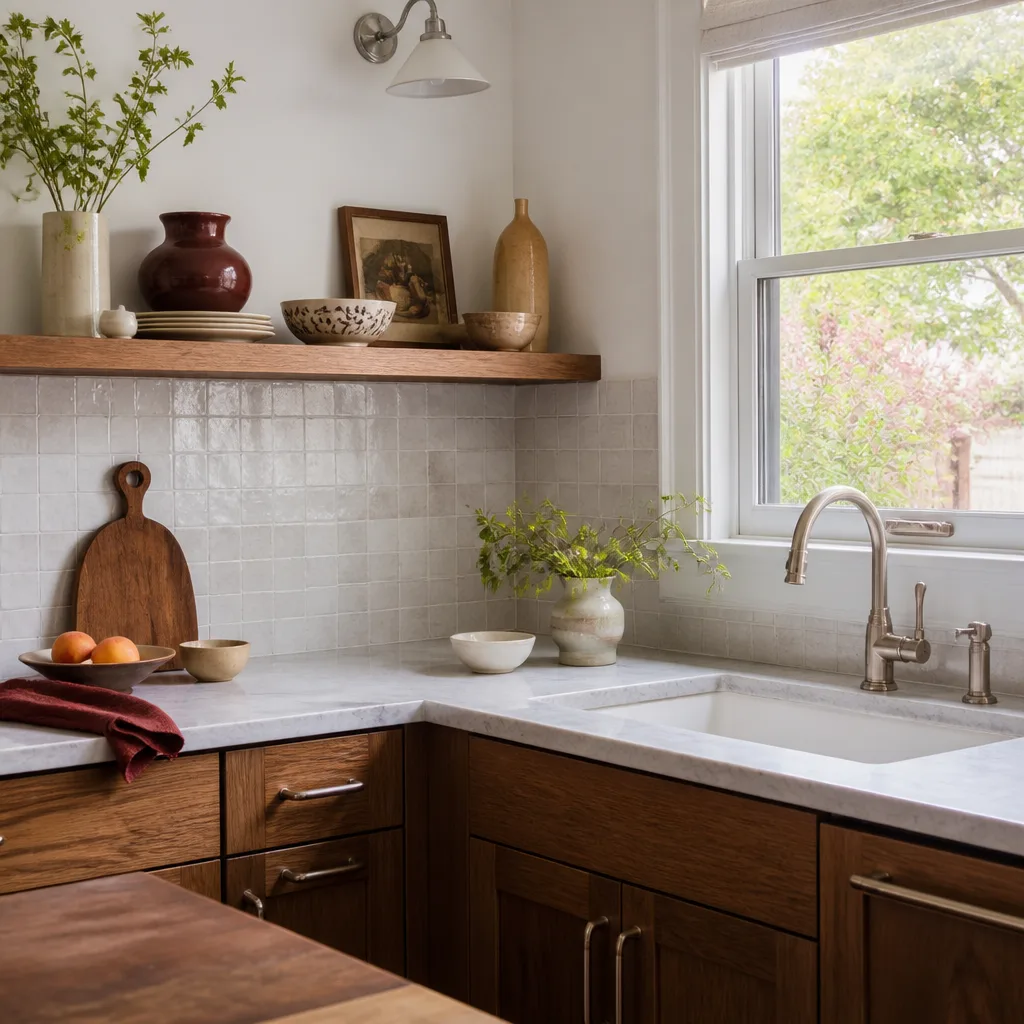
- Backsplash installation: $800-$2,500
- Kitchen island installation: $3,000-$10,000
- Slab prep (either floor): $2-$4/sq ft in self-leveling compound, itemized separately
Materials come from brands we trust to hold up – KraftMaid and Wellborn cabinetry, Cambria, Silestone, and Caesarstone counters, Kohler and Moen fixtures – and for slab prep we use Quikrete and Sakrete compounds we know cure flat and stay flat. The products behind the guarantee are as solid as the promise.
Every project carries our 365-Day Done Right Promise in writing: if the work fails inside the year, we come back and fix it at no charge. Free second visit if a repair fails – no service call fee, no re-inspection. Our technicians have up to 22 years of experience, arrive background-checked and in uniform, and a real person answers the phone 24/7 – no voicemail maze.
Common Local Scenarios – and How Each One Resolves
A 1934 Dam bungalow, original concrete slab, no leveling ever done. This is our most common call. The floor is out of tolerance, so either product needs self-leveling compound first. Tile wins here, because the slab is the variable and tile tolerates that variable better than plank does.
A patio home near the historic district edge, 1990s construction, flatter slab. Newer pour, easier tolerances. Vinyl plank becomes a genuinely good option if the homeowner wants warmth and quiet – provided the moisture test comes back clean.
A historic-core kitchen where the floor finish has to match the character of the original structure. The Boulder City Historic Preservation Committee has reviewed the finishes and materials accepted in comparable kitchens, and we walk homeowners through what’s passed before ordering a single tile. Porcelain that reads like the period floor usually clears more easily than a plank that looks contemporary.
These aren’t hypotheticals – we see them week to week, and the answer isn’t always the same. What never changes: a written price before any work starts. The number on day one is the number on the invoice. When you’re ready to line up the rest of the kitchen alongside the floor, our Kitchen Remodeling in Boulder City team handles the full scope.
FAQs
Tile is the safer choice for most Boulder City kitchens, especially in 1930s Dam bungalows with poured-concrete slabs – it stays dimensionally stable through 105°F summers and monsoon humidity, while vinyl plank can expand at the slab edge or cup if the slab emits moisture. Vinyl plank is a good fit in newer, flatter slabs that pass a moisture test. Call (844) 834-9740 for a free written estimate.
Self-leveling compound typically adds $2-$4 per square foot to either tile or vinyl plank on an older Boulder City slab, and that cost is the same for both products. We itemize it separately in every written price so you see the full number up front. Call (844) 834-9740 for an exact quote – estimates are free.
It can, if the plank is installed tight to the slab edge without enough expansion room – 105°F-plus heat makes vinyl expand, and a small Dam bungalow kitchen often doesn’t leave much gap. Tile on a properly prepped slab doesn’t have that problem. A moisture test and a realistic gap answer this before you choose. Call (844) 834-9740 to get the floor assessed.
Yes – we walk Boulder City homeowners through the finishes the Historic Preservation Committee has accepted in comparable historic-core kitchens before ordering materials, and porcelain tile that reads period-appropriate is usually the cleanest fit. The slab prep and original concrete get the same care as the finish. Call (844) 834-9740 to start.
If you’d rather have it looked at than sort it out yourself, Penhallow Remodeling Boulder City offers a no-pressure assessment in Boulder City – we’ll test the slab, price the leveling, and put the whole number in writing before you decide. Call (844) 834-9740 for a free estimate.
Written by the team at Penhallow Remodeling Boulder City, serving Boulder City, NV.