
Last updated November 18, 2026








Free written scope consultation - allowances, timeline, and change-order rules on paper before a single trade is scheduled
General Contractor Troubleshooting: Common Problems and How to Fix Them
A cracked tile grout line six weeks after a bathroom remodel isn’t bad luck. It’s almost always a substrate problem that was visible before the first tile went down – a missing uncoupling membrane, a cement board seam with no mesh tape, or a floor that moved because nobody checked the deflection. Knowing that one fact changes how you handle the conversation with your contractor. In our experience, the failure you’re looking at today was predictable on day one, which means it’s fixable on their dime if you handle it correctly.
This guide walks through how to identify what actually failed, how to document it so it holds up, how to tell a cosmetic callback from a structural defect, and how to escalate when a contractor ghosts you. We’ll reference Boulder City specifics throughout, from our desert climate’s effect on caulk and stucco to the state licensing board that backs your complaint.
Quick Answer
Most post-project contractor problems are workmanship failures in three places: tile and flooring substrates, exterior seams and flashing, and door and window installation. Fix them by documenting the issue with time-stamped photos, sending a written request that names the specific defect and contract language, and escalating to the Nevada State Contractors Board if the contractor won’t respond within a reasonable window. A written 365-day workmanship guarantee makes all of this much shorter.
Styles & brands we work with
- Kitchen remodeling
- Bathroom remodeling
- Home additions & ADU
- Roofing
- Windows & doors
- Driveway & pavers
- Fence
Table of Contents
- How Do You Tell a Cosmetic Callback From a Structural Defect?
- How Should You Document a Problem So It Holds Up?
- Why Do Tiles and Floors Fail Six Weeks Later?
- What Should a 365-Day Workmanship Guarantee Actually Cover?
- How Do You Escalate Through the Nevada State Contractors Board?
- What Contract Language Predicts Which Problems Won’t Get Fixed?
- Why Boulder City’s Climate Accelerates Certain Failures
- How Do You Prevent Post-Project Disputes Before Work Starts?
How Do You Tell a Cosmetic Callback From a Structural Defect?
A cosmetic callback is a defect that affects appearance only – a paint touch-up needed at a corner, a caulk line that separated at a countertop-to-wall joint, a grout line that cracked at a floor transition where two different materials meet. A structural defect is a failure where the assembly is no longer doing its job – water intrusion at a shower pan, a door that swings and catches because the rough opening was framed out of plumb, or tile that’s tenting off the floor because the thinset didn’t bond.
The distinction matters because leverage is different. Contractors will often handle cosmetic callbacks quickly to close a job out. Structural defects carry real cost – sometimes thousands in rework – and that’s where a contractor is more likely to stall, blame materials, or ask you to split the cost.
Here’s how to sort them out:
- Cosmetic: paint, caulk, drywall cracks at seams less than 1/16 inch, grout discoloration without movement. Cosmetic callbacks should be handled within your warranty window with a single visit.
- Functional but not structural: a cabinet door out of alignment, a faucet cartridge with a slow drip, a sliding door that doesn’t latch. Warranty work, but cheap to fix.
- Structural: water showing at the base of a shower curb, tile that sounds hollow when tapped (bond failure), a door or window frame with visible light coming through, a floor that deflects noticeably underfoot, or a crack wider than a hairline at a grout joint.
- Safety: any failure that touches electrical, gas, or plumbing supply lines. Stop using that fixture and call.
If you’re unsure which bucket your problem falls into, get a second set of eyes. We install Cambria quartz countertops and Kohler fixtures on most kitchen jobs, and even with premium materials the substrate is what fails first – a fact most homeowners learn the hard way.
How Should You Document a Problem So It Holds Up?
Documentation is the single thing most homeowners do badly, and it’s the difference between a contractor fixing your problem and the Nevada State Contractors Board siding with you later. The trick is to make the timeline undeniable and the defect unambiguous.
- Take wide shots before close-ups. A close-up of a crack is worthless without a wide shot showing where in the room it lives. Take three photos: one wide (room context), one mid (the wall or floor), one macro (the defect itself).
- Time stamps matter. Most phones embed EXIF data automatically. Do not crop photos before sending – cropping strips metadata in many apps. Send originals, keep originals saved separately.
- Film a five-second video with your hand in frame. For anything that moves or deflects – a door swing, a floor bounce, water pooling – video showing your hand at the location is the single best proof that the problem wasn’t staged.
- Write a dated email, not a text. Text messages disappear from phone storage and are easy to dispute. Email with an attachment folder creates a permanent record. Subject line: “Warranty request – [project address] – [defect]” – nothing cute.
- State the contract language you’re relying on. If your written agreement says “365-day workmanship warranty” or “Kingswell Way standards,” quote that line in your email. Contractors respond faster to specific language than to general complaints.
- Give a reasonable response window in the email. Ask for a written response within 10 business days. Any reasonable contractor will reply. Any contractor who doesn’t is providing you with useful evidence.
That folder of photos and dated emails is what you hand the Nevada State Contractors Board if it comes to that. It’s also what makes a good contractor fix the issue without argument – because you’ve demonstrated you’re organized and serious.
Why Do Tiles and Floors Fail Six Weeks Later?
The short answer: most tile and floor failures are substrate failures, not tile failures. Tile itself is very hard to break. What fails underneath is what makes the tile come loose, crack, or tent off the floor.
The three most common substrate failures we see on Boulder City projects:
- Missing uncoupling membrane. Tile set directly on a plywood or concrete slab without a movement-isolation layer will crack along stress lines within weeks. In a desert climate where slab temperatures swing between 50°F at night and 100°F+ in the afternoon sun, that movement is amplified.
- Cement board installed without thinset underneath. The board needs to be set in a mortar bed and screwed through, with the seams mesh-taped and floated. Skipping either step leaves tiny voids that telegraph through the tile after a few hundred footfalls.
- Inadequate subfloor deflection. Wood subfloors need to be checked against the tile manufacturer’s L/360 (or L/720 for stone) deflection standard. A floor that bounces is a floor that will show cracked grout in a year.
If you see hairline cracks at grout joints within 60 days of a new floor installation, tap lightly on the tile with a coin across the crack. A hollow sound means bond failure – the tile is no longer attached to the substrate. That’s structural, not cosmetic, and it’s covered under most legitimate workmanship warranties.
For showers, the same logic applies to waterproofing. A shower that leaks at the curb or at a bench is almost always a missing pre-slope or a punctured waterproofing membrane under the tile. Reworking that is real money – plan on a contractor pushback if your original agreement was thin on warranty language. This is exactly why the bathroom remodeling in Boulder City work we do always documents the waterproofing and substrate step with photos before the tile goes in.
What Should a 365-Day Workmanship Guarantee Actually Cover?
A real 365-day workmanship guarantee covers the labor and installation errors the contractor controls for a full year after final walkthrough, at no charge for the return visit and no charge for the rework. Most warranties in the remodeling industry do not cover that, or cover it with enough exclusions that it’s effectively a one-visit courtesy.
Here’s what a strong guarantee actually says:
- Labor and installation defects: any failure caused by how the contractor installed or assembled a system – tile bond failure, improper flashing, improperly set cabinets, door and window leaks from installation – is covered. The return visit is free, the rework is free.
- A specific time frame: “365 days from final walkthrough” is a real term. “As long as you own the home” or “limited lifetime warranty” are marketing phrases that don’t commit to anything in writing.
- Written delivery: the guarantee appears in the contract itself, not just on the company website. If it’s not in the paperwork you sign, it isn’t a guarantee – it’s an advertisement.
- Materials warranty pass-through: product warranties from manufacturers like Cambria, Silestone, or Kohler are separate from workmanship coverage. Both should be spelled out.
What most warranties quietly exclude:
- Water damage caused by homeowner cleaning products or drain maintenance lapses
- Anything caused by a material the homeowner supplied
- Damage from a separate trade or subsequent contractor who worked in the space
- “Normal wear and tear” – which in practice some contractors stretch to cover cracking
- Adjustments and “tune-ups” after 30 or 60 days
If your contractor offers a warranty that leaves out the labor-defect category or the free return visit, you’re carrying the risk of every substrate and installation call you’ll make in year one. That’s the single biggest argument for a written guarantee before work starts. The St. Thomas Highland area in Boulder City has a lot of older homes with subfloors that need a deflection check before tile goes in – warranty language on the substrate work is what makes the difference when a floor moves twelve months later.
How Do You Escalate Through the Nevada State Contractors Board?
The Nevada State Contractors Board (NSCB) is the state agency that licenses contractors and mediates complaints between homeowners and licensees. If a contractor licensed in Nevada has ghosted you on a legitimate warranty request, the Board is the correct escalation path – and it’s free to file.
Here’s how to escalate cleanly:
- Verify the license. Look up the contractor on the NSCB website before filing. If the contractor was licensed at the time of the project, the Board has jurisdiction. If they weren’t licensed, that’s a separate complaint path (and a serious red flag in hindsight).
- Send one last written request with a deadline. Before you file, send a written notice (email is fine) that states you’ll file with the NSCB if there’s no response in 10 business days. This is your last good-faith effort and the Board will ask for it.
- File the complaint online or by mail. Include the contract, all dated photos, your email trail, and a written summary of the defect and your requested remedy (repair, refund, or arbitration).
- Respond to Board mediation. Most cases get resolved at the mediation stage. Contractors who would ignore a phone call regularly fix things once the Board is involved.
- Consider arbitration. If mediation fails, the Board can offer arbitration. The decision is binding in most cases, but it’s still usually faster and cheaper than a civil suit.
For Boulder City projects specifically, be aware that the state licensing requirement applies regardless of how small the project seemed. If a contractor wasn’t licensed, the Board can’t help you the same way, and your leverage is civil only. That’s why verifying the license is worth 5 minutes before signing anything.
What Contract Language Predicts Which Problems Won’t Get Fixed?
You can predict which problems a contractor will fix by reading the original agreement. If the contract is thin on scope, silent on substrate, or vague on warranty, expect calls to go unanswered – not because the contractor is malicious, but because there is no written hook to hang a fix on.
Specific red flags to look for in your signed contract:
- “Standard installation” with no definition. Standard is not defined by any code or trade body, and in disputes it defaults to whatever the contractor says it means.
- No substrate or prep line item. If the agreement jumps straight to tile or flooring without a line item for prep, deflection check, substrate, or waterproofing, the work behind the visible finish wasn’t priced and probably wasn’t done correctly.
- “Warranty: 1 year” with no described scope. This means nothing. A warranty needs to say what’s covered and what the remedy is (free repair vs. materials only).
- Vague final payment trigger. “Upon substantial completion” is standard, but if the contract doesn’t define substantial completion, your final payment leverage can evaporate before punch-list items are resolved.
- Allowance-heavy pricing. A low base price with large allowances on cabinets or fixtures (“$8,000 allowance for cabinets, adjustment at time of ordering”) is a warning that the number you signed may grow 30% before the job ends.
- No change-order process described. A contractor without a written change-order process will add costs verbally. If your contract is silent on this, every mid-project “we found X” is a negotiation with no lever.
If you’re still in the planning phase for a Boulder City project and haven’t signed yet, use these red flags as a screen when you compare bids. A written, no-allowance price with the substrate described and the warranty spelled out is what you’re looking for. You can see how this reads on our kitchen remodeling in Boulder City page – no allowance vagueness, no standard-installation language.
Why Boulder City’s Climate Accelerates Certain Failures
Boulder City sits in a high-desert basin with hard summer temperature swings and dry air. That’s hard on the joints and sealants of any exterior or semi-exterior assembly, and it accelerates certain failure modes faster than coastal or humid climates would.
What we see most often in Boulder City:
- Caulk at exterior windows and doors. UV exposure and 40°F-plus daily temperature swings harden and shrink caulk lines in 12-18 months. Failures show up as water intrusion at window sills after the first winter rain, not during summer.
- Stucco cracking. Hairline cracks in stucco are common in the desert and are cosmetic if they don’t breach the weather barrier. Cracks that open and stay open (more than 1/16 inch) need to be investigated for underlying structural issues.
- Wood framing and door fitment. Door frames shift as humidity drops in spring, and a door that fit in February may not in June. Catching this early (within your warranty window) accelerates a fix.
- Tile over concrete slabs. Exterior slab-on-grade is standard in Boulder City new construction and 1970s-80s builds alike. A slab that wasn’t properly cured before tile went down will telegraph cracks through the tile in a matter of weeks.
None of this is a reason not to build here. It’s a reason to insist on the right substrate, the right sealants, and a written workmanship guarantee that covers the first year, when climate-driven failures typically appear.
How Do You Prevent Post-Project Disputes Before Work Starts?
The best time to solve a contractor dispute is before the contract is signed. Three things prevent 80% of what we get called about:
- Get the price in writing, with the substrate line-itemized. Not an estimate, not a range – a written number that holds from first day through final invoice. Any line item for prep, substrate, waterproofing, or deflection check that’s missing is either going to be charged mid-project or skipped entirely.
- Get the arrival window and the guarantee in writing. “Arrival window” means a specific time block, not “sometime Tuesday.” The guarantee should name what’s covered, how long, and what the free return looks like.
- Confirm who walks into your home. Background-checked and uniformed technicians matter more than they sound on paper. When you’re not home for part of the day, knowing exactly who’s there is the difference between peace of mind and an uncomfortable conversation.
If you already have a signed contract and the work is done, use everything above in this guide – documentation, the cosmetic/structural distinction, the escalation path – to get the fix you’re owed. If you’re still in the planning phase, this is the moment to demand a written price and a written guarantee. That’s the Kingswell Way: say the price before the work, show up in the window we gave, leave the place cleaner than we found it.
Common Mistakes to Avoid
- Documenting with one close-up photo. A close-up of a crack tells your contractor nothing about where it is or how it connects to the assembly. Wide, mid, macro – every time.
- Reporting by text. Text messages vanish from phone storage during upgrades and are easy to dispute. Email, with dates and attachments, is the only record that holds up.
- Splitting the cost on a workmanship defect. If the tile failure is a missing uncoupling membrane, you don’t split it. Splitting treats the defect as a shared bad-luck event; it’s a construction error, and it’s the contractor’s to fix.
- Waiting more than 60 days to report. Most workmanship defects reveal themselves within the first two months. A 60-day delay gets told “you should have called sooner” – true or not, it complicates your case.
- Not verifying the license before you sign. Boulder City and Clark County have active contractor licensing requirements. A handshake isn’t a license, and if the license isn’t in place, the NSCB can’t help you when something fails.
- Accepting “normal wear and tear” as an answer. Hairline caulk separation is wear. A tented tile floor at six weeks isn’t. Push back with a definition.
- Letting the final payment go before the punch list closes. Once the check clears, your leverage halves. Hold final payment until written resolution on the punch list, and put that condition in the contract.
See the difference
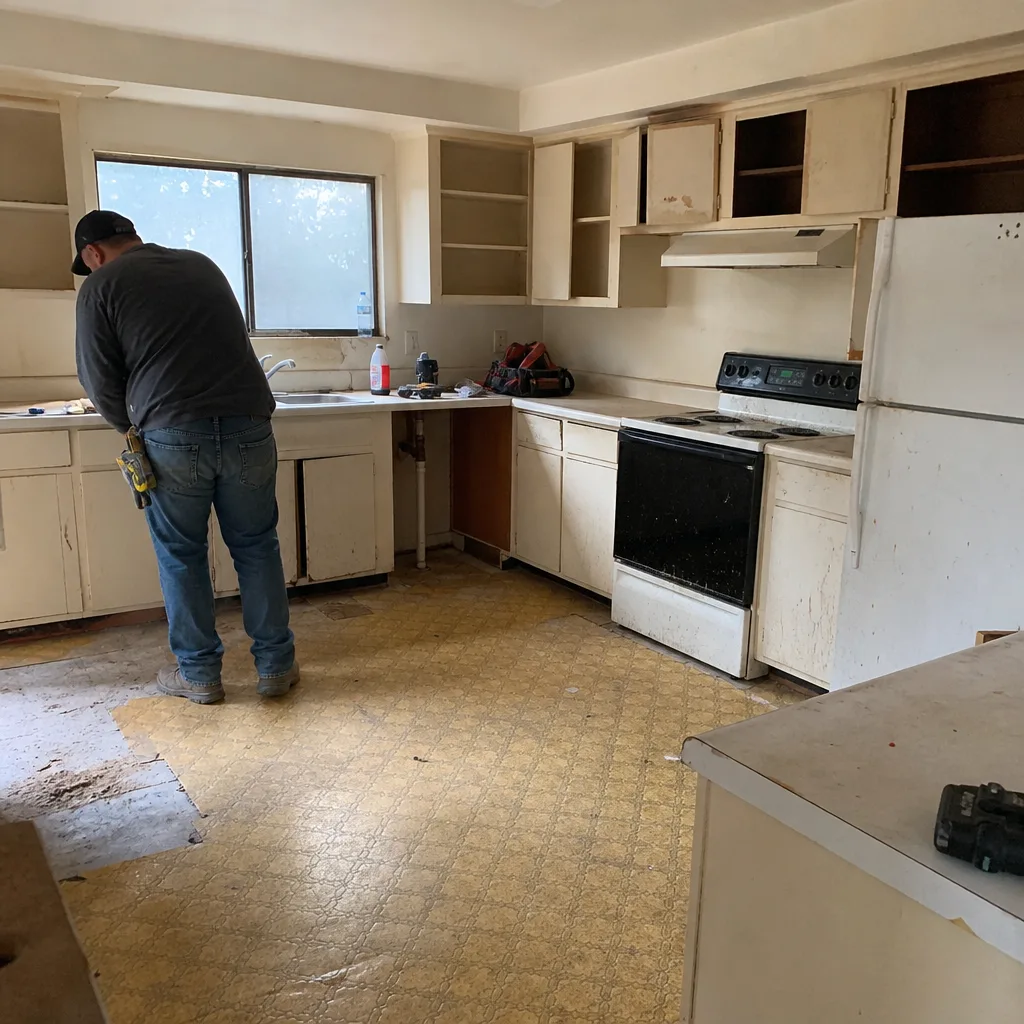 Before
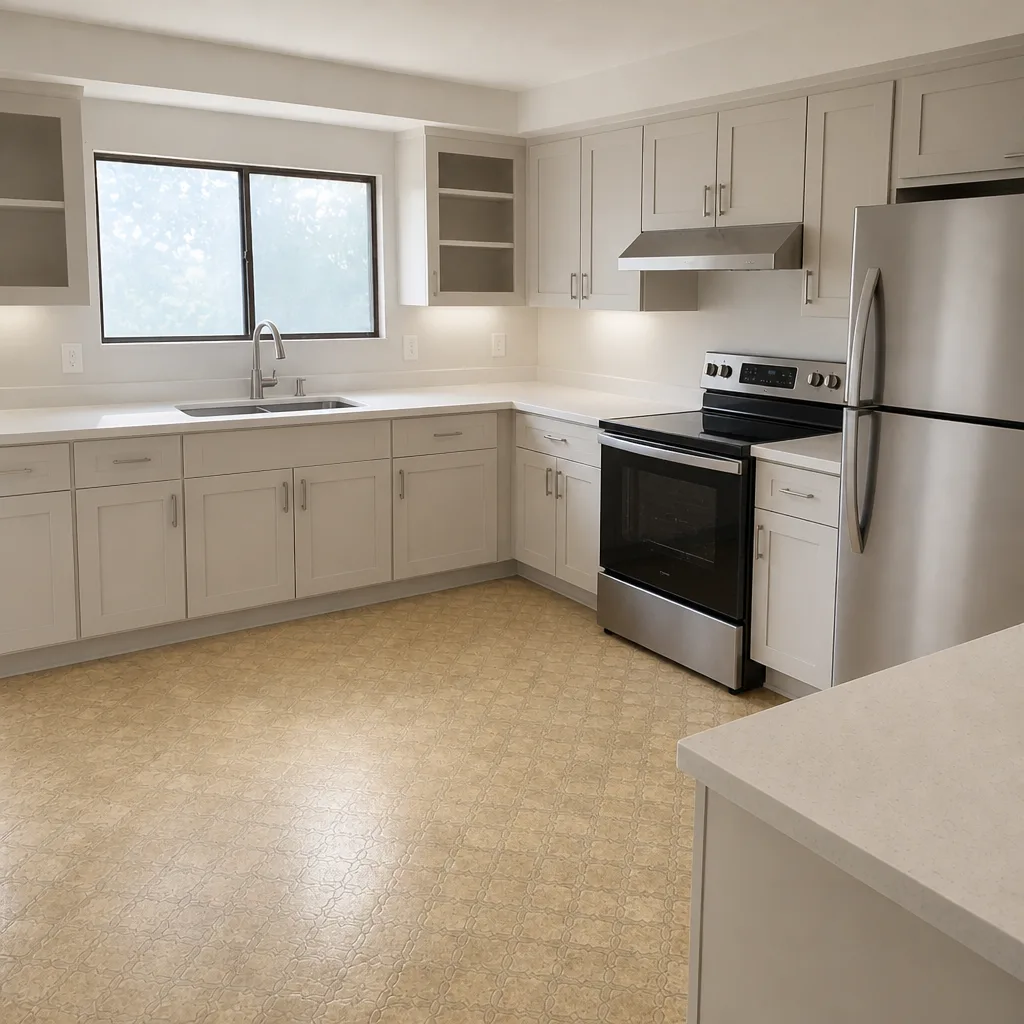 After
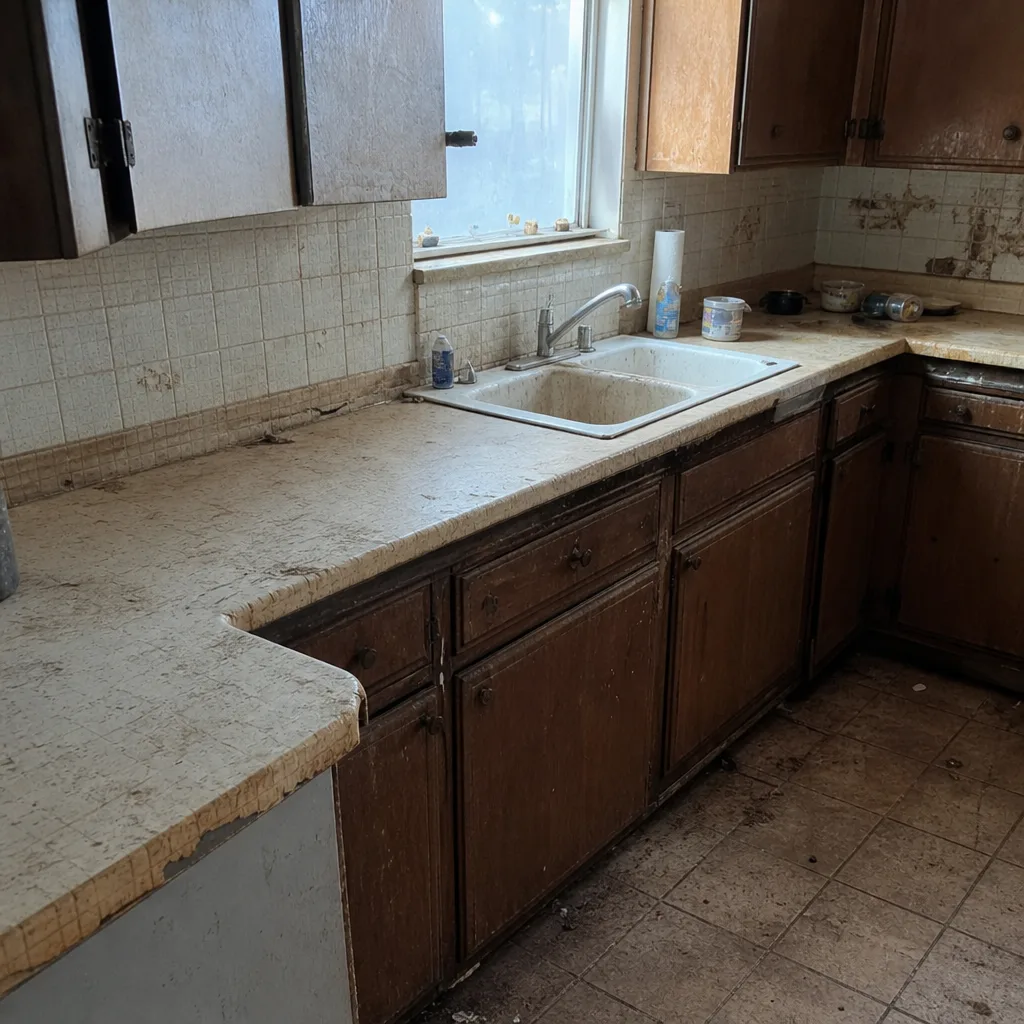 Before
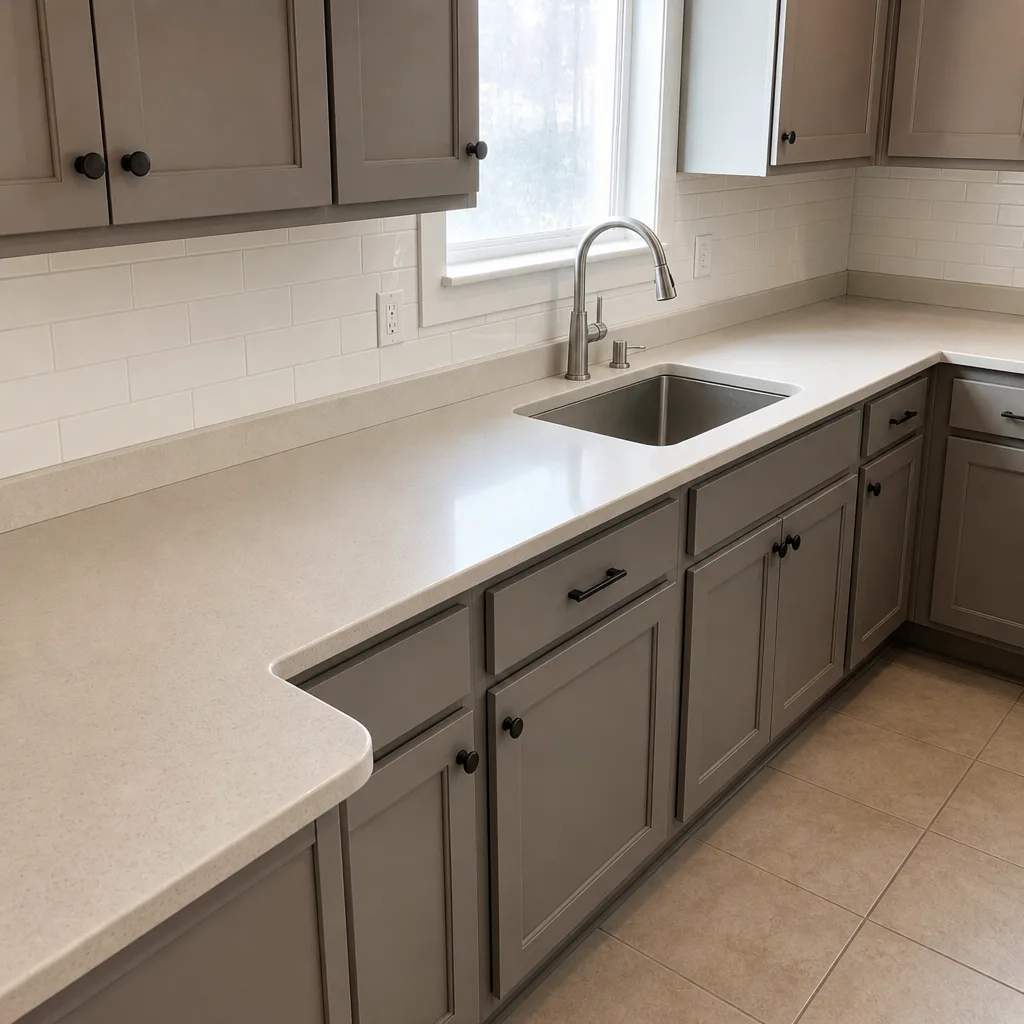 After
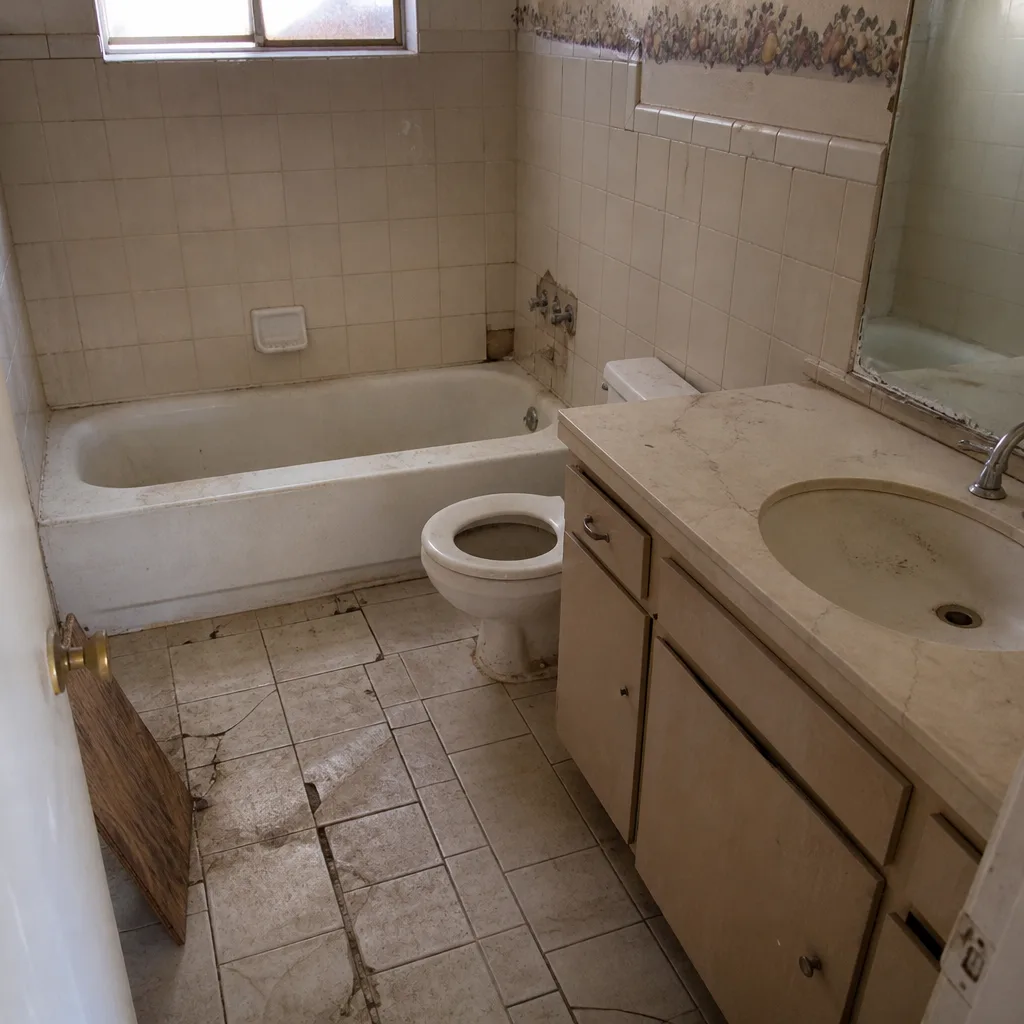 Before
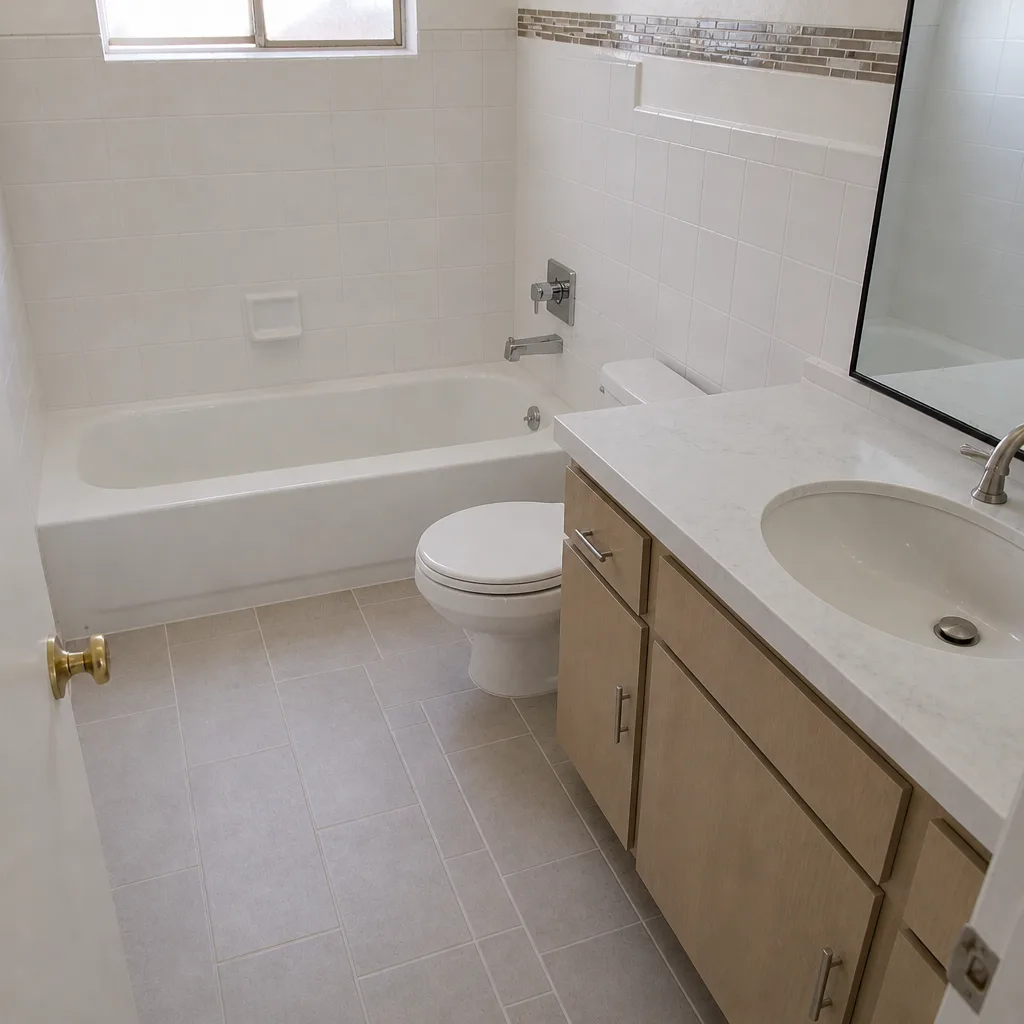 After
When to Call a Professional
Call a professional when the defect crosses from cosmetic to functional – water showing where it shouldn’t, a floor or wall that’s moved, a door or window that won’t seal, or any electrical, plumbing, or gas issue that appeared after a project. Don’t try to diagnose structural tile or waterproofing failures with a YouTube video; the fix is in the substrate, and pulling up tile to investigate is how those problems get properly solved.
The same goes for the front end. If you’re evaluating bids for a new kitchen or bath, and you’re not sure whether a contractor’s proposal has the right substrate or warranty language, get a professional read before signing. Penhallow Remodeling Boulder City offers free estimates in Boulder City – call (844) 834-9740 and we’ll walk through what a written, no-surprise scope looks like for your home. Our technicians have up to 22 years of experience, and we’re background-checked and uniformed on every job. If you want to see the full scope of work we take on, start with the general contractor in Boulder City page.
Frequently Asked Questions

Report the problem within the first 30 days of noticing it, and photograph it the same day. Most workmanship defects are visible within the first 60 days after construction, and the sooner you document the better your leverage. If your contractor is responsive, the fix usually happens on the first callback. If they aren’t, you’re building a record from day one.
In remodeling, they’re often used interchangeably, but a guarantee is what you want – it should specify what’s covered, for how long, and what the remedy is (a free return visit and free rework). A warranty is a broader term that sometimes only covers materials. Ask for both in writing, and read the exclusions carefully. Call (844) 834-9740 if you want to see how our written guarantee reads on a real project.
Not in the same way. The Board’s jurisdiction covers actions by its licensees. If a contractor wasn’t licensed during your project, your remedy is through civil channels rather than Board mediation. This is why verifying the license before signing is the single most valuable 5 minutes you’ll spend on the project – and why we recommend it for every Boulder City homeowner, whether you work with us or another company.
Yes, it should be. A shower leak at the curb within the first 60 days of a properly built job is almost always a waterproofing or pre-slope failure, which is a workmanship defect. Report it in writing with photos and a video of where the water shows, and reference the warranty language in your agreement. If the contractor won’t respond, the documentation you collect is what the Nevada State Contractors Board will ask for.
Yes – most interior remodels that move plumbing, electrical, or structural elements in Boulder City require a permit through the city’s building department, and the inspection process creates an official record of the rough-in work. That record is valuable if a dispute arises later, because it shows the assembly was inspected before the finish went on. A contractor who suggests skipping the permit is signaling what their warranty will be worth when something fails.
Nothing on top of the project price – a written workmanship guarantee should be included in the quote, not a paid add-on. What it changes is who carries the risk of the first year of post-project failures. On a $30,000 kitchen, a single substrate rework can run $3,500-$8,000 depending on the scope. Ask any contractor for the guarantee in writing before signing, and call (844) 834-9740 for a free estimate that shows the number and the guarantee side by side.
The Bottom Line
Most contractor disputes aren’t caused by contractors who won’t fix problems – they’re caused by homeowners who don’t document them properly, sign contracts that leave the covered-defect list undefined, and wait past the warranty window before calling. Get the price and the guarantee in writing, photograph anything that fails with time-stamped wide-to-macro shots, distinguish cosmetic from structural before you pick up the phone, and know that the Nevada State Contractors Board is the escalation path if a licensed contractor ghosts you. Do those four things, and you’ve already won the argument you’re worried about having. The best defense is a written scope up front – and that’s what you should be asking for from the first bid you take.
To start a project in Boulder City with a written price before work begins, call (844) 834-9740 for a free estimate. We’re part of the Kingswell family of companies, and every job gets the same standard: the price in writing, an arrival window in writing, a clean job site, and a 365-day guarantee in writing. For everything else we do – from the Boulder City bathroom remodeling work to full-home remodels – start with the Penhallow Remodeling Boulder City home page. We source from recognized trade brands like Blanco, Delta, American Standard, and Toto, so the products behind our guarantee are as solid as the promise.
Written by the team at Penhallow Remodeling Boulder City.