Last updated November 18, 2026



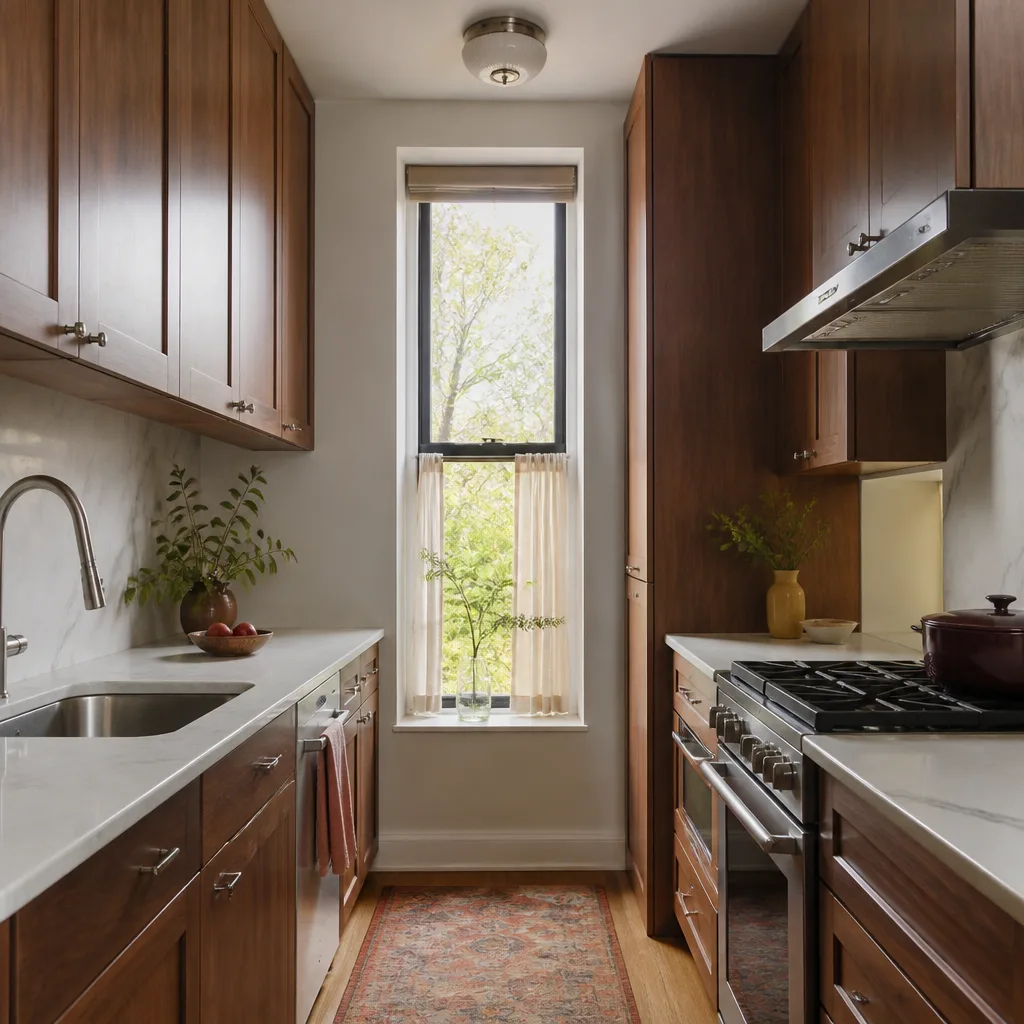
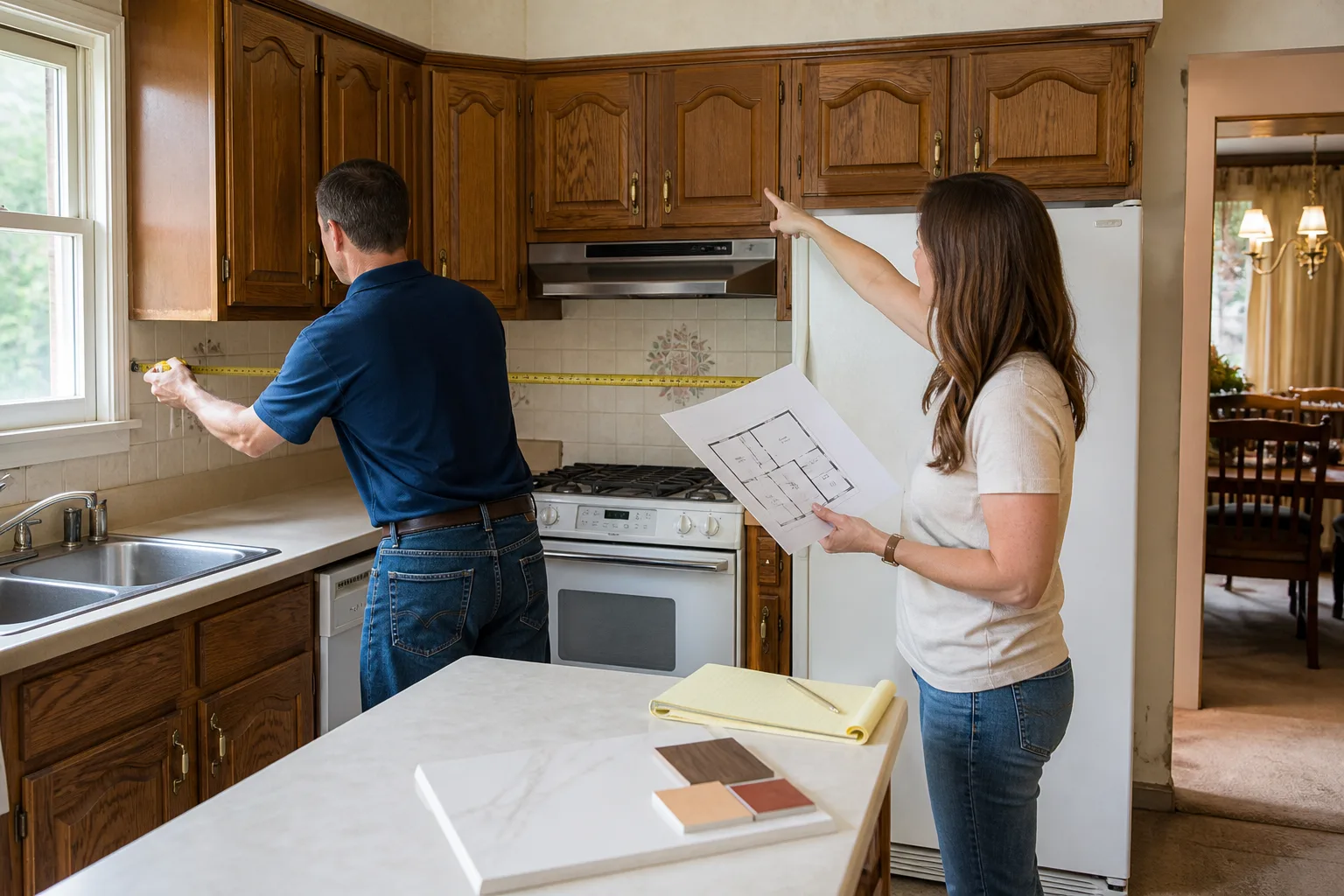
Free written scope consultation - allowances, timeline, and change-order rules on paper before a single trade is scheduled
Choosing the Right Construction Brand: A Buyer’s Guide for Boulder City
A composite decking brand rated “best overall” by a national publication was tested in Minnesota and Oregon. In Boulder City, that same product can cup and fade within two summers. The testing environment matters more than the award, and Boulder City’s environment is about as demanding as it gets: a UV index that regularly climbs past 11, single-digit humidity for most of the year, and a daily thermal swing that can move thirty degrees between a July afternoon and the same night’s low. This guide walks you through what actually holds up here, material by material, so you can filter the market by performance instead of marketing.
Quick Answer
Choosing construction materials in Boulder City is an engineering question, not a brand loyalty question. The right product for this climate is the one rated for high solar exposure, low humidity, and wide thermal movement, and the only reliable way to get it is to ask your contractor for a written scope of work that names the performance requirement, not just the brand. A written price and a written guarantee are the two documents that protect you when a material underperforms two summers after install.
Styles & brands we work with
- Kitchen remodeling
- Bathroom remodeling
- Home additions & ADU
- Roofing
- Windows & doors
- Driveway & pavers
- Fence
Table of Contents
- Why Boulder City’s Climate Rewrites the Spec Sheet
- What UV Resistance Ratings Actually Mean Here
- Stucco and Exterior Finish: Why the Finish Coat Matters More Than the Name
- Flooring and Thermal Swing: Why LVP Ratings Vary So Much
- HVAC and Insulation: Which R-Values and SEER Ratings Are Worth It
- Window Systems and Solar Control
- How to Ask a Contractor to Spec by Performance, Not Brand
- What a Written Scope of Work Should Say About Material Substitution
Why Boulder City’s Climate Rewrites the Spec Sheet
Most construction products are tested against a composite of national conditions. A decking board that performs well in a wet, moderate climate may fail here for a reason the manufacturer never designed around: the combination of intense ultraviolet exposure and almost no moisture in the air. UV radiation degrades polymers, wood fibers, and paint resins. Dry air means materials spend more of the year without the moisture buffer that keeps wood from checking and keeps sealants flexible.
Boulder City sits at roughly 2,400 feet in the Mojave, within a few miles of Lake Mead. That proximity to a large body of water matters in an unexpected way: it can push humidity up on certain mornings while the rest of the day stays bone-dry. So materials here face both extremes rather than a steady middle. Add the thermal swing, and you get a daily expansion-and-contraction cycle that stresses every joint, seal, and adhesive in a house.
- Solar exposure: Boulder City averages well over 280 sunny days a year. That is a lot of UV load on anything facing west or south.
- Humidity swing: Single-digit afternoon humidity is common, but lake-influenced mornings can briefly spike it. Products rated only for “dry” or only for “humid” are both a poor fit.
- Thermal movement: A thirty-degree daily swing is normal. Materials with tight expansion tolerances fail at the seams.
- Dust and wind: Desert particulate gets into everything. Sealants and finishes that rely on a clean surface need better primers.
None of this is a reason to skip a national brand. It’s a reason to read the spec sheet with the local environment in hand. Our technicians have up to 22 years of experience in desert construction, and the lesson from that work is simple: the environment picks the materials, not the best-seller list.
What UV Resistance Ratings Actually Mean Here
A UV resistance rating tells you how long a product is expected to retain its color and structural integrity under continuous sunlight. The problem is that many national ratings assume a milder average exposure than Boulder City provides. A product rated for ten years in a moderate zone may show noticeable color shift here in three.
For roofing, decking, and exterior paint, look for explicit language in the manufacturer’s documentation, not the marketing copy. Specifics to hunt for:
- ASTM G154 or G155 testing data for accelerated weathering. Ask for the hours tested and the color-shift result, usually expressed as a Delta E value. Lower is better.
- Color-fade warranty length in writing. A five-year fade warranty is a different product than a twenty-five-year one. Read which one you’re buying.
- High-SRI or cool-roof rated products where applicable. SRI stands for Solar Reflectance Index. A high number means the surface reflects more sunlight and absorbs less heat.
- Explicit “UV-stabilized” language in the resin or polymer, ideally with a named stabilizer or additive package rather than a vague claim.
On exterior paint, look for 100% acrylic formulations rather than vinyl-acrylic blends. Acrylics hold color under UV better and stay flexible longer, which matters when a south-facing wall heats and cools every day. If your home faces west with no shade, that wall is the toughest test surface on the property.
Stucco and Exterior Finish: Why the Finish Coat Matters More Than the Name
Stucco is the dominant exterior finish in Boulder City for good reason: it handles heat, resists insects, and holds up to the sun when it’s done right. But homeowners often focus on the brand of the stucco system when the finish coat formulation is what actually determines how the wall looks in five years.
The finish coat is the colored, textured top layer. In a low-humidity desert application, that coat needs to be formulated to resist cracking and efflorescence (the white mineral bloom that pushes through the surface). Some finish products are designed for coastal humidity; some are designed for freeze-thaw climates. For Boulder City, you want a desert-rated acrylic finish with UV-stable pigments and a documented resistance to efflorescence. The base coat and lath matter, but a premium base under the wrong finish coat will still crack and chalk.
- Ask which finish coat is specified and whether it’s rated for an arid, high-UV climate.
- Ask how the wall will be cured. Stucco needs controlled moisture during curing, and desert afternoons dry it fast. A contractor who sprays the wall with water for a few days during curing is protecting your finish.
- Ask what prep goes on the substrate before the finish coat. A bonding agent appropriate to dry climates makes a difference.
If you’re planning a larger exterior project, the same logic applies to the whole envelope. Our General Contractor in Boulder City page lays out how we sequence stucco, siding, and roofing on a whole-home remodel so each layer is protected.
Flooring and Thermal Swing: Why LVP Ratings Vary So Much
Luxury vinyl plank (LVP) has become the default choice for kitchens and whole-home remodels, and for good reason: it handles water, it’s durable, and it looks good. But LVP products are not all rated the same, and in a high-thermal-swing interior, the differences matter.
LVP expands and contracts with temperature changes. Every product has an expansion rating and a required installation gap at the perimeter. In a Boulder City home where the interior temperature can shift fifteen degrees through the day when the AC cycles, a plank with a tight expansion tolerance can buckle at the seams. A product with a wider tolerance and a thicker wear layer will hold up better.
- Look for a stated expansion tolerance in the product data, often expressed in inches per ten feet. A wider tolerance is better in high-swing climates.
- Check the wear layer thickness. Twenty mil is the standard for high-traffic residential use; twelve mil will not last in a kitchen with dogs or kids.
- Ask about the underlayment. A product with an attached pad may need a different installation technique than a plank with a floating underlayment. The pad should be rated for the climate.
- Check whether the product is rated for direct sunlight. LVP in a sunroom or west-facing kitchen sees a lot of UV through glazing.
Tile and stone have their own thermal considerations, but they handle swing better than most plank products. If tile is in your plan, our Bathroom Remodeling in Boulder City team can walk through what’s specified for floors that see daily heat cycles.
HVAC and Insulation: Which R-Values and SEER Ratings Are Worth It
Boulder City sits in a climate zone where cooling load dominates. That changes the math on insulation and HVAC efficiency ratings compared to the national averages most marketing is built around.
R-value measures how well a material resists heat flow. Higher is better, but there’s a point of diminishing return, and the point depends on your envelope. In our experience, pushing attic insulation past R-60 in this climate rarely pays back within a reasonable window, but falling short of R-38 leaves real money on the table every summer.
- Attic insulation: R-38 to R-49 is a reasonable target for Boulder City. Above R-60, the added cost rarely earns back quickly.
- Wall insulation: R-13 to R-15 for standard 2×4 construction, higher for 2×6. The right number depends on the existing assembly.
- SEER ratings: SEER2 is the current standard. A unit rated 15 to 16 SEER2 is a sensible efficiency point for this climate. Very high SEER2 ratings cost more up front and may not earn back before the equipment’s life ends.
The more important question is not the rating. It’s whether the system is sized correctly. An oversized AC cools too fast and leaves humidity cycling wrong; an undersized one runs nonstop in July. A proper load calculation (a Manual J) done on the home is worth more than a high SEER number on a badly sized unit.
Window Systems and Solar Control
Windows are where Boulder City’s solar load gets personal. A west-facing single-glazed window can turn a living room into an oven by 3 pm. The product line matters less than the glazing specification. Look for low-E coatings with a solar heat gain coefficient (SHGC) around 0.25 to 0.35 for west and south elevations. A low U-factor (around 0.30 or lower) helps on the cold winter nights.
Brands like CGI, ES Windows, and ECO Window Systems offer product lines across these specs, but the spec sheet is what you compare, not the logo on the frame. Ask for the SHGC, U-factor, and visible light transmittance for the exact glazing package being quoted, not the marketing brochure number. A contractor who can produce those numbers in the written scope is a contractor who is actually specifying your windows rather than ordering a package.
How to Ask a Contractor to Spec by Performance, Not Brand
This is the single most useful skill in the guide. Most homeowners ask “what brand are you putting in?” The better question is “what performance does this material need to meet for my home, and how does the product you’re proposing meet it?”
Here’s how to run that conversation, step by step:
- Name the environment. Tell your contractor you want materials spec’d for high UV, low humidity, and wide thermal swing. That frames the whole conversation.
- Ask for the performance requirement in writing. For roofing, decking, and paint, that means the UV or SRI rating. For flooring, the expansion tolerance. For windows, the SHGC and U-factor.
- Ask which products meet the requirement and which don’t. A contractor who can name two or three products that meet the spec and explain why they chose one is showing real knowledge. A contractor who only names one brand is showing a vendor relationship.
- Ask about the warranty behind each product. The product warranty and the installation warranty are separate documents. Ask for both.
This is how we work on every project: written price before any work begins, products named with their performance specification, and a written guarantee on the install. The brands we draw from, including KraftMaid and Wellborn cabinetry, Cambria, Silestone and Caesarstone countertops, Kohler and Moen fixtures, and James Hardie siding, are all selected because they carry product warranties that stack with ours, not replace it. For the broader picture of how we sequence a whole-home build, our Penhallow Remodeling Boulder City home page is a good starting point.
What a Written Scope of Work Should Say About Material Substitution
Material substitution is the quiet way a written price becomes a bigger invoice. You sign a scope that says “premium LVP,” and a product that meets the bare minimum of “LVP” shows up. The way to protect yourself is to require the scope to name the exact product, the performance spec it meets, and the substitution rule.
Here’s what a written scope should include on the material side:
- Exact product name and model number for every finish material, not a category name.
- The performance spec the product meets, stated in the scope, so the requirement travels with the project even if the product is changed.
- A substitution clause that requires your written approval before any product is swapped, including a comparable-spec replacement if the original is unavailable.
- The product warranty document attached to the scope, not promised verbally.
- The installation warranty terms in writing, including the length and what triggers a return visit.
This is the core of The Kingswell Way: say the price before the work, show up in the window we gave, and leave the place cleaner than we found it. A written scope is how that promise becomes something you can hold us to.
Common Mistakes to Avoid
- Buying on the national “best overall” list. Those lists are built on testing conditions that don’t match Boulder City’s UV and thermal profile. Always check the spec sheet against your local environment.
- Accepting a verbal estimate. A verbal number changes at the door. Require a written price before any work starts, including a line-item breakdown of materials and labor.
- Skipping the substrate conversation. Substrate (the layer behind your finish, whether cement board under tile or lath under stucco) is where desert failures often start. Ask what’s going on that layer and how it’s rated for dry climates.
- Choosing windows by brand alone. The label on the frame doesn’t tell you the SHGC and U-factor. Ask for the glazing spec on the exact unit being quoted.
- Ignoring the expansion rating on flooring. In a high-thermal-swing interior, a plank with a tight tolerance buckles. Ask for the expansion specification and the recommended installation gap.
- Assuming a high SEER rating is always worth it. A properly sized, correctly installed 15-SEER2 system beats an oversized 20-SEER2 unit every year on comfort and often on energy cost.
- Not asking about material substitution. If the scope doesn’t name the exact product and require your approval for swaps, you’re exposed to a downgrade you didn’t authorize.
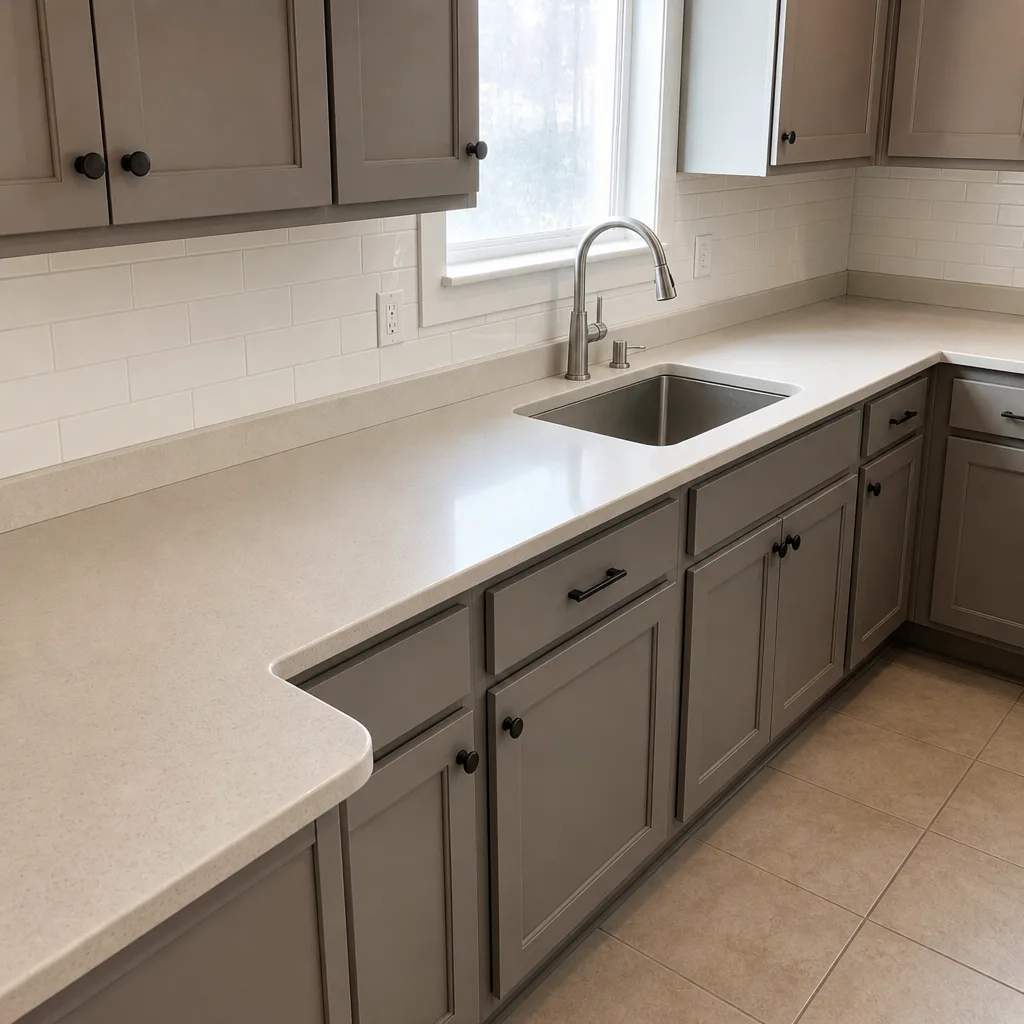
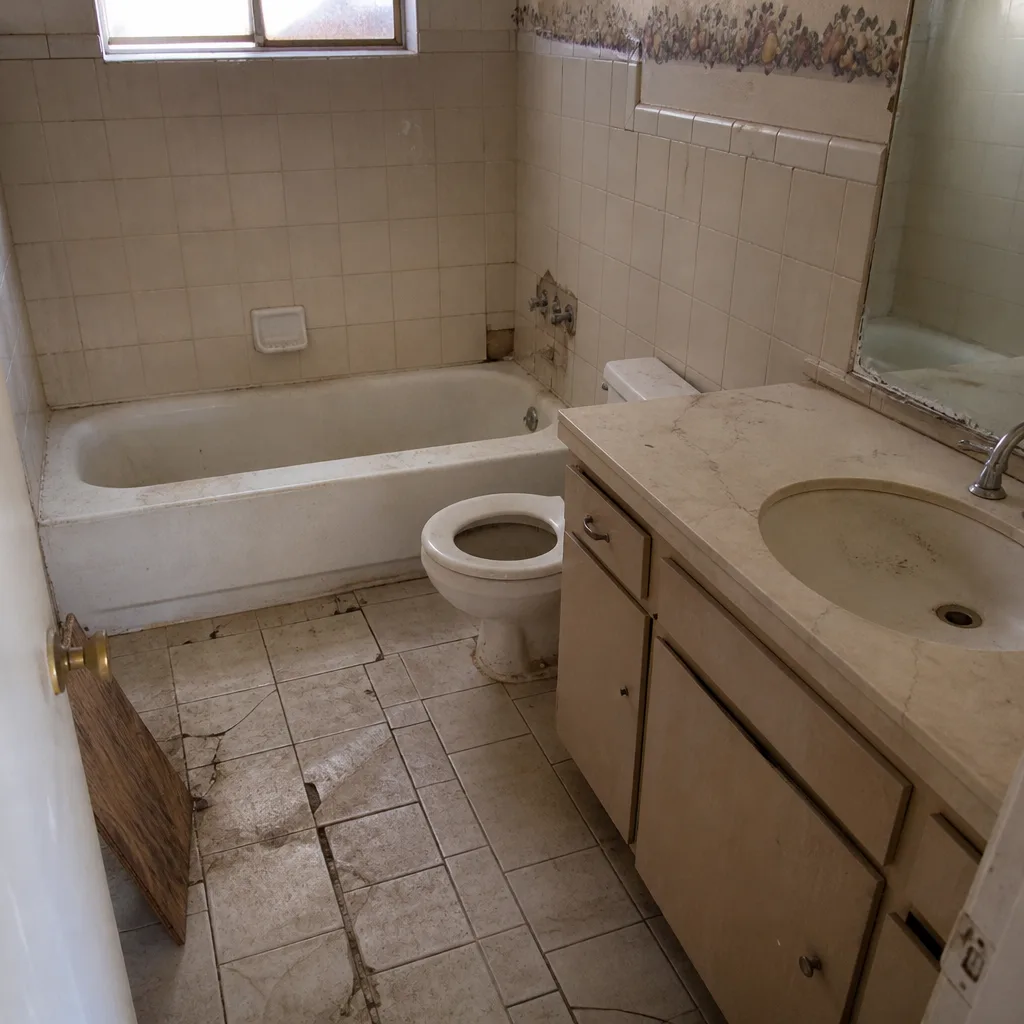
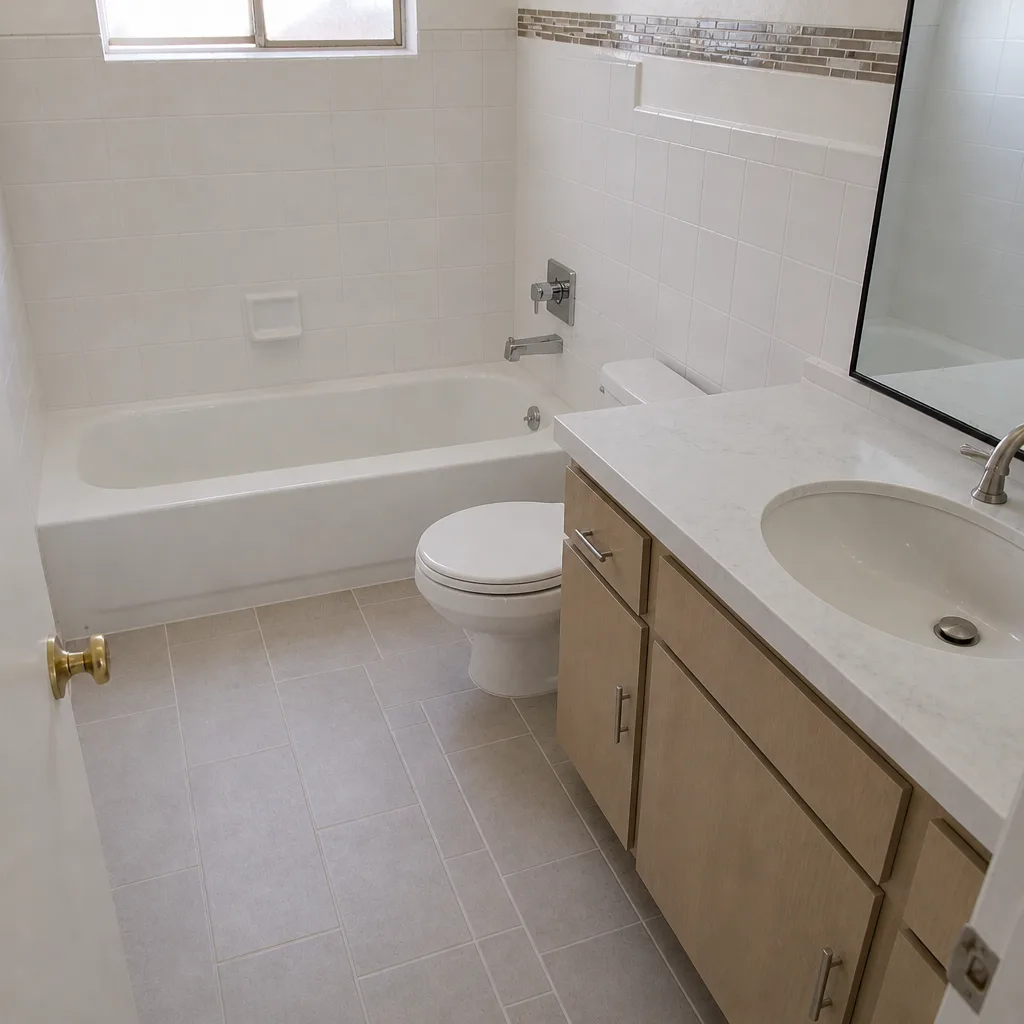
See the difference
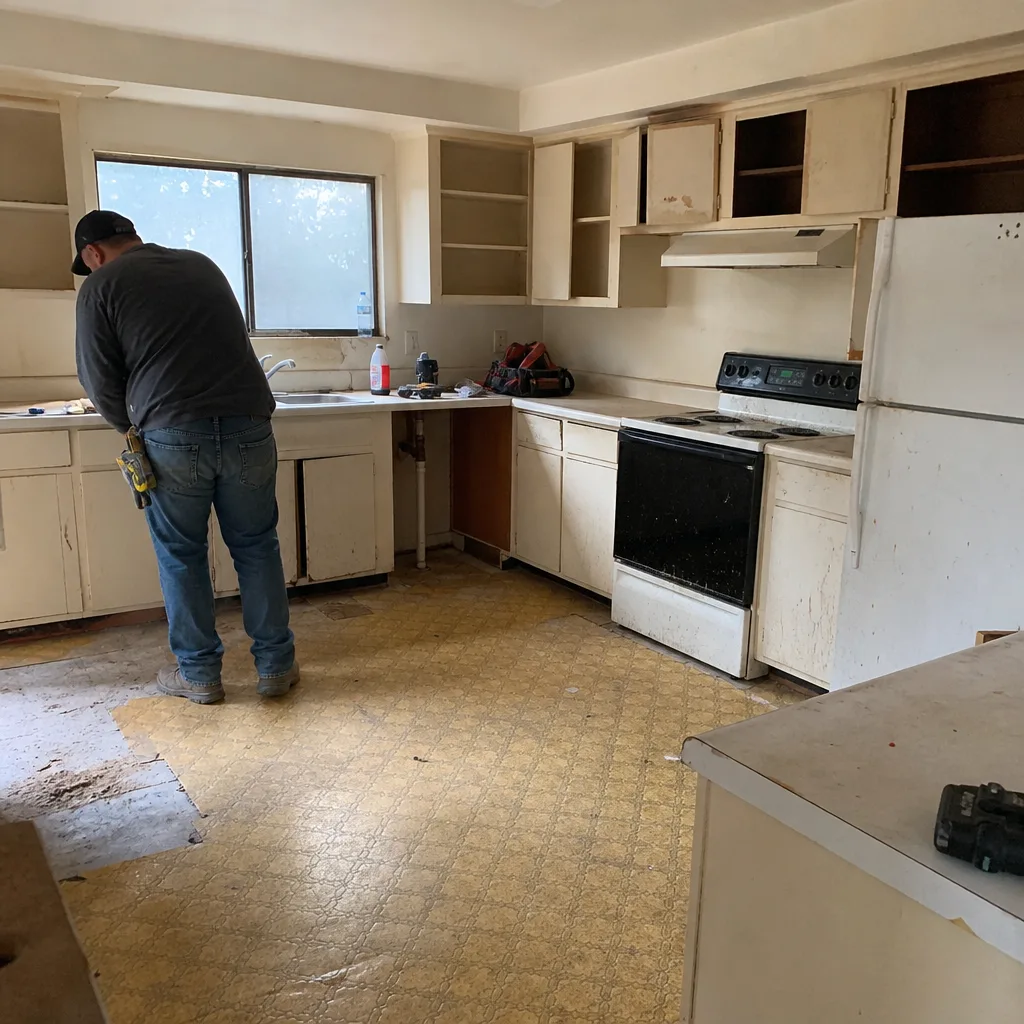 Before
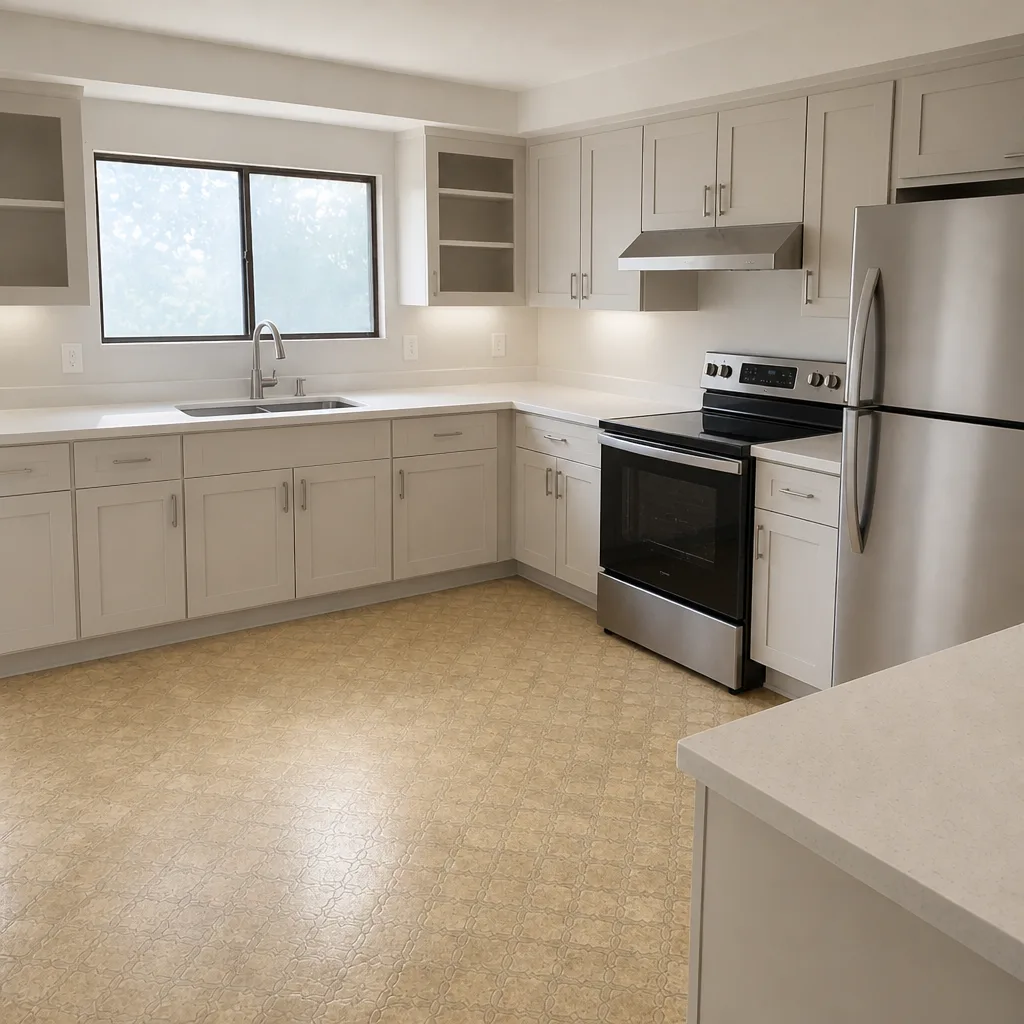 After
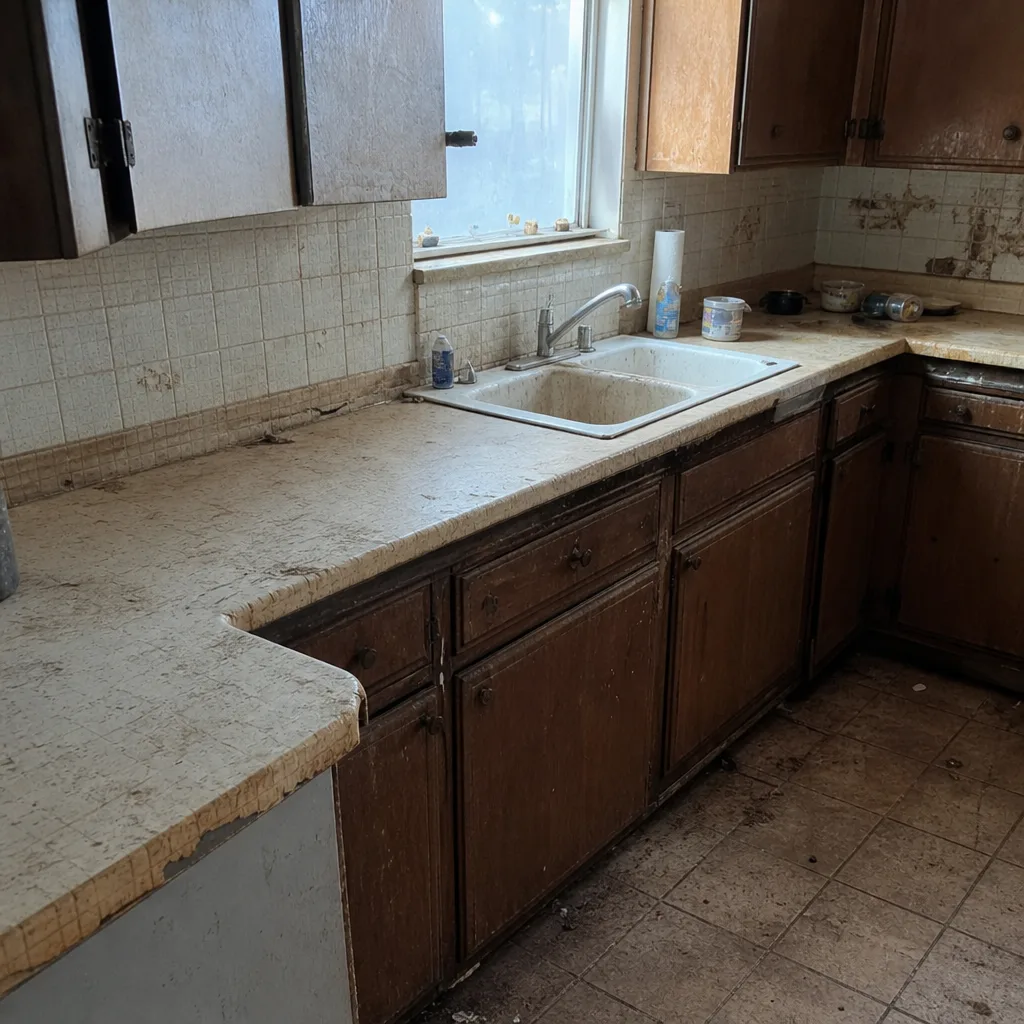 Before
 After
 Before
 After
When to Call a Professional
Some material decisions are safe to research on your own, and some aren’t. Call a professional when your project touches the building envelope: roof replacement, stucco repair, window replacement, or any work where a material failure could let water into the wall assembly. Call when you’re choosing an HVAC system, because proper sizing takes a load calculation you can’t run from a spec sheet. Call when the flooring or tile you’re considering needs a substrate assessment, since the right substrate depends on the existing structure in ways a product brochure won’t tell you. And call when you want a written price and a written guarantee on the whole job rather than a verbal estimate that shifts after demo day. Penhallow Remodeling Boulder City offers free estimates in Boulder City. Call (844) 834-9740 to schedule yours.
Frequently Asked Questions
Tile or a high-SRI rated asphalt shingle tends to perform best in Boulder City because both reflect solar heat and hold up to UV exposure. Look for explicit SRI ratings and a fade or color warranty that reflects real desert performance, and ask your contractor to show the spec sheet rather than the marketing page. Call (844) 834-9740 for an exact quote on a roof replacement in Boulder City, with a written price before any work starts.
Composite decking fails faster in Boulder City because the UV index here is much higher than in the temperate climates where most national testing happens, so the polymer and colorant degrade faster despite what the spec sheet claims. Heat and thermal swing also stress the board-to-joist connections. Ask for ASTM G154 or G155 weathering data and a fade warranty expressed in years, not adjectives.
Tile generally handles Boulder City’s thermal swing better than LVP, though a high-quality LVP with a wide expansion tolerance and a 20-mil wear layer can perform well if installed correctly. The deciding factors are the expansion rating and the installation gap at the perimeter. Call (844) 834-9740 for a written estimate on a kitchen floor project and we’ll walk through both options.
You know the windows are right when the quote states the SHGC, U-factor, and visible light transmittance for the exact glazing package, not just the brand name. For west and south elevations, look for SHGC around 0.25 to 0.35. Brands like CGI and ES Windows offer lines that meet those specs, but you should be comparing spec sheets, not logos. Call (844) 834-9740 to schedule a free estimate.
Spec-by-performance means the contractor names the environment and the performance requirement before naming a product, so the requirement drives the selection rather than a vendor relationship. Ask for that requirement in writing in the scope of work. A contractor who can explain why a product meets the spec, not just who makes it, is showing real knowledge. Call (844) 834-9740 to see how we write a scope.
Yes, a written scope protects you from substitutions if it names the exact product and model number, states the performance spec, and requires your written approval for any swap. That single document is the difference between a written price you can hold the contractor to and a verbal estimate that changes after demo. Call (844) 834-9740 for a free estimate on a remodel in Boulder City.
The Bottom Line
Choosing construction materials in Boulder City is an engineering exercise, not a brand-loyalty test. The right product is rated for high UV, low humidity, and wide thermal swing, and the safest way to get it is to require the performance spec in a written scope of work with a substitution clause. Look for ASTM weathering data, SRI ratings, expansion tolerances, and SHGC and U-factor numbers rather than best-seller lists. Pair that with a written price and a written guarantee on installation, and you’ve built the protection your home needs in this climate. Our technicians have up to 22 years of experience in desert construction, and our Kitchen Remodeling in Boulder City page walks through how we spec products on a typical kitchen project.
Get a Written Price Before You Choose a Brand
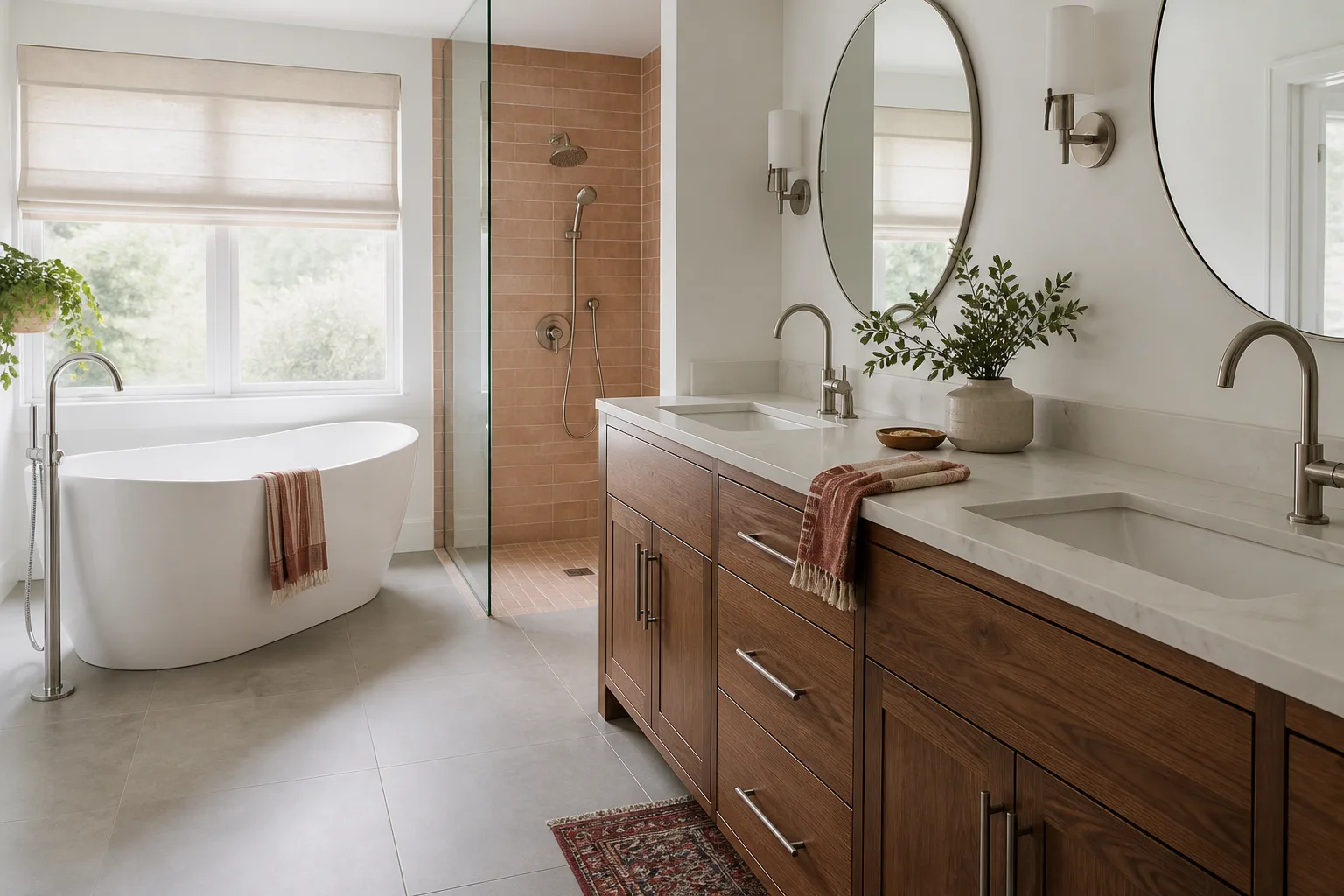
If you’re planning a project in Boulder City, call Penhallow Remodeling Boulder City at (844) 834-9740 for a free estimate. You’ll get a written price before any work starts, a written guarantee on the installation, and materials spec’d to hold up in this climate rather than a milder one. Our 365-Day Done Right Promise means if something fails within the guarantee period, we come back and fix it at no charge.
Written by the team at Penhallow Remodeling Boulder City.