Last updated November 18, 2026








Free written scope consultation - allowances, timeline, and change-order rules on paper before a single trade is scheduled
General Contractor Warning Signs Every Homeowner Should Know
A contractor who hands you a verbal estimate that “shouldn’t change much” has already told you everything you need to know. Every legitimate scope of work in a remodeling project can be priced in writing before demo starts – the cabinets, the tile, the substrate, the trim, the labor. If someone can’t put a number on paper, it’s not because the job is unknowable. It’s because they haven’t done the work of figuring it out. What follows is the checklist we wish every homeowner in Boulder City had before signing anything: the paperwork red flags, the verification steps most people skip, and the exact questions that separate a prepared contractor from a problematic one.
Quick Answer
The clearest warning signs of a bad contractor are missing paperwork, not missing charm. A vague scope of work, no written fixed price, no proof of license and insurance, and contract clauses that allow extra charges without your written approval are all red flags you can spot before work begins. In Boulder City, where older homes and desert climate create specific remodeling challenges, a contractor who can’t produce a written scope and a fixed number on day one is telling you exactly how the project will go.
Styles & brands we work with
- Kitchen remodeling
- Bathroom remodeling
- Home additions & ADU
- Roofing
- Windows & doors
- Driveway & pavers
- Fence
Table of Contents
- Why a Vague Scope of Work Is More Dangerous Than a High Price
- How to Verify a Contractor’s License and Insurance in Nevada
- What “We’ll Figure It Out as We Go” Does to Your Final Invoice
- Contract Clauses That Let a Contractor Charge Extra Without Your Approval
- The Questions to Ask Before You Sign
- Boulder City-Specific Warning Signs
- Common Mistakes to Avoid
- When to Call a Professional
Why a Vague Scope of Work Is More Dangerous Than a High Price
A high price is honest. It tells you what the job costs and lets you decide. A vague scope of work is a different animal – it’s a blank check disguised as a bid, and it’s the single most reliable predictor of a project that ends in a dispute.
Here’s what separates a real scope from a fake one. A real scope names the materials, the quantities, and the sequence. It says “KraftMaid maple cabinets, 42-inch uppers, 18 linear feet, installed with crown molding” – not “new cabinets.” It says “Cambria quartz countertop, 26 square feet, templated and installed” – not “countertops.” It says “cement board substrate behind all tile in the shower surround” – because the layer behind the tile is what determines whether that shower is still watertight in five years.
When a scope is vague, every undefined line item becomes a negotiation at the worst possible moment: after demo, when your kitchen is torn apart and you have no leverage. The contractor says the price “didn’t include” the substrate or the trim or the disposal. You pay, or you live with a half-finished room.
In our experience across Boulder City remodels, the projects that go sideways almost never start with a shockingly low bid. They start with a bid that looks reasonable on the surface but leaves half the work undefined. We’ve seen homeowners in the historic district near Nevada Way get a verbal number for a bathroom refresh, then discover after tile removal that the subfloor needed repair and the “estimate” didn’t cover it. That’s not an accident. That’s a scope designed to be renegotiated.
If you want to see what a fully written scope looks like in practice, our general contractor in Boulder City page walks through how a project is priced line by line. Compare that structure to any bid you’re considering. The difference is usually obvious within the first page.
How to Verify a Contractor’s License and Insurance in Nevada
This takes five minutes. Most homeowners skip it. That skip is exactly what an unlicensed or underinsured operator is counting on.
Nevada requires contractors to hold an active license with the Nevada State Contractors Board, and the license has to match the type and value of work being performed. General remodeling, cabinetry, and structural work all fall under specific classifications. A license number that doesn’t check out – or doesn’t cover the work – is a hard stop.
- Get the license number in writing. Not a photo of a card. A number you can verify. The contractor should hand it over without hesitation.
- Look it up on the Nevada State Contractors Board site. Confirm the license is active, the classification matches your project, and the status is in good standing. A suspended or expired license shows up immediately.
- Ask for a certificate of insurance naming general liability coverage. If a worker is injured on your property and the contractor isn’t insured, that liability can follow you as the homeowner. A legitimate contractor carries coverage and provides proof.
- Confirm workers’ compensation coverage. This is separate from general liability, and it protects you if a crew member is hurt on the job.
- Check the bond. Nevada requires licensed contractors to carry a bond, which gives you a path to recover losses if the contractor fails to perform or abandons the job.
The local professional we connect homeowners with is licensed and insured as Nevada requires, and we expect the same of anyone you’re comparing. If a contractor hesitates, deflects, or says “we’re getting the paperwork together” when you ask for the license number, that’s not a scheduling hiccup. That’s the answer.
What “We’ll Figure It Out as We Go” Does to Your Final Invoice
“We’ll figure it out as we go” is a phrase that sounds flexible and collaborative. On a remodeling project, it’s a financial hazard. It means the price you were quoted is not the price you’ll pay, and nobody has agreed on the boundary between what’s included and what’s extra.
Here’s the math. Say you get a verbal estimate of $24,000 for a kitchen remodel. Then demo reveals the wall behind the old backsplash has water damage. Then the electrical panel doesn’t have capacity for the new range hood. Then the flooring height needs a transition the bid didn’t mention. None of those surprises were priced. Each one comes as a change order, and change orders under pressure are always more expensive than the same work priced up front.
A fixed written price works differently. The contractor has done the site work, measured the space, identified the likely problem areas (in a 1940s Boulder City home near the old downtown, that’s almost always going to include subfloor and plumbing stub-outs), and built those into a number. If they missed something, that’s on them – not on you. The price on day one is the price on the invoice.
That’s the standard we hold ourselves to, and it’s the one you should hold every bidder to. A written fixed price before work starts isn’t a premium service. It’s the baseline for anyone asking you to let them pull cabinets in your home. Call (844) 834-9740 if you want to see how that looks on paper before you commit.
Contract Clauses That Let a Contractor Charge Extra Without Your Approval
You don’t need a law degree to spot a bad clause. You need to read the contract with a pen in hand and know what the problematic language looks like. Here are the ones to watch for.
- Open-ended “time and materials” language. If the contract says you’ll be billed for hours and materials without a written cap or a fixed not-to-exceed number, you have no protection against a slow crew or a padded materials list.
- Allowance line items with no written management process. An allowance is a placeholder number for something like tile or fixtures. That’s fine if the contract specifies how overages are approved and what happens if you go over. It’s dangerous if allowances are used to keep the quoted total artificially low, knowing the real cost will land higher once you pick your selections.
- Change orders authorized by text or verbal agreement. Change orders should require your written signature and should state the cost impact before the work is done. If the contract lets the contractor proceed on a change without your signature, every conversation becomes a charge.
- No defined payment schedule tied to milestones. A contract that asks for a large deposit upfront and the balance on completion is asking you to fund the whole project before it’s finished. A milestone-based schedule – deposit, rough-in complete, drywall, final – keeps both parties accountable.
- No written guarantee or workmanship warranty. If the contract is silent on what happens if the work fails, the answer is you pay again. A written guarantee should spell out the coverage period and exactly what the contractor will do if something goes wrong.
- No description of the clean-up standard. A job site left full of debris and construction dust is the most common complaint after the invoice is paid. A real contract says who cleans up and to what standard.
To see how these clauses should read, the bathroom remodeling in Boulder City and kitchen remodeling in Boulder City pages both outline what a written guarantee and fixed price cover on a real project. Read those before you compare contracts.
The Questions to Ask Before You Sign
The questions below aren’t traps. They’re calibration. A prepared contractor has an answer ready for every one. A problematic contractor deflects, gets vague, or promises more than they can put in writing.
- “Can you put the full scope and the price in writing before demo starts?” A yes with a document beats a yes in conversation every time. If the answer is “we’ll write it up after we get started,” you have your answer.
- “What’s your license number, and what classification does it cover?” They should give it without pause.
- “Are you carrying general liability and workers’ comp, and can I see the certificates?” Legitimate contractors expect this and provide it.
- “What does the written guarantee say, and what happens if the work fails?” A real guarantee has a specific coverage period and a specific remedy. Ours is the 365-Day Done Right Promise: if the work fails inside the guarantee period, we come back and fix it at no charge, and it’s in writing on every project.
- “How many change orders do you expect, and how do you price them?” The answer should be “as few as possible” with a written process for any that do come up. If the contractor expects several, that’s a signal your scope is undefined.
- “What’s the payment schedule, and how does it map to milestones?” A large up-front deposit with no milestone structure is a risk you don’t need to take.
- “Who’s actually on site, and are they background-checked?” You have a right to know who’s walking through your home. Our technicians are background-checked and arrive in uniform on every job, and that’s a standard every contractor should meet.
If you’d rather see what a fully prepared bid looks like than run through these questions cold, call (844) 834-9740 for a free estimate and compare the written document against anyone else you’re considering.
Boulder City-Specific Warning Signs
Boulder City has remodeling conditions that punish a vague scope more than most places. Knowing them is part of reading a bid critically.
First, the housing stock. Much of the residential inventory in Boulder City was built in the mid-20th century or earlier, particularly around the historic district and the streets off Nevada Way. That means a remodel frequently uncovers galvanized plumbing, undersized electrical panels, and subfloor that’s been baked by decades of dry desert air. A contractor who hasn’t scoped for that reality and priced it into the job is going to find it during demo – and find a reason to charge you for it.
Second, the climate. Boulder City’s heat and low humidity are hard on materials – exterior caulk, tile grout, hardwood floors, and cabinetry finishes all behave differently here than in a coastal market. A bid that doesn’t name the materials and account for the local climate is a bid that hasn’t been thought through for your home.
Third, permits. Remodeling work that involves structural, electrical, plumbing, or mechanical changes requires permits and inspections, and Boulder City and Clark County have their own processes. A contractor who suggests skipping the permit “to save time” is handing you a problem that surfaces at resale, when the unpermitted work becomes the buyer’s negotiation leverage against you. Permitted work and passed inspections should be part of the scope.
Fourth, the local market itself. Boulder City is a small town. Contractors who work here are known here. Ask around the neighborhood, ask at the local hardware counter, and ask the last person on your street who had a remodel for a name and a caution. Reputation travels fast and travels honestly in a town this size. To get a sense of how a local remodel is structured, the Penhallow Remodeling Boulder City home page breaks down the full picture.
Common Mistakes to Avoid
- Accepting a verbal estimate because the contractor seems trustworthy. Trust is earned by the paperwork, not the handshake. A contractor who won’t put the number in writing before work starts has told you what the relationship will feel like.
- Skipping the license check because “they came recommended.” Even a well-meaning recommendation can point to a contractor whose license is expired or whose coverage has lapsed. Five minutes on the state database is the cheapest insurance on the project.
- Choosing the bid with the lowest written total without reading the scope. The lowest total is often the one with the most undefined work. Compare scopes line by line, not bottom-line numbers.
- Paying a large deposit before any written scope or schedule exists. Money out the door before the document is signed is the fastest way to lose leverage. Milestone-based payments protect you at every stage.
- Ignoring change-order language in the contract. If the contract lets the contractor add work without your signature, every surprise becomes a bill. Read that section twice.
- Letting a contractor start without confirming who is on site. Background-checked, uniformed crews are a standard, not a nicety. In Boulder City, where a lot of remodeling happens in homes with families in them, this matters.
- Assuming the guarantee is standard. A written guarantee with a named coverage period – like our 365-Day Done Right Promise – is what protects you after the crew leaves. If the contract is silent on what happens when the work fails, you’re the guarantee.
When to Call a Professional
Some warning signs are enough to walk away from a bid and start over. If a contractor can’t produce a license number, if the scope is a single paragraph for a full kitchen, if there’s no written price or payment schedule, if the contract allows change orders without your signature, or if there’s no written guarantee on the work – those are not quirks. They’re the reason homeowners get burned. The same is true when a contractor suggests skipping permits, can’t name the materials being installed, or wants a large deposit before any document is signed.
Penhallow Remodeling Boulder City offers free estimates in Boulder City – call (844) 834-9740. You’ll get a written price before any work starts, a defined arrival window, background-checked uniformed technicians, and the 365-Day Done Right Promise in writing. If the work fails, a free return visit is part of the guarantee, no service call and no re-inspection fee.
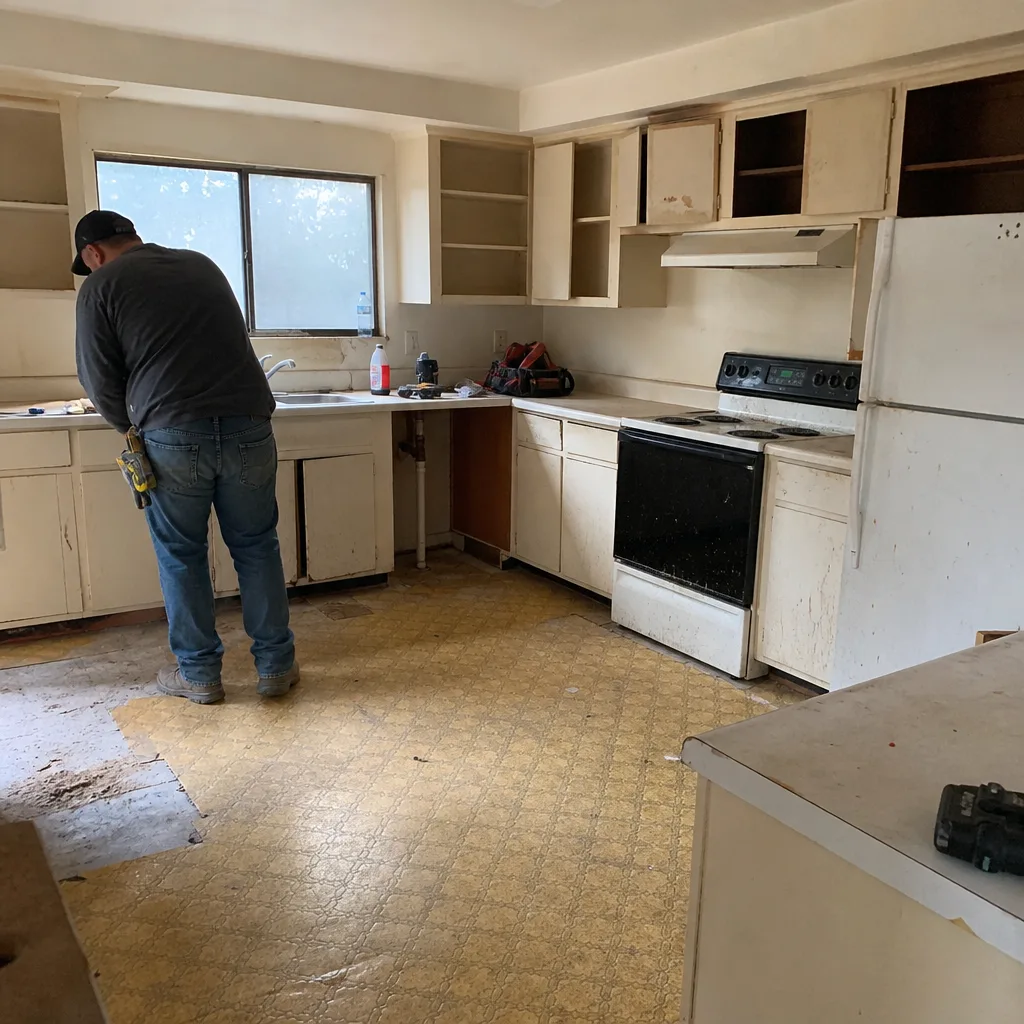
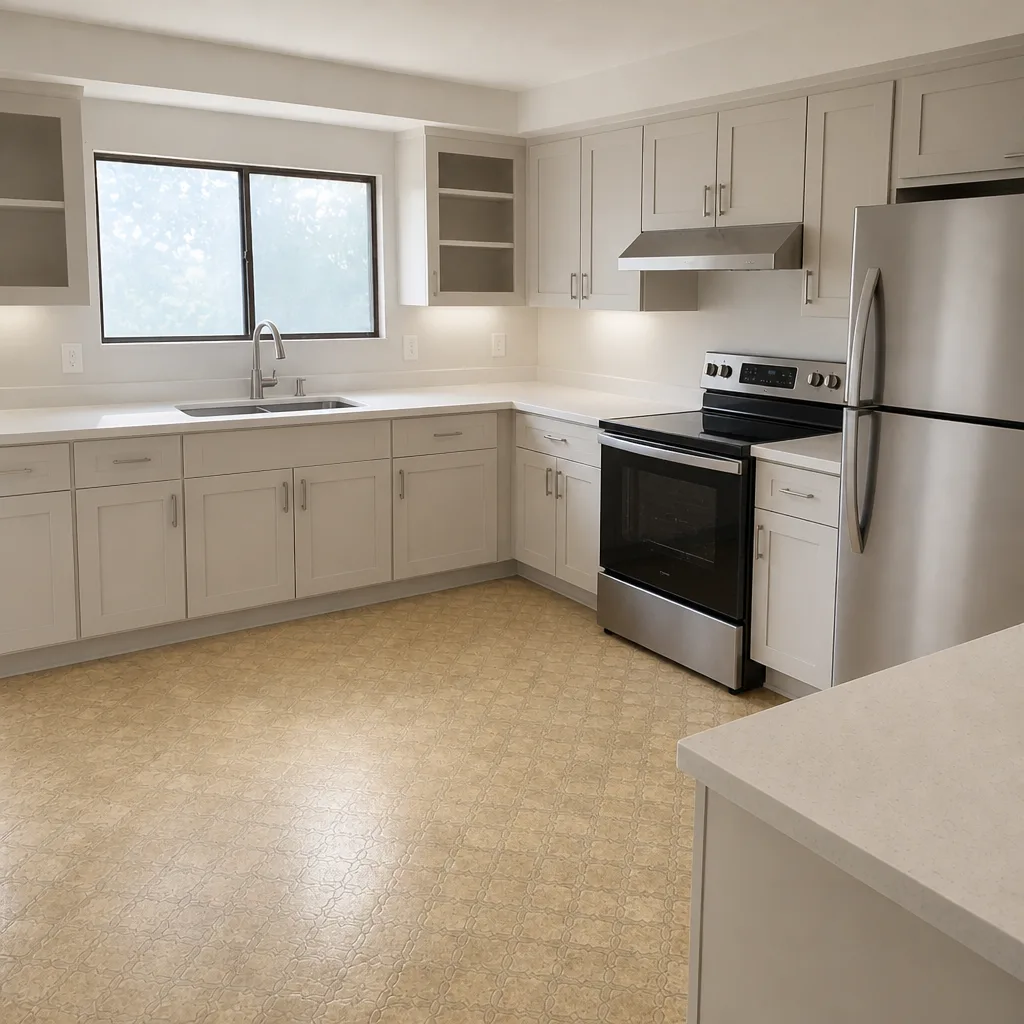
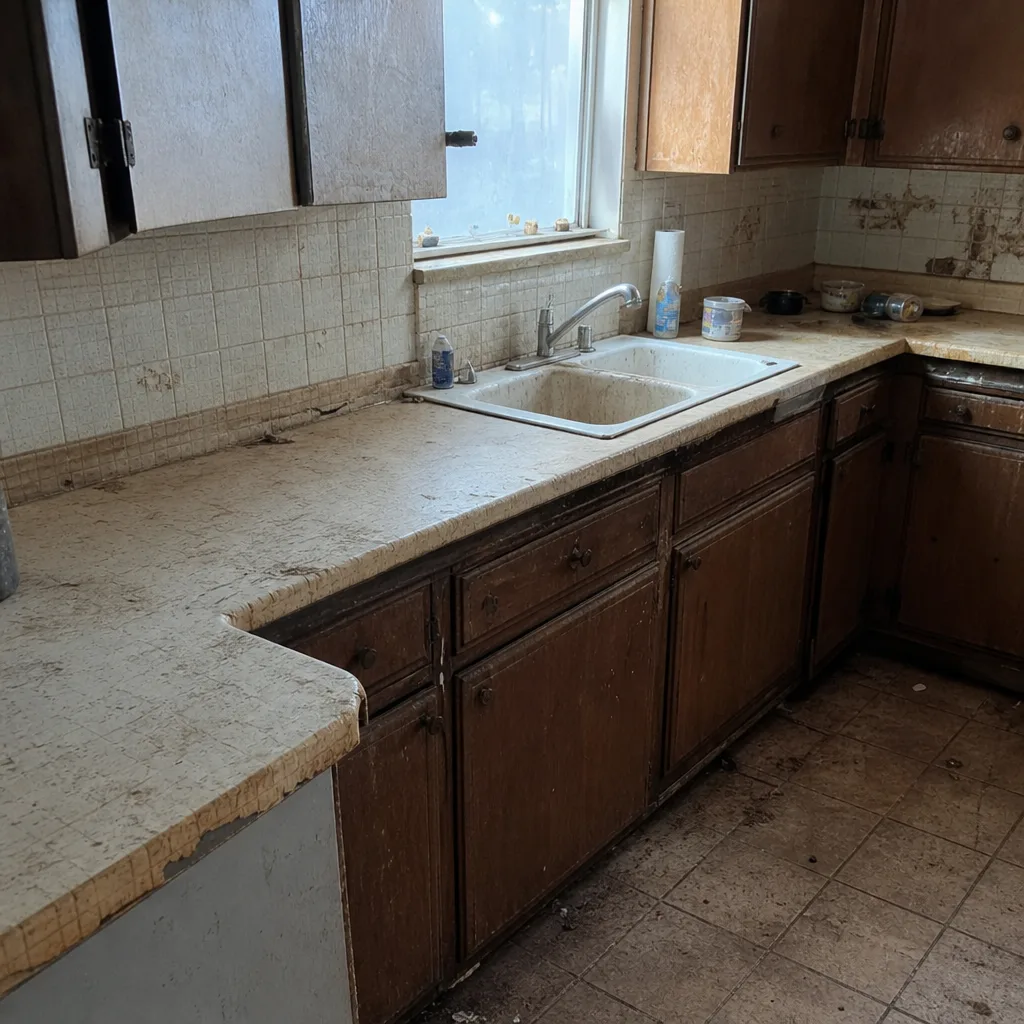
See the difference
 Before
 After
 Before
 After
 Before
 After
Frequently Asked Questions

The biggest warning sign is a contractor who cannot put the full scope of work and a fixed price in writing before work begins. A vague verbal estimate that “shouldn’t change much” is a sign that the price will change, and that the changes will land on your invoice after demo starts.
Ask for the license number in writing, then look it up on the Nevada State Contractors Board website to confirm it’s active and that the classification matches your project. In Nevada, you can verify the license, the bond, and insurance status in about five minutes. If a contractor won’t give you a number to check, that’s the answer to your question.
Surprise repairs on a Boulder City remodel typically run $2,000 – $8,000 depending on what’s uncovered – subfloor replacement, plumbing stub-out work, or electrical panel upgrades are the most common. A fixed written price builds likely surprises into the number so you’re not paying for them as change orders. Call (844) 834-9740 for an exact quote on your project – estimates are free.
With a written fixed price, no. The number on day one is the number on the invoice, and any change requires your written approval before the work is done. If a contractor tells you the price will “probably” stay the same, that’s not a fixed price, and you should ask for one in writing.
Yes, for any work involving structural, electrical, plumbing, or mechanical changes. Boulder City and Clark County have their own permitting and inspection processes, and unpermitted work becomes a liability at resale. A legitimate contractor will pull the permits and include the inspection process in the scope, not suggest skipping it.
A written guarantee should state the coverage period and exactly what the contractor will do if the work fails inside that period. Our 365-Day Done Right Promise covers the work for a full year, in writing, with a free return visit if something goes wrong. If your contract is silent on the guarantee, ask for one before you sign.
The Bottom Line
The warning signs that predict a bad contractor are almost always in the paperwork. A vague scope, no written fixed price, no license or insurance verification, contract clauses that allow unapproved charges, and no written guarantee are the real red flags – and they’re visible before a single tool comes out of the truck. Every legitimate scope of work can be priced in writing before demo starts. If a contractor can’t produce that document, you’ve learned everything you need to know about how the project will go. Do the five-minute license check, read the contract with a pen in hand, ask the questions, and insist on the written price. The number on day one should be the number on the invoice.
Ready to compare a fully written bid? Call Penhallow Remodeling Boulder City at (844) 834-9740 for a free estimate. You’ll get a written price before work starts, background-checked uniformed technicians, and the 365-Day Done Right Promise – in writing on every project. A live person answers the phone around the clock, so there’s no voicemail maze and no callback window.
Written by the team at Penhallow Remodeling Boulder City.