
Last updated November 18, 2026








Free written scope consultation - allowances, timeline, and change-order rules on paper before a single trade is scheduled
General Contractor Maintenance Schedule: What to Do and When
The number one reason a remodel fails early isn’t bad workmanship. It’s the homeowner who skips a 15-minute caulk inspection at the six-month mark, and that one missed gap lets moisture find the single seam the installer didn’t seal. We’ve walked into Boulder City homes where a four-year-old bathroom already shows soft drywall at the tub edge – not because the tile work was wrong, but because nobody looked. The work itself is only half the investment. The other half is the schedule you keep once the crew pulls out of the driveway. What follows is the maintenance calendar we’d hand a neighbor: what to check at 30, 60, and 90 days, what to inspect every year, what’s your job versus ours, and how to document it all so a warranty claim never turns into a fight.
Quick Answer
Start checking caulk joints at 30 days, re-inspect grout and hardware at 60 and 90 days, then move to an annual walkthrough each spring and fall. Focus on wet areas first – tub surrounds, shower corners, sink edges, and exterior window frames – because those fail first. Log each inspection with dated photos and keep your permits, product warranties, and written price in one file. That habit protects both the work and your guarantee.
Styles & brands we work with
- Kitchen remodeling
- Bathroom remodeling
- Home additions & ADU
- Roofing
- Windows & doors
- Driveway & pavers
- Fence
Table of Contents
- Why a Remodel Needs a Maintenance Schedule at All
- The 30-60-90-Day Post-Remodel Checklist
- How Boulder City’s Dry Air Changes Your Timeline
- The Annual Inspection: What to Check Every Year
- Homeowner Responsibility vs. Contractor Callback
- Building a Home File That Pays Off at Resale
- Common Mistakes to Avoid
- Frequently Asked Questions
Why a Remodel Needs a Maintenance Schedule at All
A finished general contractor project in Boulder City is a system, not a sculpture. The caulk, grout, hardware, and mechanical connections in a kitchen or bath all move. Wood swells and shrinks with the seasons. Caulk shrinks as it cures and again as it dries out. Grout develops hairline cracks from normal flex. None of that means the work was wrong – it means the materials are alive, and living joints need a periodic look.
Here’s the part most homeowners never hear from their contractor: the written guarantee on a project covers workmanship and materials, not deferred maintenance. If a shower pan fails because a 50-cent bead of caulk went unchecked for two years, that’s not a defect. That’s a missed inspection. Knowing the difference is what separates a home that ages well from one that keeps calling the same repair back every eighteen months.
Boulder City homes take this further than most. The older housing stock near the historic district, the stucco-and-slab builds out toward the river, the newer construction on the edges of town – they all sit in the same punishing climate, and they all need the same calendar, just with different emphasis on the exterior. We’ll get to that. First, the schedule you run in the first ninety days.
The 30-60-90-Day Post-Remodel Checklist
The first ninety days after a remodel are the settling-in period. This is when new caulk finishes curing, cabinet doors finish their first season of opening and closing, and any small hardware issues surface before they become bigger ones. Run these checks on a calendar, not on memory.
Day 30
- Press-test every caulk joint in wet areas. Run a dry finger along the tub edge, shower corners, sink backsplash, and where the counter meets the wall. If the caulk feels soft, pulls away, or shows a gap, note it and re-caulk with a quality silicone.
- Check cabinet door and drawer alignment. Open and close each one. Doors that rub or drawers that stick usually just need a hinge adjustment, which is a five-minute fix.
- Look under every sink for moisture. A dry paper towel wiped around the supply lines and P-trap tells you in seconds whether a fitting is weeping.
- Test every GFCI outlet in the kitchen and bath. Press the test button, confirm it trips, reset it. If it doesn’t trip, call an electrician; that’s not a wait-and-see item.
Day 60
- Re-inspect grout lines in the shower and floor. Look for hairline cracks, especially at inside corners and where the tile meets the tub. Small cracks here are normal material movement; deep ones or missing grout are a callback.
- Check the range hood and any new vent fans. Hold a tissue up to the intake – if it doesn’t pull, the damper or ductwork needs a look.
- Confirm all drawer slides and soft-close hinges still operate smoothly. If a hinge has failed under warranty, this is the time to flag it, not in year three.
Day 90
- Walk the whole job with a flashlight and a notebook. Photograph every joint, seam, and mechanical connection. Date the photos.
- Check the exterior door and window seals on any new install. Weatherstripping should be tight and caulk lines continuous, especially on the sun-facing sides of the house.
- Test the water heater, disposal, and any new appliance connections for leaks or odd sounds. Appliance failures in the first 90 days are almost always warranty items from the manufacturer.
If something on this list looks wrong, call the contractor before you touch it. Any repair you attempt yourself can complicate a workmanship claim – even a well-intentioned fix.
How Boulder City’s Dry Air Changes Your Timeline
Boulder City sits in one of the driest climates in Nevada, and that dry air is the single biggest reason your caulk and grout need attention sooner than a homeowner in a humid climate would expect. Indoor relative humidity in Boulder City homes routinely drops into the teens during summer and stays low most of the year. Caulk cures by losing moisture and solvents; when the air is this dry, it cures fast, shrinks more than it would in a wetter climate, and pulls away from joints sooner.
In practice, that means a bead of caulk that would hold for two years in a coastal climate may show its first hairline gap in Boulder City at the eight- to twelve-month mark. Grout behaves similarly – it dries hard and fast, which is good for durability, but it also means thermal movement in slab-on-grade construction shows up as fine cracks earlier. We’ve seen shower surrounds in Boulder City’s older neighborhoods where the caulk at the tub edge needed replacement inside a year of install. That’s not a defect in the caulk. That’s the climate.
What to do about it:
- Inspect caulk joints at 6 months, not just 12. Add a quick visual pass at the halfway mark to your calendar.
- Run a humidifier in the dry months if you have hardwood or a humidor-sensitive finish. Whole-home humidification helps cabinetry joints and any solid-wood furniture sitting in the room.
- Prioritize exterior caulk on south and west-facing walls. Those faces take the sun and dry out fastest. Re-caulk those joints before winter.
- Watch stucco and hardscape edges. Any exterior pavers or concrete work near Boulder City’s sun-facing patios will show movement at the perimeter faster than the interior. A periodic walk with a tube of Quikrete concrete patch handles small surface cracks; deep movement is a callback.
The Annual Inspection: What to Check Every Year
Once the first ninety days are behind you, settle into a twice-a-year rhythm – spring and fall are both good anchors. This is the check most homeowners never do, and it’s the one that keeps a five-figure remodel from showing its age at year five.
What to inspect every year:
- All caulk in wet areas: tubs, showers, sinks, backsplashes, and the toilet base. Replace any joint that’s cracked, peeling, or moldy. Silicone caulk in Boulder City typically needs replacing every 1-2 years; that’s the honest number.
- Grout: Check for missing or cracked grout at inside corners and where tile meets a fixed object like a tub or shower pan. Re-grout small areas yourself; call for larger repairs.
- Hardware: Cabinet hinges, drawer slides, door handles, towel bars, shower valves. Tighten loose screws, flag any pull-away from the wall. A towel bar that comes loose is a fifteen-second fix now and a drywall repair later.
- Mechanical connections: Under-sink supply lines, the connection at the toilet, the dishwasher line, and any gas appliance shutoff. Look for corrosion, weeping, and loose fittings. Gas connections are a call-the-professional item, always.
- Exterior seals: Window and door caulk, weatherstripping, thresholds, and any new siding or masonry. The James Hardie siding and trim used on many Boulder City remodels holds up well, but caulk at the joints needs re-application on the same cycle as the interior.
- Ventilation: Run every exhaust fan for a few minutes. Confirm airflow with a tissue test. Clean the bath fan cover annually.
- Water heater and HVAC filter: Not strictly remodel-related, but they’re in the same file, and inspecting them on the same day costs nothing extra.
- Shutoff valves: Once a year, turn each under-sink and toilet shutoff a quarter turn and back. Valves that sit untouched for years seize, and a seized valve on the day you need it is a plumbing bill.
Log the date on each item. A two-minute note in your phone is enough. The point is to have a record, not a paper trail fit for a courtroom.
Homeowner Responsibility vs. Contractor Callback
This is the question homeowners ask us most often, and it’s the one that decides whether a repair is free or paid: who covers what? The short answer is that routine maintenance is always yours, and defects in workmanship or materials are ours. The line sounds simple but matters most when something has visibly failed, and knowing ahead of time where it sits saves an argument.
Yours to handle (routine maintenance):
- Re-caulking wet-area joints when caulk cracks or pulls away
- Touch-up grout at inside corners
- Tightening cabinet hardware, towel bars, and drawer pulls
- Replacing weatherstripping and re-caulking exterior joints
- Cleaning bath and kitchen exhaust fans
- Annual flushing of the water heater per the manufacturer’s instructions
Callback territory (our written guarantee, not your maintenance):
- Tile that de-bonds from the wall or floor (substrate or adhesive failure)
- Grout that cracks deeply through the tile field, not just at corners
- A cabinet door that sags because a hinge anchor failed, not because the wood swelled
- A shower pan that leaks through the pan itself, not through a caulk line
- Failure of any installed fixture (a Kohler or Moen faucet leaking at the cartridge in year one is a fixture warranty item, and we’ll walk you through the process)
- Any mechanical connection we made that weeps within the guarantee period
The 365-Day Done Right Promise covers the second list. If something on it fails inside the guarantee period, we come back and fix it at no charge – covered in writing on every project. And if a repair fails, we offer a free second visit with no service call and no re-inspection fee. The only way to void that coverage is by skipping the maintenance on the first list long enough to cause damage, which is exactly why this schedule exists. When you need a Boulder City bathroom remodeling project or kitchen remodeling project priced in writing before the work starts, that’s where every job begins.
Building a Home File That Pays Off at Resale
Every remodel deserves a file. Not a shoebox – a deliberately built folder, digital or physical, that lives with the house and travels with it when you sell. Boulder City buyers are careful, and a complete maintenance record is a genuine selling point. A resale buyer who sees dated inspection photos and a written guarantee is a buyer who trusts the home more, and trusts usually translate into price.
What belongs in the home file:
- The written price. The contract, the line-item scope, and any change orders. Put the written number at the front so the file opens with proof of what you paid for.
- The written guarantee. Copy of the 365-Day Done Right Promise and any product warranty documentation that came with the cabinetry, counters, and fixtures.
- Permits and inspection records. Every permit pulled and every inspection passed. Boulder City permits matter at resale; the file is the easiest place to find them.
- Product spec sheets. Manufacturer sheets and care instructions for KraftMaid or Wellborn cabinetry, Cambria or Silestone counters, Kohler and Moen fixtures. Care instructions differ across these brands, and having them on file prevents the wrong cleaner from being used on a quartz surface.
- Dated inspection photos. Photograph the same joints and connections at every annual inspection. Side-by-side photos over five years tell a much clearer story than a single photo.
- A maintenance log. A simple note of what was checked, what was re-caulked, and what was replaced. A one-page log with dated entries is worth its weight when a buyer asks whether the shower has ever had issues.
Keep a scanned copy in cloud storage and a physical copy in a dedicated folder near the electrical panel. The scanned copy is the one you’ll rely on. The physical copy is the one a buyer will flip through on a rainy Saturday. Both matter. For a whole-home remodel project, that home file becomes one of the more valuable assets in the house. For a sense of what a Boulder City home remodel looks like from start to finish, that’s a good place to see our process.
See the difference
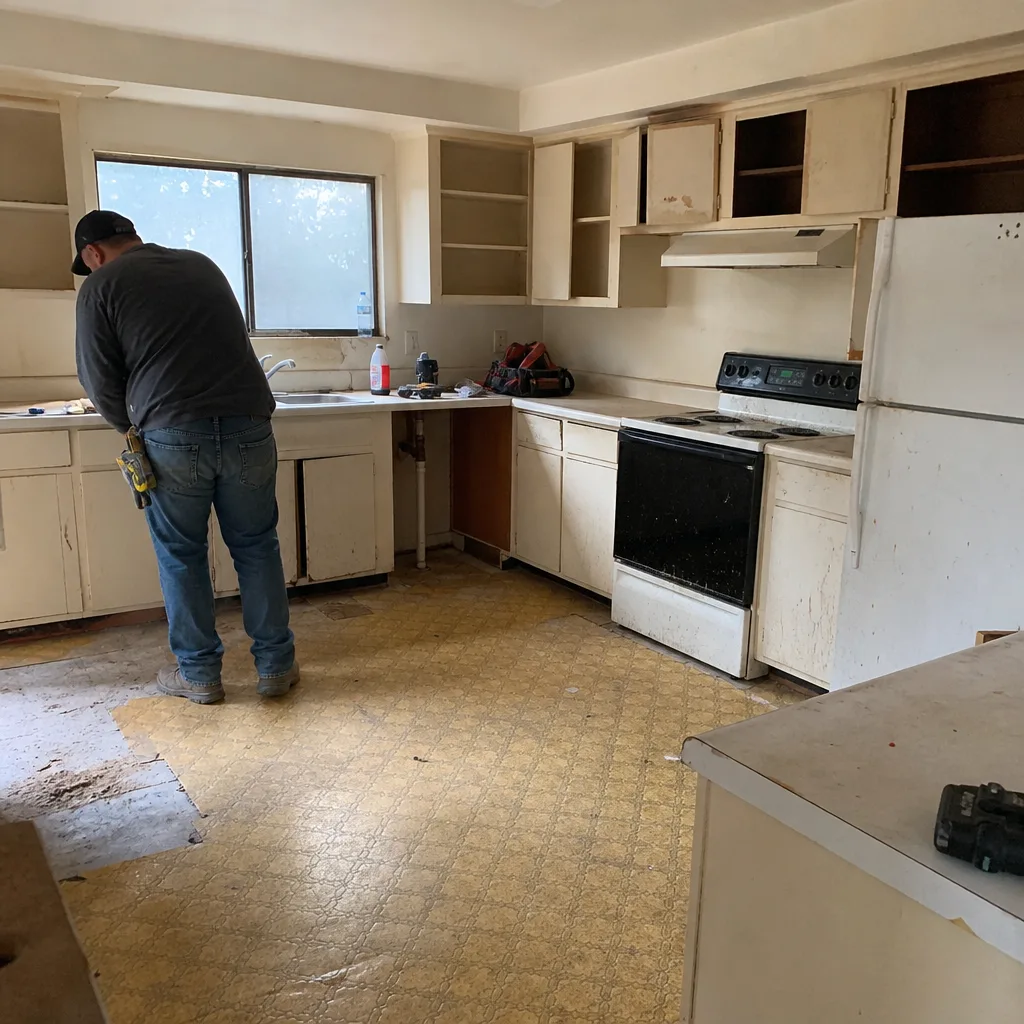 Before
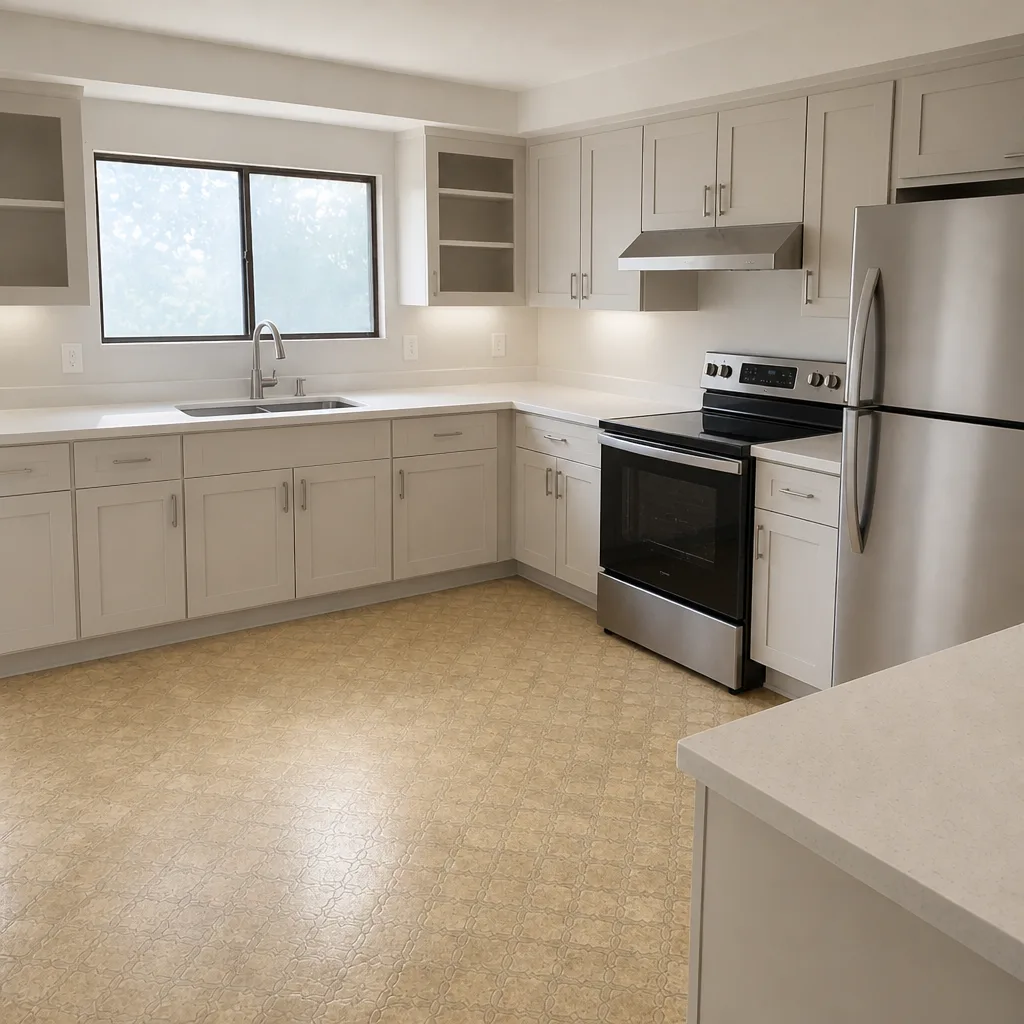 After
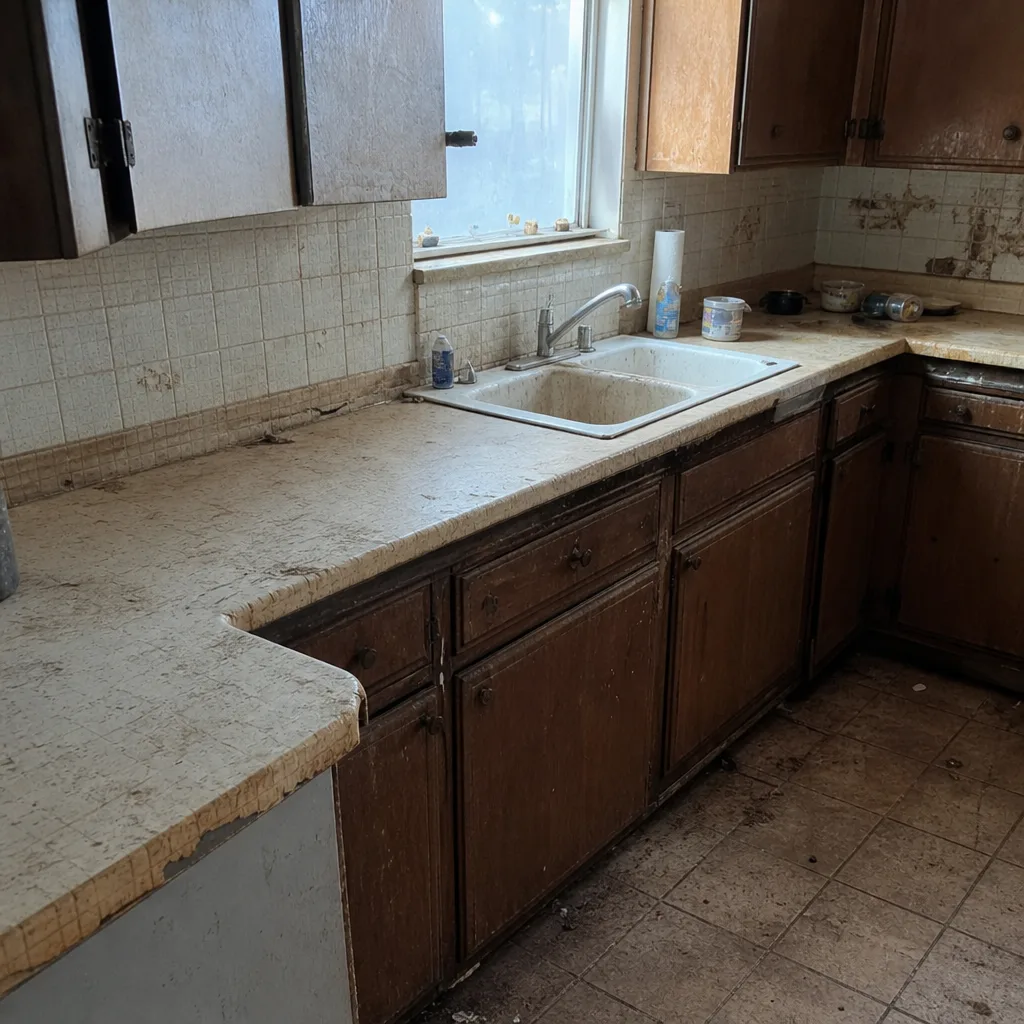 Before
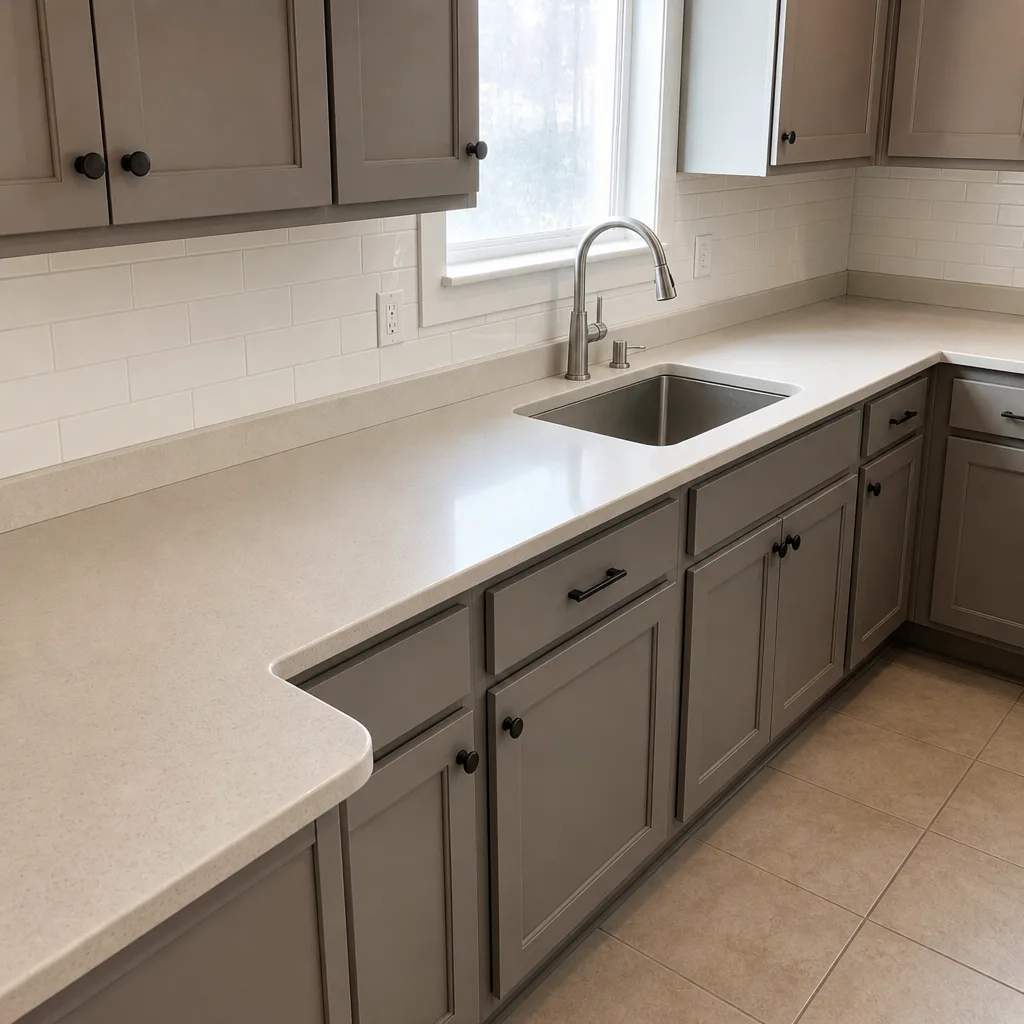 After
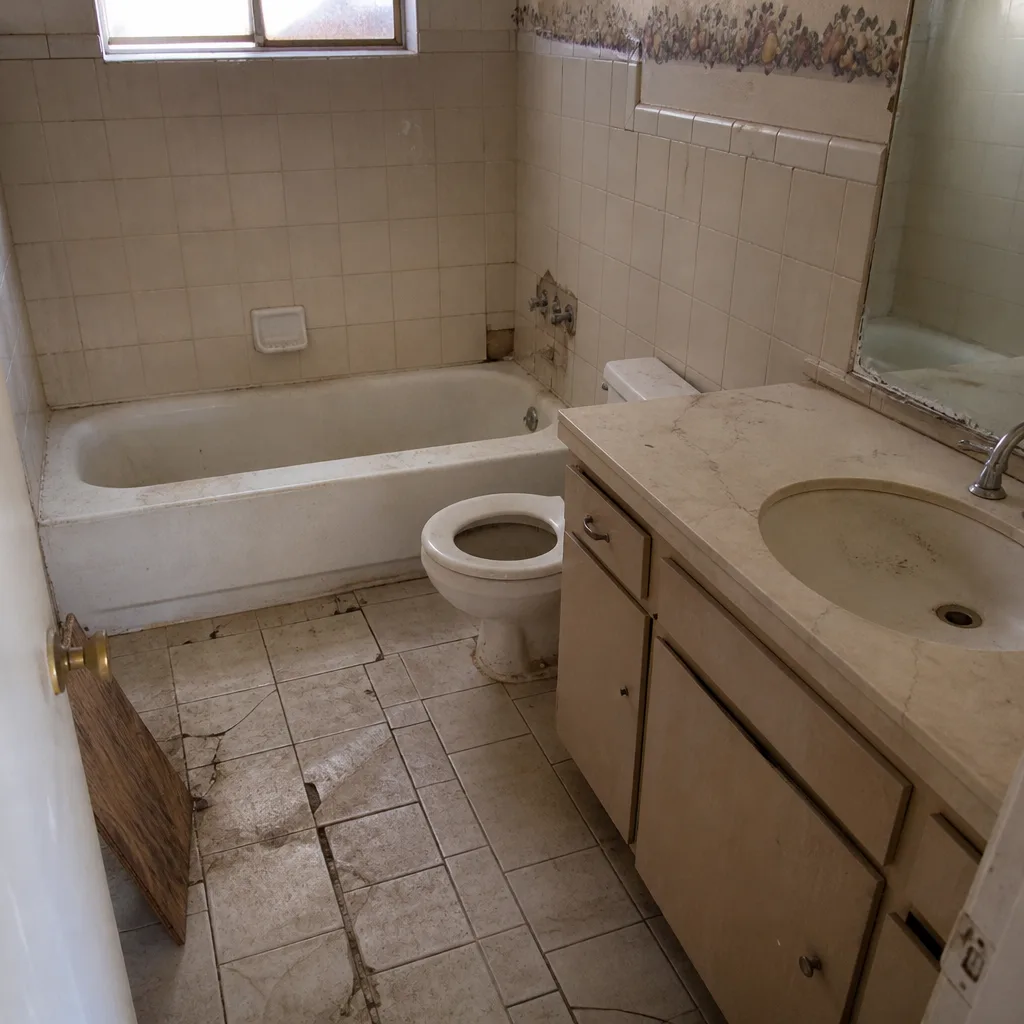 Before
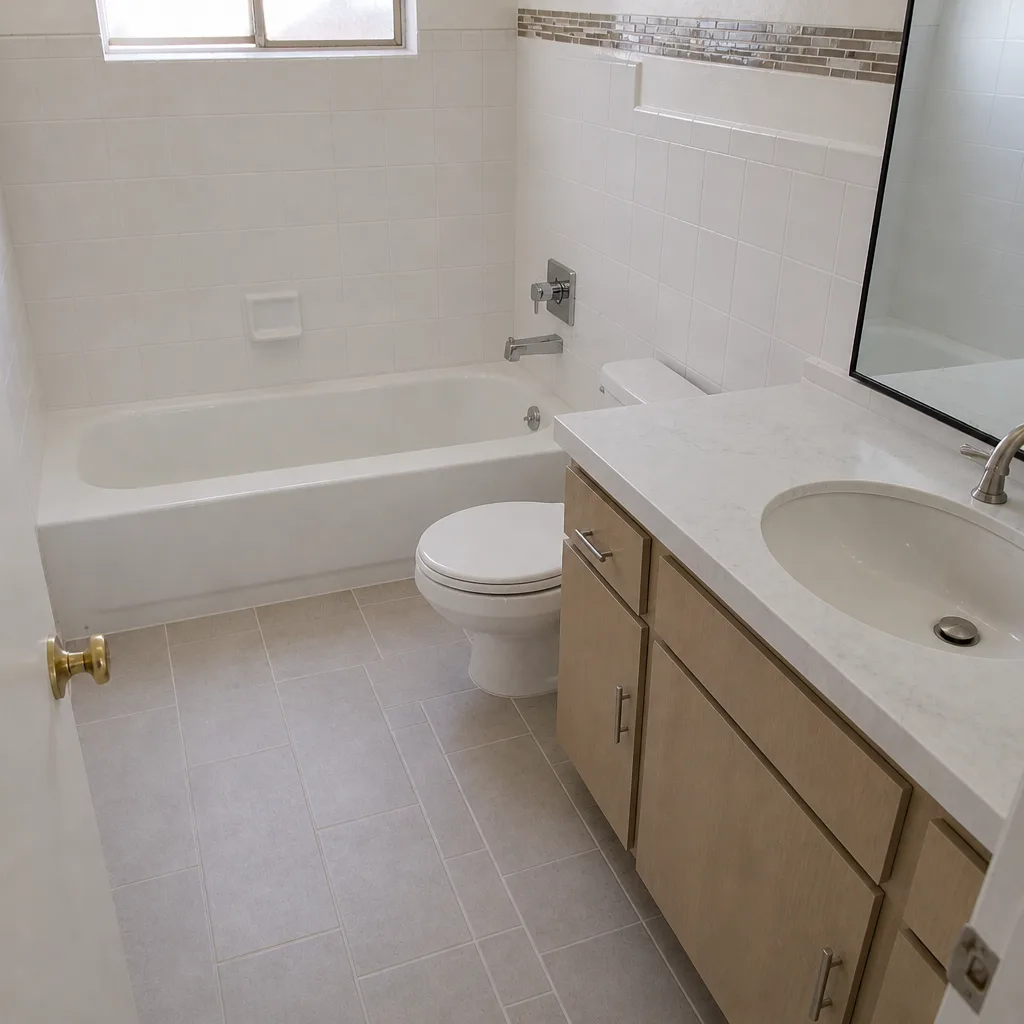 After
Common Mistakes to Avoid
- Waiting until you see water to check the caulk. Moisture damage is patient. By the time a stain shows on drywall, the substrate behind it has been wet for months. Caught at the 30-day check, the same joint is a $10 tube of silicone.
- Assuming the first-year callback is free for everything. It isn’t. Workmanship failures are covered; deferred maintenance is not. That line is written into the guarantee, and you’ll be glad it’s clear upfront rather than after a surprise.
- Using the wrong cleaner on quartz counters. Cambria and Silestone surfaces are durable but not indestructible. Abrasive pads and acidic cleaners dull the finish. Follow the manufacturer’s care sheet in your file – the wrong cleaner is one of the more common avoidable surface problems we see in Boulder City.
- Re-caulking over failing caulk without removing it. New caulk over old caulk fails fast. Remove the old bead with a scraper, clean the joint, and apply fresh silicone on a dry surface. That’s the difference between a fix and a recurring problem.
- Forgetting the exterior joints on the south- and west-facing walls. Boulder City summers punish those faces. If you only inspect the interior, you’ll miss the caulk failures that let wind-driven dust and moisture into a wall cavity.
- Never documenting the inspection. A home file with no dated photos is a home file that can’t defend you. The easiest way to lose a warranty dispute is to have no record that the problem appeared inside the guarantee period.
- Ignoring a seized shutoff valve. If the valve under your sink won’t turn, that’s a plumbing repair, not a tomorrow problem. A seized valve on the day you need to shut off water is a wet floor and a call no one wants to make.
When to Call a Professional
Most of this schedule is homeowner work. A handful of items are not, and they’re the ones worth remembering. Call a licensed professional for anything involving gas connections or shutoff valves, water heater service, any water intrusion you can’t trace to a single caulk line, tile or cabinet failure that looks like a defect rather than normal movement, or any electrical fixture that behaves oddly. If the shower pan leaks without a visible caulk gap, that’s plumbing-or-pan territory, not DIY. If a cabinet door sags and re-tightening the hinge doesn’t hold, the anchor has failed. If you’re not sure whether it’s maintenance or a callback, that’s the reason to call, not to guess. Penhallow Remodeling Boulder City offers free estimates throughout Boulder City – call (844) 834-9740 and a live person will answer, any hour of the day.
Frequently Asked Questions
Start with caulk joints in the wet areas – tub, shower, sinks, and backsplash – followed by cabinet hardware and under-sink plumbing connections. That’s the 30-day checklist, and the order matters: the caulk joints are the fastest to fail and the most expensive to ignore.
Plan on every 12 to 24 months in wet areas, with a visual check at six months. Boulder City’s dry air cures caulk quickly and shrinks it more than a humid climate would, so the timeline runs a little shorter here than the general advice would suggest. Call (844) 834-9740 for an exact quote if you’d rather have a pro handle the re-caulk – estimates are free.
A hairline crack at an inside corner or where tile meets a fixed object like a tub is normal material movement, not a warranty defect. A deep crack through the tile field, missing grout, or tile that de-bonds from the substrate is a workmanship or materials issue and should be reported under your guarantee.
Yes. The written price, the guarantee, the permits, the inspection records, and the dated maintenance photos all belong in one home file. Boulder City resale buyers respond well to a documented project; it’s one of the simplest ways to protect the value of the work when you eventually sell.
Routine maintenance is what you do to prevent normal wear from becoming damage – re-caulking, tightening hardware, replacing weatherstripping. A callback is when the work itself or a material fails – a shower pan that leaks through the pan, a hinge anchor that gives out, a tile that de-bonds. One is expected; the other is covered by our written guarantee.
Skipping maintenance doesn’t void the guarantee on the work itself. It voids coverage for damage that deferred maintenance caused – a shower pan that rotted because the caulk line went unchecked, for example. The distinction is real, and it’s why this schedule is written down rather than passed along by word of mouth. Call (844) 834-9740 if you’re unsure which category a problem falls into.
The Bottom Line

A remodel is a system in motion, and the maintenance schedule is what keeps the system honest. Check caulk at 30 days, revisit grout and hardware at 60 and 90, then settle into an annual spring-and-fall inspection focused on wet areas and exterior joints. In Boulder City’s dry air, plan on re-caulking sooner than general advice suggests, and watch the sun-facing walls. Log every inspection with dated photos, keep your written price, permits, and guarantee in one home file, and know the line between your maintenance and a covered callback. Do all of that and your remodel holds its value for far longer than the materials alone would suggest. If you’re ready to start a new project or want a free estimate in Boulder City, call our kitchen team – no, better yet – call (844) 834-9740 directly and we’ll get a written price in your hands before any work begins.
Written by the team at Penhallow Remodeling Boulder City.